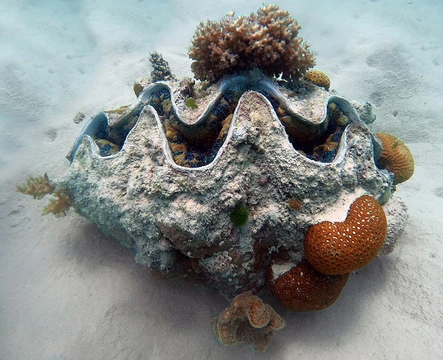
Hippopus
A genus of large tropical saltwater clams in the giant clam subfamily.

Hippopus is a genus of large, tropical marine bivalve mollusks belonging to the giant clam subfamily Tridacninae, within the family Cardiidae. It includes two recognized species: *Hippopus hippopus*, commonly known as the bear paw clam, and *Hippopus porcellanus*, called the China clam. Several other species names, such as *Hippopus brassica*, *Hippopus equinus*, and *Hippopus maculatus*, have been reclassified as synonyms of *Hippopus hippopus*.
Quick Facts
- Taxon
- Hippopus
Facts from the source article.
Lore & Background
The genus Hippopus includes two recognized species: Hippopus hippopus, described by Linnaeus in 1758 and known as the bear paw clam, and Hippopus porcellanus, described by Rosewater in 1982 and known as the China clam. Several other species names, such as Hippopus brassica, Hippopus equinus, and Hippopus maculatus, have been brought into synonymy with Hippopus hippopus, indicating historical taxonomic uncertainty. The genus is classified within the subfamily Tridacninae, the giant clam subfamily, of the family Cardiidae, placing it among the largest marine bivalves.
Reader's Guide
Hippopus clams are significant as members of the giant clam subfamily Tridacninae, which are ecologically important in tropical marine ecosystems. The genus is referenced in a comprehensive update on giant clams published in Oceanography and Marine Biology: An Annual Review, which addresses species distribution, current threats, and conservation status. The synonymy of several former species under Hippopus hippopus reflects ongoing taxonomic refinement within the group. The genus is also cited in historical works, including Lamarck's 1799 classification and Gistel's 1848 textbook, as well as in modern systematic indices for the family Cardiidae. Its legacy lies in its role in the study of giant clam biodiversity and conservation.
Did You Know?
- Hippopus is a genus of large tropical saltwater clams in the subfamily Tridacninae.
- The bear paw clam (Hippopus hippopus) was described by Linnaeus in 1758.
- The China clam (Hippopus porcellanus) was described by Rosewater in 1982.
- Three former species—Hippopus brassica, Hippopus equinus, and Hippopus maculatus—are now accepted as Hippopus hippopus.
Frequently Asked Questions
What is Hippopus?
Hippopus is a genus of large, warm-water clams that belongs to the giant clam subfamily Tridacninae within the family Cardiidae. Like other members of that subfamily, it is a bivalve mollusk with two hinged shells, found in tropical marine habitats.
How many species are currently recognized in the genus Hippopus?
Taxonomists accept exactly two species: Hippopus hippopus, the bear paw clam, and Hippopus porcellanus, the China clam. Several older names that once stood on their own have since been absorbed as synonyms of the bear paw clam.
What is the full taxonomic placement of Hippopus?
The genus sits in the subfamily Tridacninae, which is nested inside the family Cardiidae (the cockle family). This makes Hippopus a close relative of other well-known giant clams such as Tridacna.
What are the common names people use for the two Hippopus species?
Hippopus hippopus is widely called the bear paw clam, a nod to the bumpy, paw-like texture of its shell. Its genus-mate Hippopus porcellanus is typically referred to as the China clam, a name rooted in its long history of trade through East Asian markets.
Why do Hippopus brassica, Hippopus equinus, and Hippopus maculatus no longer appear as separate species?
All three names have been formally synonymized under Hippopus hippopus, meaning researchers concluded they describe the same organism that was originally named as the bear paw clam. You will still encounter those older names in older literature, but current checklists treat them as redundant.
More in Giant Clams and Marine Bivalves 1-24
Spotted an error? Know more?
Reader corrections go straight into our review queue. Suggest an edit · How this site is sourced