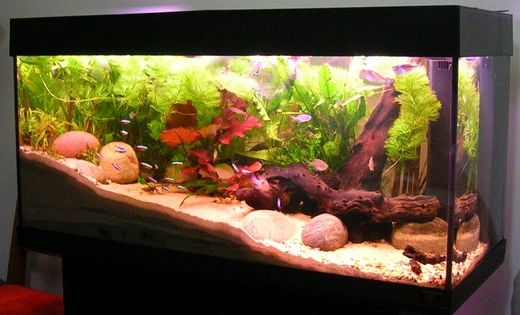
Checker barb
A peaceful schooling fish from Sumatra, popular in community aquariums.

The checker barb (Oliotius oligolepis) is a cyprinid fish native to the creeks, rivers, and lakes of Sumatra, Indonesia, and has also become established in the wild in Colombia. It is the sole known member of its genus. Adult males display red fins with black tips, and the species reaches a maximum total length of 5 centimeters (2.0 inches).
The genus name *Oliotius* combines parts of the species name *oligolepis* and its former genus, *Puntius*. The common name "checker barb"—along with variants like "checkered barb," "chequer barb," and "checkerboard barb"—comes from the black markings on its sides, which resemble a checkerboard pattern.
Taxonomically, this species has sometimes been placed in the genus *Barbus*, but *Barbus oligolepis* Battalgil, 1941 refers to a different fish found only in Turkey. Since Bleeker's *oligolepis* is not classified under *Barbus*, both names are valid.
In its native habitat, the checker barb lives in a tropical climate, preferring water with a pH of 5.5 to 7.5, a hardness of 10.0 dGH, and a temperature range of 64–77 °F (18–25 °C). It is omnivorous, feeding on small worms, crustaceans, insects, and plants. An egg-scattering species, it spawns early in the morning on plants within the male's territory; after spawning, the pair will attempt to eat any eggs they find.
In the aquarium trade, the checker barb is commercially important. It has a mild temperament, making it suitable for community tanks. A schooling fish, it should be kept in groups of at least 6 to 10 individuals. It occupies the middle to lower levels of the aquarium and thrives on a diet of both prepared and live or frozen foods. It is a prolific spawner, well-suited for novice breeders.
Quick Facts
- Genus
- Oliotius
- Species
- oligolepis
Facts from the source article.
Lore & Background
The checker barb derives its common name from the black marks on its side, which resemble those on a checkerboard. Adult males have red fins with black tips. The genus name Oliotius combines a portion of the specific epithet oligolepis and its former genus name Puntius. There is a taxonomic issue: this species has sometimes been placed in the genus Barbus, though Barbus oligolepis Battalgil, 1941 properly refers to a different fish found only in Turkey. Since Bleeker's oligolepis is not placed in Barbus, both names are valid.
Reader's Guide
The checker barb has commercial importance in the aquarium trade. It has a mild temperament and is well suited to a community aquarium. As a schooling fish, it should be kept in groups of no fewer than 6-10. It occupies the medium to lower levels of the aquarium. An ideal diet consists of both prepared and live or frozen foods. It is a prolific spawner that lends itself well to the novice breeder. In the wild, checker barbs natively live in a tropical climate and prefer water with a pH of 5.5 - 7.5, a water hardness of 10.0 dGH, and a temperature range of 64–77 °F (18–25 °C). Their omnivorous diet consists of small worms, crustaceans, insects, and plants. An egg-scattering fish, they spawn early in the morning on plants that are the center of the male's territory. Once spawning is completed, the pair will attempt to eat the eggs they can find.
Did You Know?
- The checker barb is the only known member of its genus, Oliotius.
- It has been established in the wild in Colombia, outside its native Sumatra.
- The common name comes from black marks on its side resembling a checkerboard.
More in Fishkeeping 1-24
Spotted an error? Know more?
Reader corrections go straight into our review queue. Suggest an edit · How this site is sourced