Aquarist
Aquarists manage aquariums, caring for aquatic animals professionally or as hobbyists.

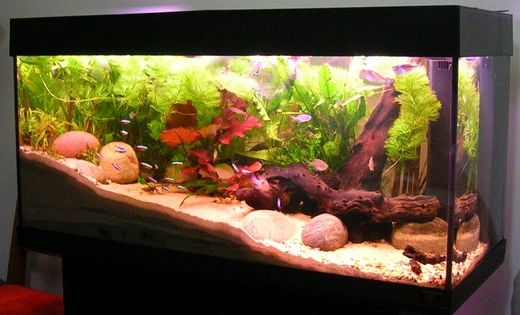
An aquarist is a person who manages aquariums, either professionally or as a hobby. They typically care for aquatic animals, including fish and marine invertebrates, and some may care for aquatic mammals. Aquarists often work at public aquariums, nature reserves, zoos, amusement parks, pet stores, or as commercial fish breeders or manufacturers; some are hobbyists known as home aquarists.
- Earliest known fishkeeping
- 2500 BCE (Sumerians kept fish in ponds)
- First aquarium invented by
- Jeanne Villepreux-Power (1830, according to Richard Owen)
- First public aquarium opened
- 1853 (fish house at London Zoo)
- Notable early aquarium book
- 1854, The Aquarium by Philip Henry Gosse
- First japanese fish breeder
- Sato Sanzaemon from Koriyama (around 1700s)
Lore & Background
People have cared for aquatic animals since ancient times. The Sumerians kept fish in ponds as early as 2500 BCE. Pliny the Elder wrote of fish kept as oracles, and ancient Agrigent had fish ponds. By the 10th century, goldfish were popular pets in China. In 1369, Emperor Hung Wu established a porcelain factory for large fish tubs. Around 1500, goldfish reached Sakai, Japan, and two hundred years later Sato Sanzaemon became the first Japanese fish breeder. Goldfish came to Europe around 1611, likely first in Portugal, and by the 18th century they were common pets. Richard Bradley and John Dayell experimented with keeping marine life, as scientists tried to determine if marine life could survive in captivity.
In the 19th century, railroad transportation enabled more people to visit coasts, and scientists analyzed water chemistry and temperature. Ocean exploration increased with telegraph cables, diving bells, submarines, and dredgers. In 1830, Jeanne Villepreux-Power conducted research on argonauts and, according to Richard Owen, invented the first aquarium. Nathaniel Bagshaw Ward discovered plants could grow in airtight glass. Felix Dujardin owned a saltwater aquarium around 1838. Anna Thyne moved stone corals to her London home in 1846 and kept them alive for three years with water changes. Robert Warrington created a 13-gallon goldfish tank in 1849. Philip Henry Gosse's 1854 book The Aquarium inspired middle-class families. William Alford Lloyd sold aquariums and offered maintenance services in London. Emil Adolf Rossmässler wrote about freshwater aquariums in 1856. Public aquariums opened in London (1853), Vienna (1860), New York (1896), and Detroit (1904). Early aquariums contributed to marine degradation, but conservation efforts began in the 20th century, such as Charles Haskins Townsend's work with Galápagos tortoises. Contemporary aquariums are often involved in conservation and field research.
Reader's Guide
The role of the aquarist has evolved from ancient fish pond keepers to modern professionals managing complex life-support systems. The article traces fishkeeping back to the Sumerians in 2500 BCE and notes the spread of goldfish across China, Japan, and Europe. The 19th century saw key experiments by Villepreux-Power, Ward, Dujardin, Thyne, and Warrington, leading to the first public aquarium in 1853. Gosse's 1854 book sparked an 'aquarium mania' that faded but gave way to permanent public aquariums in major cities. Early aquariums showed little concern for conservation, but the 20th century brought efforts like Townsend's tortoise conservation. Today, aquarists work in diverse settings—public aquariums, zoos, pet stores, and as hobbyists—with responsibilities including tank maintenance, feeding, health monitoring, water quality management, and exhibit building. The article notes that in 2019, the United States experienced a new wave of aquarium enthusiasm, though public aquariums often face financial difficulty. The aquarist's significance lies in bridging human curiosity about aquatic life with the practical care and conservation of aquatic animals.
Did You Know?
- Jeanne Villepreux-Power is credited by Richard Owen with inventing the first aquarium in 1830.
- Anna Thyne kept stone corals alive for three years in her London home using water changes.
Ancient Roots: Fish as Sustenance, Sacred Symbol, and Companion
Long before the modern pet store or the carefully cycled tank, humans were already keeping fish close. The Sumerians, roughly 2500 BCE, held wild-caught specimens in ponds as a practical step before the kitchen. In Egypt, artistic depictions reveal sacred fish of Oxyrhynchus housed in rectangular temple pools, suggesting a spiritual dimension to captivity. Across Asia, rice paddies were deliberately stocked with edible catfish and cyprinids, and over two millennia of selective breeding in Japan and China transformed common carp into the ornamental koi and fancy goldfish we recognize today. By the Song dynasty, Chinese keepers had moved goldfish indoors into large ceramic vessels purely for visual pleasure. Medieval European estates and monasteries maintained carp pools as a practical alternative to meat during religious fasts. In Rome, the wealthy kept lampreys in saltwater basins; one patron reportedly paid eight thousand sesterces for a single prized mullet, and Cicero recorded an advocate who wept openly when a favored specimen perished. These scattered threads show that the impulse to keep fish—whether for sustenance, devotion, or delight—runs deep through human history.
From Guesswork to Science: The Refinement of Aquatic Care
For most of its ancient history, keeping fish alive indoors was largely a matter of trial, error, and luck. Early pond-keepers and temple custodians had no real grasp of the environmental conditions their charges needed to survive, let alone to thrive. The turning point came gradually as understanding of aquatic biology deepened. Keepers began designing tanks tailored to specific species rather than dumping everything into one generic pool. Aquatic plants were incorporated deliberately, not as decoration but as functional components that helped balance the ecosystem and mimic natural habitats. In the nineteenth century, the French breeder Pierre Carbonnier pushed the frontier further. He opened one of the earliest public aquaria in Paris in 1850 and, in 1869, successfully bred the first imported Paradise fish (Macropods) in Europe. His work in acclimating exotic freshwater species to French conditions earned him the Gold Medal of the Imperial French Acclimatization Society in 1875. Carbonnier's achievements marked a clear shift: fishkeeping was no longer just about holding water and hoping, but about understanding the biology that made life in a tank possible.
Three Worlds of Water: The Disciplines of the Hobby
The hobby of fishkeeping divides naturally into three branches, each defined by the salinity of the water its inhabitants call home. Freshwater keeping is by far the most accessible and widespread; even the smallest neighborhood pet shop will stock goldfish, guppies, and angelfish. Most freshwater setups are community tanks mixing several compatible species, though dedicated breeders maintain single-species aquaria for livebearers like mollies and guppies, as well as cichlids, catfish, characins, cyprinids, and killifish. Marine keeping demands a steeper learning curve and a larger budget, since saltwater livestock is pricier and the parameters are stricter. This branch tends to draw in more seasoned hobbyists who are attracted to the vivid colors and sculptural forms of corals and reef fish. Temperate-zone marine species pose an extra challenge because they do not flourish at room temperature, requiring a dedicated cool room or a mechanical chiller. Brackish water sits between the other two, demanding a salinity that is neither fully fresh nor fully salt. Fish from mangroves and estuaries simply cannot survive in permanent freshwater, yet brackish setups remain the least common of the three disciplines.
The Living Canvas: Aquascaping, Ponds, and Reef Building
Beyond simply keeping fish alive, many aquarists treat their tanks as living artworks. In freshwater aquascaping, the emphasis shifts toward aquatic plants as much as the fish themselves. The so-called Dutch aquaria, named for the European keepers who first designed them, feature dense arrangements of contrasting stem plants that create layered, garden-like compositions. In recent decades, the Japanese aquarist Takashi Amano emerged as one of the most active advocates of the heavily planted aquarium. A photographer, he shared his vision through striking images of his own complex tanks. In 1982 he founded Aqua Design Amano to sell aquarium products featuring excellent quality and design, extending his aesthetic philosophy to fellow hobbyists. On a larger scale, garden ponds echo the principles of freshwater aquaria while being exposed to ambient weather; tropical species can be kept in warm climates, while goldfish, koi, and orfe suit temperate zones. In the marine world, experienced keepers build reef tanks around large quantities of living rock—porous calcareous stone encrusted with coralline algae, sponges, worms, and other small organisms—then add larger corals, shrimps, crabs, echinoderms, mollusks, and a variety of small fish once the aquarium has matured.
Frequently Asked Questions
Who is Aquarist?
An Aquarist is any individual who tends to aquariums and the aquatic life within them, whether as a paid professional or a dedicated hobbyist. Their charge typically includes fish, marine invertebrates, and in some cases even aquatic mammals.
What are Aquarist's powers or role?
An Aquarist's domain spans public aquariums, nature reserves, zoos, amusement parks, pet shops, and commercial breeding operations. At home, a hobbyist Aquarist manages a personal tank with the same level of care and responsibility.
When does Aquarist's story begin?
The earliest known chapter dates to roughly 2500 BCE, when Sumerians kept fish in ponds. The modern era of the role is often traced to Jeanne Villepreux-Power, who in 1830 built what Richard Owen credited as the first true aquarium.
Why is Aquarist important to the fishkeeping canon?
Aquarists turned a millennia-old practice into a global science and art, bridging the gap between ancient pond-keeping and today's sophisticated marine and freshwater systems. Their work at institutions like the 1853 London Zoo fish house and through publications such as Philip Henry Gosse's 1854 volume shaped public understanding of aquatic life.
More in Fishkeeping 1-24
Spotted an error? Know more?
Reader corrections go straight into our review queue. Suggest an edit · How this site is sourced