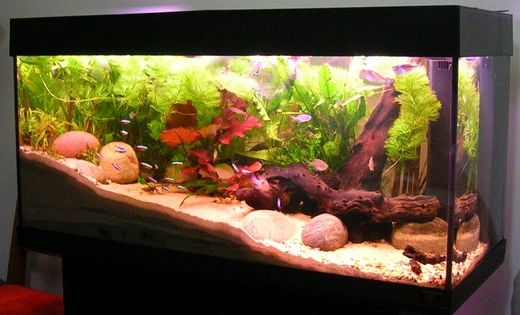
Takashi Amano
Japanese aquarist who pioneered the Nature Aquarium style.

Takashi Amano was a Japanese professional track cyclist, photographer, designer, and aquarist who founded Aqua Design Amano (ADA), a company specializing in aquarium design and production. He is notable for pioneering the 'Nature Aquarium' style, which integrates Japanese gardening concepts such as Wabi-sabi and Zen rock arrangements into planted freshwater aquariums, and for introducing the Amano shrimp (Caridina multidentata) to the hobby as an algae-control method.
Quick Facts
- Birth Date
- 1954-07-18
- Birth Place
- Maki, Nishikanbara, Niigata, Japan
- Death Date
- 2015-08-04
- Death Place
- Niigata, Japan
- Known For
- Photographer, aquarist
- Awards
- Fuji Film Nature Photo Contest, Grand Prix, 1992
Facts from the source article.
Lore & Background
Takashi Amano began his career as a professional track cyclist before turning to photography and aquascaping. Starting in 1975, he traveled to tropical rainforests in the Amazon, Borneo, and West Africa, as well as forests in Japan, capturing 'untouched nature' with large-format cameras using extra-large films up to 8 × 20 inches. His photographic works were featured internationally at exhibitions and publications, and he advocated for tree planting programs to support environmental conservation.
In 1982, Amano founded Aqua Design Amano Co., Ltd., which provided aquatic plant-growing equipment. He developed the 'Nature Aquarium' concept, using plants such as Glossostigma elatinoides and Riccia fluitans, and incorporating Japanese gardening principles like Wabi-sabi and Zen rock arrangements. His photo books, Glass no Naka no Daishisen (1992) and Mizu-Shizen eno kaiki, were translated into seven languages.
Amano discovered that a freshwater shrimp species, later named the Amano shrimp (Caridina multidentata), could eat large quantities of algae. He ordered several thousand from a local distributor, and the shrimp became widely used in freshwater planted aquariums. He also authored the three-book series Nature Aquarium World (1994) and Aquarium Plant Paradise (1997), and wrote the column 'Nature Aquarium' for Practical Fishkeeping and Tropical Fish Hobbyist.
Reader's Guide
Takashi Amano's significance in fishkeeping stems from his creation of the Nature Aquarium style, which elevated planted aquariums from simple fish tanks to artistic landscapes inspired by Japanese gardening. His use of plants like Glossostigma elatinoides and Riccia fluitans, combined with concepts such as Wabi-sabi and Zen rock arrangements, set a new standard for aquascaping. The introduction of the Amano shrimp (Caridina multidentata) provided a natural, effective method for algae control, making it a staple in planted tanks worldwide.
His company, Aqua Design Amano (ADA), produced a line of aquarium products and equipment, further influencing the hobby. His publications, including Nature Aquarium World and Aquarium Plant Paradise, spread his techniques globally. The 'Forests Underwater' exhibit at the Lisbon Oceanarium, a 40-meter-long, 160,000-liter freshwater aquarium housing over 10,000 fish of 40 species, demonstrated the scale and impact of his vision. Although initially intended as a two-year temporary exhibition, it remained open for 11 years, closing in 2026.
Amano's legacy also includes his photographic work, which was displayed at the 34th G8 Hokkaido Tōyako Summit, and his advocacy for environmental conservation through tree planting. His death from pneumonia in 2015 at age 61 marked the end of a career that blended art, nature, and fishkeeping.
Did You Know?
- Takashi Amano was also a professional track cyclist before becoming an aquarist and photographer.
- The Amano shrimp (Caridina multidentata) was named after him after he discovered its algae-eating ability.
- His 'Forests Underwater' exhibit at the Lisbon Oceanarium was 40 meters long and held 160,000 liters of water.
- Two of his landscape photos were displayed at the 34th G8 Hokkaido Tōyako Summit.
A Life Spanning Multiple Disciplines
Takashi Amano (18 July 1954 – 4 August 2015) was a remarkably versatile figure whose work spanned track cycling, photography, design, and aquaristics. Though he competed as a professional cyclist in Japan, it was his creative pursuits that left the deepest mark. In 1982 he established Aqua Design Amano Co., Ltd., a company dedicated to equipment for cultivating aquatic plants, and under the ADA brand he went on to develop a full line of aquarium products. His aesthetic philosophy drew heavily on Japanese gardening traditions, weaving principles of Wabi-sabi and Zen rock arrangement into every planted layout. Species such as Glossostigma elatinoides and Riccia fluitans became signature elements in his compositions. His influence extended well beyond the tank: the three-volume series Nature Aquarium World (1994) and the later Aquarium Plant Paradise (1997) brought his vision to a global readership, while his earlier photo books, first published in 1992, were eventually rendered into seven languages. A recurring column titled "Nature Aquarium" ran in the monthly magazines Practical Fishkeeping and Tropical Fish Hobbyist, keeping his ideas in front of hobbyists worldwide. He passed away of pneumonia in 2015 at the age of sixty-one.
The Shrimp That Bears His Name
In the 1980s, while working to keep his planted aquariums free of unsightly algae, Amano noticed that a particular freshwater shrimp could consume extraordinary quantities of the green film that plagued hobbyists. He ordered several thousand specimens from a local distributor and began introducing them into the aquatic hobby as a practical, biological solution to algae control. The species, Caridina multidentata (formerly classified as Caridina japonica), was subsequently named in his honour—the "Amano shrimp" or "Yamato shrimp" became a household name among aquarists. What began as a personal tool for maintaining his meticulously arranged Nature Aquariums quickly became an industry staple. Today the Amano shrimp is one of the most widely stocked invertebrates in freshwater planted tanks around the world, a testament to how a single observation about a small crustacean's feeding habits could reshape an entire hobby. The naming of a species after a living individual is a rare distinction, and it underscores the depth of Amano's contribution to the practical side of aquascaping beyond his artistic compositions.
Chasing Untouched Nature Through the Lens
Beginning in 1975, Amano embarked on photographic expeditions that carried him deep into the tropical rainforests of the Amazon, Borneo, and West Africa, as well as the native forests of Japan. Using large-format cameras and extra-large film sheets measuring up to 8 by 20 inches, he captured what he described as "untouched nature" in a way that demanded both physical endurance and technical precision. His resulting body of work was shown in international exhibitions and published in major outlets, earning him membership in the Japan Professional Photographers Society, the Japan Advertising Photographers' Association, the International Environment Photographers Association, and the Society of Scientific Photography. Beyond the darkroom, Amano became an outspoken advocate for environmental conservation, delivering lectures on his field experiences and championing tree-planting programmes as a means of preserving the landscapes he documented. His work reached even the highest diplomatic stages: two of his cedar-forest photographs from Sado Island, shot on that same 8-by-20-inch format, were displayed on 4-by-1.5-metre panels at the 34th G8 Summit Working Lunch in Hokkaido Tōyako.
A Living Legacy in Glass and Water
Perhaps no single project illustrates Amano's lasting influence more vividly than "Forests Underwater," the tropical freshwater installation at the Lisbon Oceanarium. Stretching 40 metres in length and holding 160,000 litres of water, the exhibit housed more than 10,000 individual fish representing 40 different species within a diverse underwater landscape that embodied everything Amano stood for. It opened on 21 April 2015, just weeks before his death of pneumonia on 4 August of that same year. Originally conceived as a temporary exhibition with a two-year lifespan, "Forests Underwater" proved so popular and enduring that it remained open for eleven full years, finally closing on 30 September 2026. The installation stands as a public monument to his vision, accessible to millions of visitors who may never have filled a single planted tank. Combined with his ADA product line, his translated publications, and the Amano shrimp now found in hobbyists' tanks across the globe, Amano's footprint in the aquatic world extends far beyond any single lifetime.
Frequently Asked Questions
Who is Takashi Amano?
Takashi Amano (1954–2015) was a Japanese aquarist, photographer, and designer who became the defining creative force behind the planted-freshwater aquarium movement. He is best remembered for codifying the Nature Aquarium aesthetic and for founding a company that still shapes the hobby's hardware and design culture.
What is the Nature Aquarium style?
The Nature Aquarium is an aquascape philosophy Amano built around Japanese landscape-gardening principles, especially wabi-sabi restraint and Zen-inspired rock placement. Instead of treating a tank as a mere fish container, each layout is composed like a miniature natural scene with deliberate seasonal or thematic intent.
What is the Amano shrimp and why is it named after him?
The Amano shrimp (Caridina multidentata, formerly Caridina japonica) is a small freshwater crustacean that Amano championed as a practical, biological tool for keeping algae in check within planted tanks. The species was later renamed in his honor to acknowledge the role he played in introducing it to the wider hobby.
When did Takashi Amano die and what was the cause?
Takashi Amano passed away on 4 August 2015 at the age of 61, with pneumonia cited as the cause of death. His loss was felt deeply across the global aquascaping community, where many kept-aquarists credited him as a mentor and creative touchstone.
What company did Takashi Amano found?
In 1982 Amano established Aqua Design Amano Co., Ltd., widely known by the initials ADA, a Japanese firm producing specialized substrates, lighting, tools, and other gear tailored to planted aquariums. The brand has remained one of the most recognized names in aquascaping equipment worldwide.
More in Fishkeeping 1-24
Spotted an error? Know more?
Reader corrections go straight into our review queue. Suggest an edit · How this site is sourced