Biotope
A uniform environmental area supporting a specific biological community.

A biotope is an area of uniform environmental conditions providing a living place for a specific assemblage of plants and animals. The term is almost synonymous with habitat, though in some countries habitat refers to a population while biotope refers to a biological community. It is an English loanword from the German Biotop, derived from Greek bios ('life') and topos ('place'). The concept was first advocated by Ernst Haeckel in his 1866 book General Morphology, which also defines the term 'ecology'. Since the 1970s, the term has gained attention in Europe, especially Germany, for preservation, regeneration, and creation of natural environmental settings.
- First advocated by
- Ernst Haeckel (1834–1919)
- Year of first advocacy
- 1866
- Year of term coined by f dahl
- 1908
- Origin language
- German (Biotop), from Greek bios and topos
- Federal law year germany
- 1976
- Law name
- Bundesnaturschutzgesetz (BNUM)
Lore & Background
The concept of a biotope was first advocated by Ernst Haeckel, a German zoologist, in his 1866 book General Morphology, which defines the term 'ecology'. Haeckel stressed the importance of habitat as a prerequisite for an organism's existence and explained that within an ecosystem, biota is shaped by environmental factors and interactions among living things. Following this, F. Dahl, a professor at the Berlin Zoological Museum, referred to this ecological system as a 'biotope' in 1908.
Characteristics of biotopes include being microscale—such as a back garden, potted plant, terrarium, or fish tank—rather than large-scale phenomena. Biotopes should generally not be isolated but connected in networks, with corridors allowing animals and plants to move between larger green tracts like forests or parks. The term does not apply to biosphere reserves separate from humans; instead, a biotope is an active part of human daily life, such as an ornamental flower bed. Artificial materials are widely used in biotope settings, and there is no binomial opposition between natural and artificial.
In Germany, authorities take the initiative in conserving biotopes, maintaining consistency with urban or rural planning. Since 1976, the federal nature protection law (Bundesnaturschutzgesetz) requires protection of wild animals, plants, and their communities, including their biotopes. Many German states are obliged by law to produce a landscape plan (Landschaftsplan) as part of urban planning, describing the present environmental state and proposed remedies.
Reader's Guide
The term 'biotope' has significance beyond technical ecology, being used in administrative and civic activities since the 1970s, particularly in Germany, for preservation, regeneration, and creation of natural settings. Activities include making roof gardens, reconstructing rivers, leaving bushes on farms, building nature parks along motorways, making school gardens or ponds, and considering ecology in private gardens. Various sectors—architecture, civil engineering, urban planning, traffic, agriculture, river engineering, limnology, biology, education, landscape gardening, and domestic gardening—participate in these efforts.
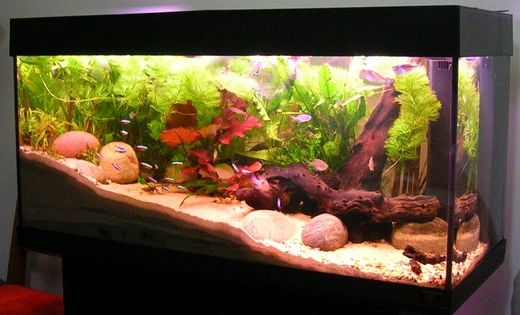
In aquarium hobbyism, 'biotope' describes a setup simulating a natural habitat of a specific fish assemblage, replicating water parameters, plants, substrate, water type, lighting, and including native fish that live together in nature. The term also applies to manmade closed ecological systems, such as the Biosphere 2 project and the Eden Project, as well as homemade systems like jarrariums.
Biotope preservation in cities emphasizes recreation and relaxation for citizens and improving the urban environment. The core idea is that civic life is improved by protecting nature and preserving the landscape, with local history and culture as background. The legal basis in Germany, established in 1976, mandates protection of biotopes and requires landscape plans, which was uncommon at that time.
Did You Know?
- The term 'biotope' is an English loanword from the German Biotop, which came from Greek bios ('life') and topos ('place').
- Ernst Haeckel first advocated the concept of a biotope in his 1866 book General Morphology, which also defines the term 'ecology'.
- Since 1976, German federal law (Bundesnaturschutzgesetz) requires protection of biotopes and their living conditions.
- In aquarium hobbyism, 'South American' is not itself a biotope, as South America contains thousands of distinct biotopes.
More in Fishkeeping 1-24
Spotted an error? Know more?
Reader corrections go straight into our review queue. Suggest an edit · How this site is sourced