Cockayne syndrome
Rare fatal disorder with premature aging and DNA repair defects.

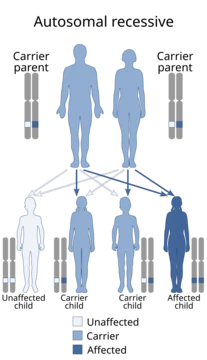
Cockayne syndrome, also known as Neill-Dingwall syndrome, is a rare, fatal neurodegenerative condition passed down in an autosomal recessive pattern. It causes growth failure, nervous system problems, extreme sensitivity to sunlight, eye issues, and premature aging. Doctors diagnose it based on failure to thrive and neurological decline, with other common signs including hearing loss, eye abnormalities, cavities, and photosensitivity. Internal organs can also be affected. The disease belongs to a group of disorders called leukodystrophies, which involve the breakdown of the brain's white matter. There are two main types: type A (CSA), caused by mutations in the ERCC8 gene, and type B (CSB), caused by mutations in the ERCC6 gene.
The root problem is a defect in the body's ability to repair DNA. Unlike other DNA repair disorders, people with Cockayne syndrome do not have a higher risk of cancer or infections. It is a rare but devastating illness that usually leads to death in the first or second decade of life. While the specific gene mutations are known, exactly how they cause such widespread effects and how they relate to DNA repair is still not well understood.
The syndrome is named after English physician Edward Alfred Cockayne, who first described it in 1936 and again in 1946. The alternative name, Neill-Dingwall syndrome, comes from Mary M. Dingwall and Catherine A. Neill, who described two brothers with the condition and confirmed it was the same disease Cockayne had identified. They also added to the known signs by discovering brain calcifications and compared the syndrome to Hutchinson–Gilford progeria syndrome (then called progeria) because both involve accelerated aging.
**Types**
CS Type I, the classic form, starts with normal fetal growth, but abnormalities appear within the first two years of life. Vision and hearing gradually decline, and the central and peripheral nervous systems progressively degenerate, leading to death in the first or second decade from severe neurological damage. Cortical atrophy is less severe in this type.
CS Type II is present at birth and is much more severe. There is very little neurological development after birth, and death usually occurs by age seven. This type is also called cerebro-oculo-facio-skeletal (COFS) syndrome or Pena-Shokeir syndrome type II. The name COFS reflects its effects on the brain, eyes, fac
- field
- Medical genetics, neurology
- known_for
- Describing a rare neurodegenerative disorder with premature aging and DNA repair defects
- named_after
- Edward Alfred Cockayne
- also_called
- Neill-Dingwall syndrome
- types
- Type I (classic), Type II (congenital, severe), Type III (late-onset, milder), XP-CS (with xeroderma pigmentosum)
Lore & Background
Cockayne syndrome was first described by English physician Edward Alfred Cockayne in 1936 and re-described in 1946. Later, scientists Mary M. Dingwall and Catherine A. Neill described two brothers with the condition and asserted it was the same disease Cockayne had described. They contributed to the understanding of the disease by discovering calcifications in the brain and compared it to Hutchinson–Gilford progeria syndrome due to accelerated aging. The syndrome is classified into types based on severity and age of onset: Type I (classic form) with onset in the first two years; Type II (congenital) with very little neurological development after birth and death usually by age seven; Type III (late-onset) milder and allowing survival into adulthood; and XP-CS when combined with xeroderma pigmentosum.
Reader's Guide
Cockayne syndrome is significant as a model for understanding the relationship between DNA repair, transcription, and aging. The disorder arises from mutations in the ERCC8 (CSA) or ERCC6 (CSB) genes, which impair transcription-coupled nucleotide excision repair (TC-NER). This leads to accumulation of oxidative damage in active genes, causing progressive neurological degeneration, growth failure, and premature aging. Unlike other DNA repair disorders, patients are not predisposed to cancer or infection. The syndrome's features—microcephaly, dwarfism, sunken eyes, joint contractures, kyphosis, loss of subcutaneous fat, and photosensitivity—reflect widespread cellular dysfunction. The premature aging features are likely due to deficiencies in DNA repair, supporting the DNA damage theory of aging. The condition is rare but destructive, usually resulting in death within the first or second decade of life.
Did You Know?
- Cockayne syndrome is also called Neill-Dingwall syndrome, named after Mary M. Dingwall and Catherine A. Neill, who described two brothers with the disease and discovered brain calcifications.
- There are two primary genetic types: type A from mutations in the ERCC8 gene and type B from mutations in the ERCC6 gene, with ERCC6 mutations accounting for about 70% of cases.
- Unlike other DNA repair defects, patients with Cockayne syndrome are not predisposed to cancer or infection.
- The syndrome is associated with leukodystrophies, conditions characterized by degradation of neurological white matter.
More in Diseases named after discoverers 1-24
Spotted an error? Know more?
This is a living reference — every entry is fact-audited, and reader corrections feed straight into our audit queue. Suggest an edit · See this site's audit record