Albright's hereditary osteodystrophy
A disorder of hormone resistance with distinctive skeletal features.

Sydney S. Gellis and Murray Feingold · Public domain
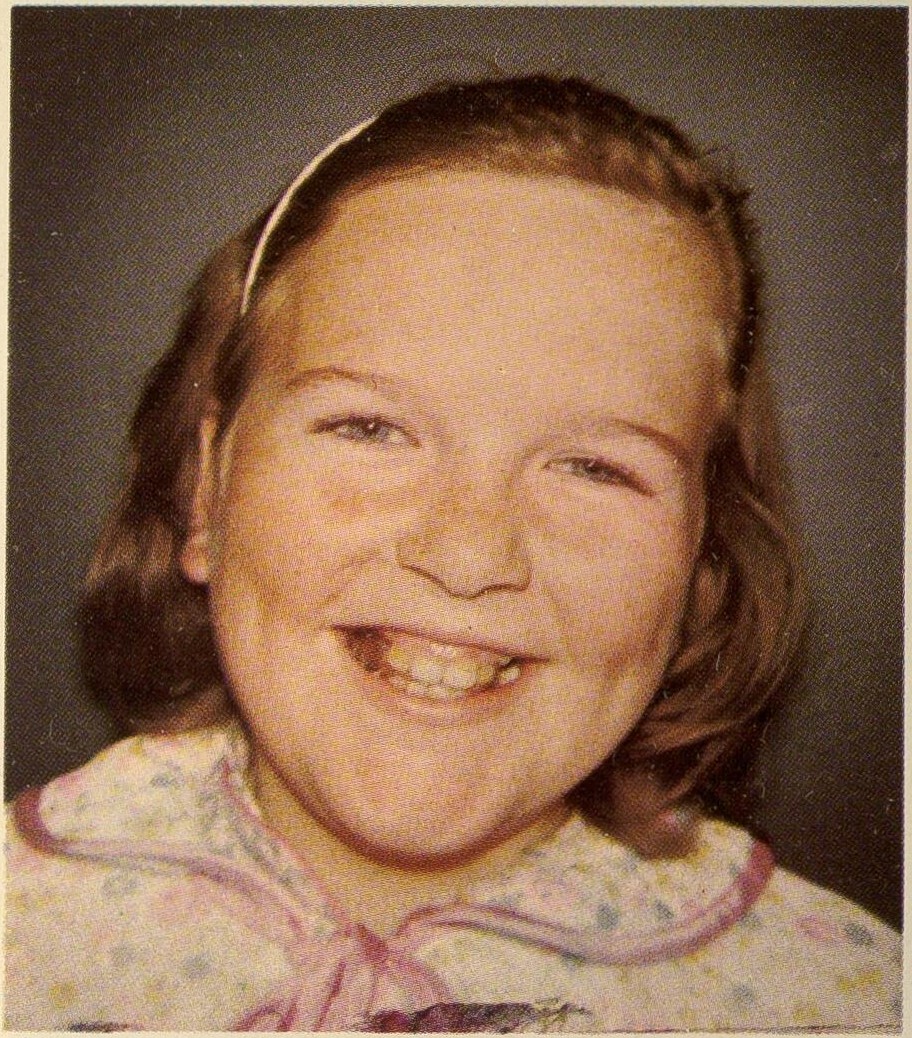
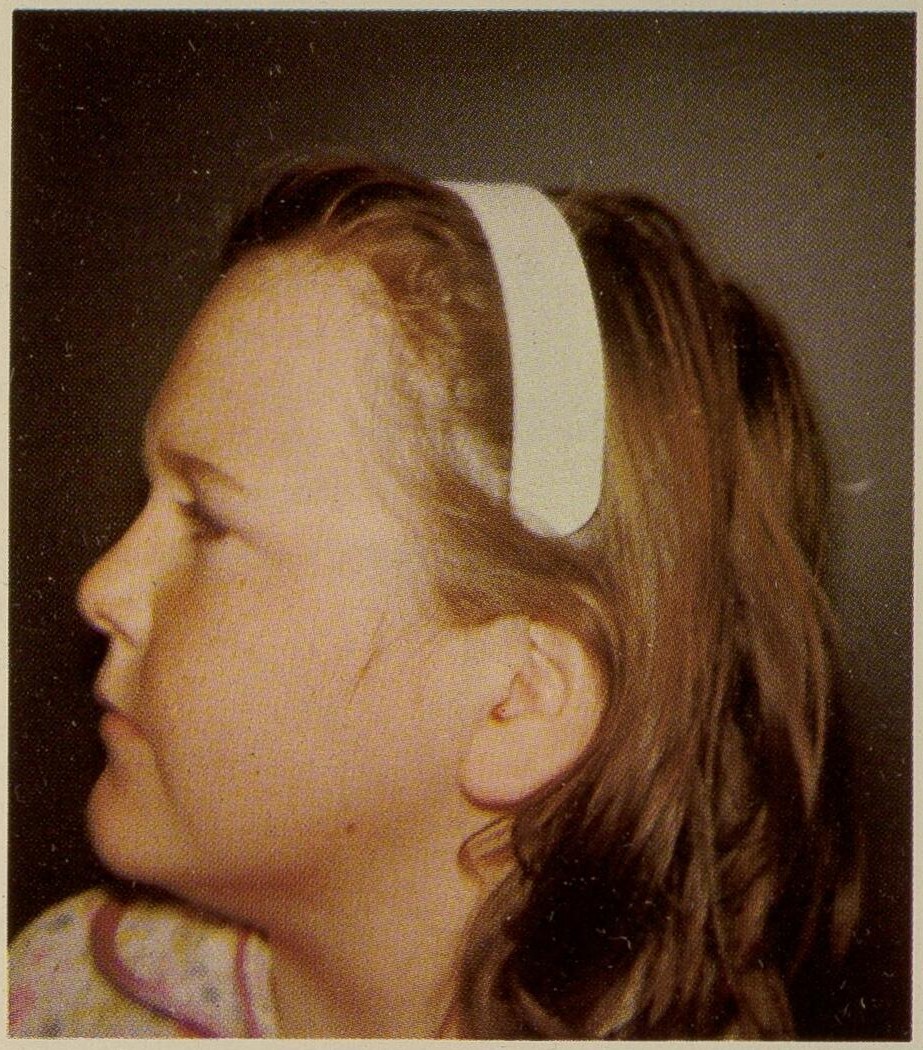
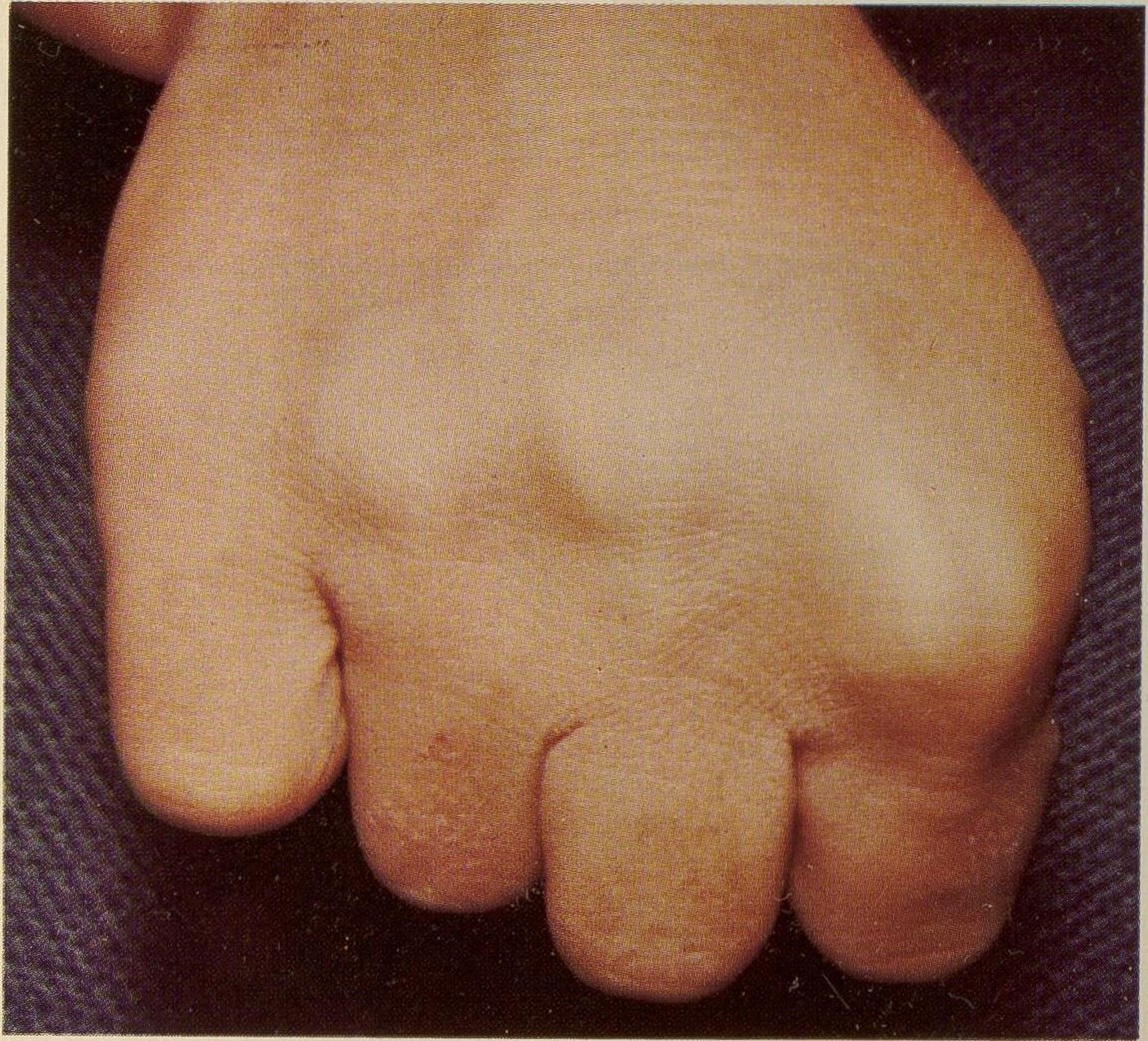
Albright's hereditary osteodystrophy is a type of bone disease and the physical presentation of pseudohypoparathyroidism type 1A, where the body fails to respond to parathyroid hormone. People with this condition typically have a short stature, a rounded face, and shortened fourth and fifth metacarpals. Mild intellectual disability is common. Other features include underdeveloped sex glands, short fingers and toes, calcium deposits in the brain's choroid plexus, thin tooth enamel, full cheeks, and muscle spasms from low calcium.
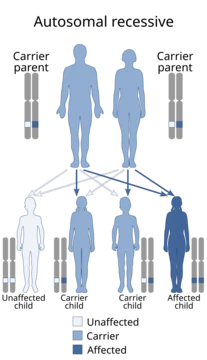
The condition follows an autosomal dominant inheritance pattern and involves genetic imprinting. It is caused by a deficiency in the Gs alpha subunit, which disrupts signaling from certain hormones. This signaling problem occurs because renal tubule cells only express the maternal version of the relevant gene.
Diagnosis is based on physical signs, blood tests for calcium, phosphorus, and parathyroid hormone levels, and urine tests for cyclic AMP and phosphorus. Treatment focuses on keeping calcium, phosphorus, and vitamin D levels normal, using phosphate binders and calcium and vitamin D supplements as needed.
The disorder was named after Fuller Albright, who described it in 1942. He also called it "Sebright bantam syndrome" after a chicken breed with a similar hormone resistance. Less commonly, it is referred to as Martin-Albright syndrome, after John Martin, though that term actually refers to a different condition: pseudohypoparathyroidism with hypogonadism and brachydactyly.
- Named after
- Fuller Albright
- Year characterized
- 1942
- Inheritance
- Autosomal dominant
- Associated deficiency
- Gs alpha subunit deficiency
- Key feature
- Resistance to parathyroid hormone
- Alternative name
- Sebright bantam syndrome
Lore & Background
The disorder bears the name of Fuller Albright, who characterized it in 1942. He was also responsible for naming it 'Sebright bantam syndrome,' after the Sebright bantam chicken, which demonstrates an analogous hormone insensitivity. Much less commonly, the term Martin-Albright syndrome is used, but it refers to John Martin, not Eric Martin, and is actually a different condition: pseudohypoparathyroidism with hypogonadism and brachydactyly.
Reader's Guide
Albright's hereditary osteodystrophy is significant as a classic example of hormone resistance and genetic imprinting. Its mechanism involves a decrease in Gs signaling in hormones related to signal transduction, with renal tubule cells expressing only maternal alleles. Diagnosis relies on clinical features, serum calcium, phosphorus, PTH levels, and urine tests for cAMP and phosphorus. Treatment focuses on maintaining normal levels of calcium, phosphorus, and vitamin D using phosphate binders and supplements. The condition highlights the interplay between genetics and endocrine function, and its naming after Fuller Albright underscores his contributions to endocrinology.
Did You Know?
- The disorder is associated with genetic imprinting and inherited in an autosomal dominant pattern.
- It is characterized by hypogonadism, brachydactyly syndrome, and choroid plexus calcification.
- Fuller Albright named it 'Sebright bantam syndrome' after a chicken breed with similar hormone insensitivity.
- The condition involves a Gs alpha subunit deficiency.
Clinical Presentation & Physical Features
Albright's hereditary osteodystrophy presents with a distinctive constellation of physical and metabolic features that together paint a recognizable clinical picture. Affected individuals typically display short stature and a characteristically rounded facial appearance, often with full cheeks. The hands reveal shortened fourth and fifth metacarpals—a hallmark that sets the condition apart from other skeletal disorders. Beyond the skeletal and facial traits, the syndrome carries a broader metabolic and developmental footprint: hypogonadism, hypocalcemic tetany, and hypoplasia of dental enamel are all documented manifestations. Choroid plexus calcification adds a neurological dimension to the picture, while mild intellectual limitation is frequently observed, though it is not universal. The condition is formally classified as the phenotype of pseudohypoparathyroidism type 1A, a designation that underscores its core problem—the body's inability to respond to parathyroid hormone. This end-organ resistance to PTH is what drives the calcium and phosphorus derangements seen in affected patients, linking the visible physical traits to the underlying hormonal dysfunction.
Genetics & Molecular Mechanism
At the molecular level, Albright's hereditary osteodystrophy is rooted in a deficiency of the Gs alpha subunit, a critical component of cellular signal transduction. The condition is thought to follow an autosomal dominant inheritance pattern, yet it is also intimately tied to genetic imprinting—a phenomenon in which gene expression depends on whether the allele was inherited from the mother or the father. This imprinting is particularly evident in renal tubule cells, which express only the maternal allele of the relevant gene, making the condition's expression parent-of-origin-dependent. The practical consequence of Gs alpha subunit deficiency is a blunted signaling cascade: hormones that normally trigger intracellular changes through Gs-mediated pathways fail to elicit their usual effects. In simpler terms, the signal arriving at the cell surface cannot be properly relayed to the cell's interior, so the functional response is diminished or absent. This failure of signal transduction is the mechanistic bridge between the genetic defect and the broad spectrum of clinical features—metabolic, skeletal, and developmental—that define the syndrome.
Diagnosis & Ongoing Management
Confirming a diagnosis of Albright's hereditary osteodystrophy requires a layered approach that integrates clinical observation with targeted laboratory work. Physicians assess the characteristic physical features—short stature, shortened metacarpals, rounded facial features, and associated findings—while simultaneously ordering serum measurements of calcium, phosphorus, and parathyroid hormone levels. Urine analysis for cyclic AMP and phosphorus adds another diagnostic dimension, helping to confirm the end-organ resistance to PTH that defines the condition. Once established, management is fundamentally supportive rather than curative. The therapeutic goal centers on maintaining normal serum levels of calcium, phosphorus, and vitamin D. In practice, this typically involves the use of phosphate binders to control excess phosphorus, alongside supplementary calcium and vitamin D administered as needed to correct deficits. Because the underlying Gs signaling defect cannot be reversed with current therapies, long-term monitoring and dose adjustment remain central to keeping affected individuals metabolically stable and minimizing the risk of complications such as hypocalcemic tetany.
History & Nomenclature
The eponymous name of this condition honors Fuller Albright, who formally characterized the disorder in 1942. In a striking act of cross-species analogy, Albright also proposed the name Sebright bantam syndrome, drawing a parallel to the Sebright bantam chicken, a breed that exhibits a remarkable hormone insensitivity mirroring the human condition. This avian comparison highlighted the broader biological principle of end-organ resistance to peptide hormones, a theme that would later be formalized in the classification of pseudohypoparathyroidism. The less commonly used term Martin-Albright syndrome acknowledges the contributions of Eric Martin, whose earlier observations helped lay groundwork for the syndrome's full description. The condition's placement within the pseudohypoparathyroidism family—specifically as the phenotype of type 1A—reflects decades of progressive understanding, from Albright's initial clinical characterization to the later identification of Gs alpha subunit deficiency and the role of genetic imprinting. The existence of a related entity, pseudopseudohypoparathyroidism, further illustrates the nuanced genetic architecture that continues to refine how clinicians and researchers categorize these overlapping presentations.
Gallery
Frequently Asked Questions
What is Albright's hereditary osteodystrophy?
It is a skeletal and hormonal disorder that represents the physical manifestation of pseudohypoparathyroidism type 1A, in which the body fails to respond properly to parathyroid hormone. The condition is marked by short stature, a rounded face, and shortened bones in the hands and feet.
Who was Albright's hereditary osteodystrophy named after?
The syndrome is named for Fuller Albright, who formally characterized the condition in 1942. It is also occasionally referred to by the alternative name Sebright bantam syndrome.
How is Albright's hereditary osteodystrophy inherited?
It follows an autosomal dominant pattern, so a single altered copy of the responsible gene is sufficient to produce the phenotype. The underlying molecular defect is a deficiency in the Gs alpha subunit, which disrupts normal hormone-receptor signaling.
What are the hallmark physical features of Albright's hereditary osteodystrophy?
Affected individuals typically show short stature, full cheeks, a rounded face, shortened fourth and fifth metacarpals, and underdeveloped sex glands. Other features can include thin tooth enamel, calcium deposits in the choroid plexus of the brain, and muscle spasms driven by low calcium levels.
Why is Albright's hereditary osteodystrophy considered important in endocrinology?
It is a textbook example of end-organ hormone resistance, demonstrating that the defect can reside in the target tissue rather than in the hormone-producing gland itself. Mild intellectual disability is also commonly associated, making it a multisystem condition that bridges skeletal, metabolic, and neurodevelopmental medicine.
More in Diseases named after discoverers 1-24
Spotted an error? Know more?
This is a living reference — every entry is fact-audited, and reader corrections feed straight into our audit queue. Suggest an edit · See this site's audit record