
Addison's disease
Rare endocrine disorder first described by Thomas Addison in 1855.

Alfred Loomis & William Thompson · Public domain
Addison's disease, also known as primary adrenal insufficiency, is a rare long-term endocrine disorder characterized by inadequate production of the steroid hormones cortisol and aldosterone by the adrenal cortex. It was first described in 1855 by Thomas Addison, a graduate of the University of Edinburgh Medical School. The disease is an autoimmune condition in many cases, leading to symptoms such as fatigue, weight loss, skin darkening, and potentially life-threatening adrenal crises.
- field
- Endocrinology
- known_for
- First description of primary adrenal insufficiency
- prevalence
- 9 to 14 per 100,000 people in the developed world
- most_affected
- Middle-aged females
Lore & Background
Thomas Addison, a graduate of the University of Edinburgh Medical School, first described the condition in 1855. The disease arises when the adrenal glands do not produce sufficient cortisol and sometimes aldosterone. It is an autoimmune disease affecting some genetically predisposed people, where the immune system targets the adrenal glands. In many adult cases, the trigger is unclear, though it sometimes follows tuberculosis. Causes can include certain medications, sepsis, and bleeding into both adrenal glands.
Reader's Guide
Addison's disease is significant as a classic example of primary adrenal insufficiency, first identified by Thomas Addison in 1855. It affects about 9 to 14 per 100,000 people in the developed world, most frequently in middle-aged females. The condition is primarily autoimmune, though it can follow tuberculosis or other causes. Without treatment, an adrenal crisis can result in death, but with appropriate therapy—lifelong corticosteroid replacement and monitoring—most people lead a reasonably normal life. The disease highlights the critical role of the adrenal cortex in producing cortisol and aldosterone, and its recognition has advanced understanding of autoimmune endocrine disorders. Comorbid autoimmune conditions are common, including autoimmune thyroid disease, type 1 diabetes, and pernicious anemia. The term 'Addisonian crisis' describes a medical emergency requiring immediate treatment with intravenous fluids and corticosteroids.
Did You Know?
- Addison's disease is named after Thomas Addison, a graduate of the University of Edinburgh Medical School, who first described the condition in 1855.
- An adrenal crisis can be triggered by stress such as injury, surgery, or infection, and without treatment can result in death.
- Most people with Addison's disease develop or have a preexisting autoimmune disease, such as autoimmune thyroid disease (40%) or type 1 diabetes (11%).
- Darkening of the skin in Addison's disease occurs because ACTH and melanocyte-stimulating hormone share the same precursor molecule, pro-opiomelanocortin.
The Slow Unfolding: Signs, Symptoms, and the Adrenal Crisis
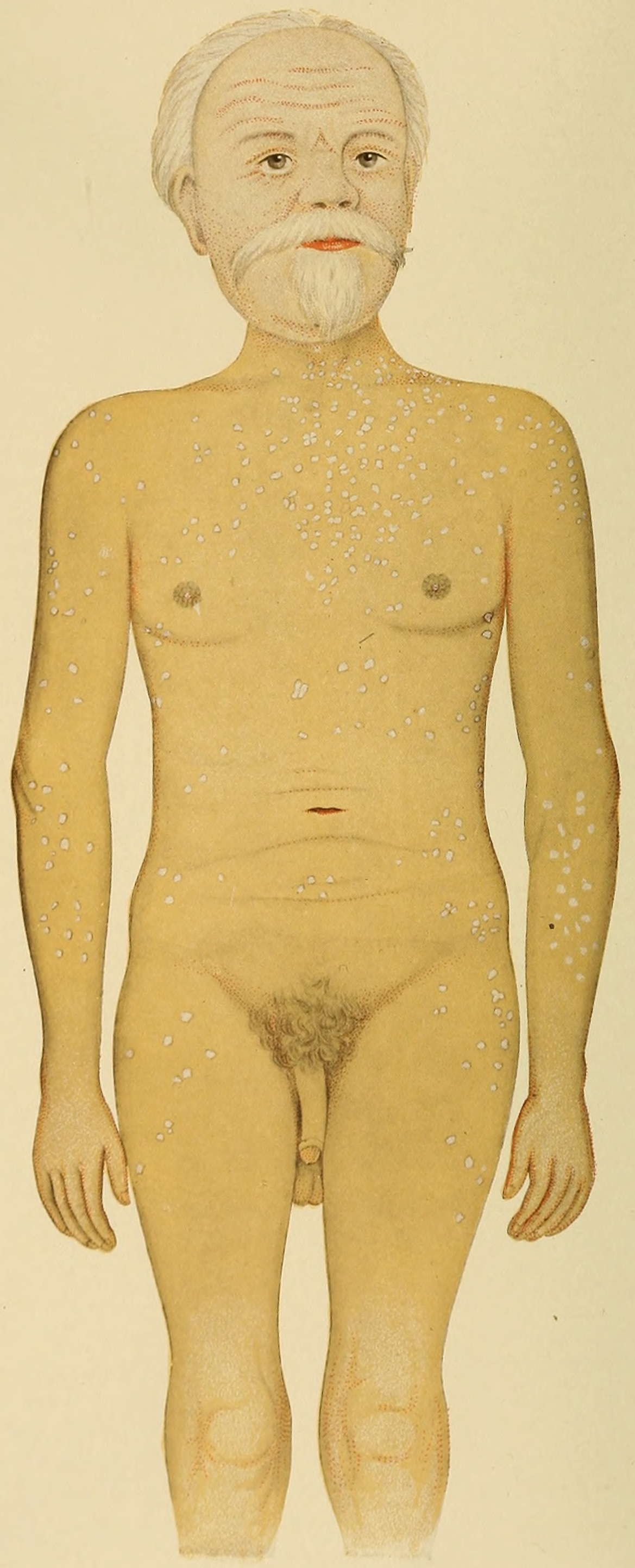
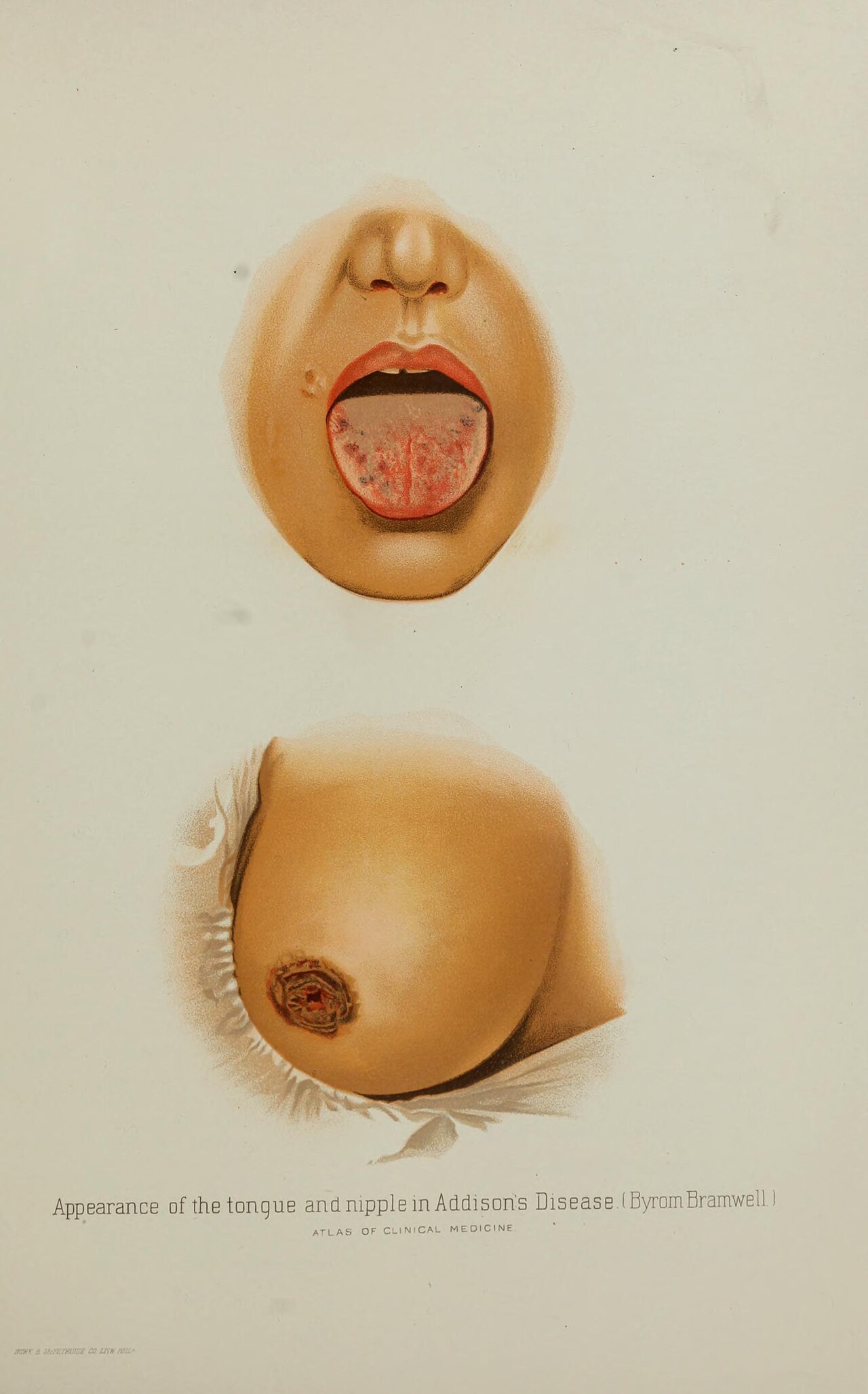
Addison's disease rarely announces itself with a single dramatic event. Instead, symptoms creep in over months, mimicking a host of other conditions and making early recognition difficult. The hallmark complaints stem from the body's shortage of cortisol and aldosterone: persistent fatigue, aching muscles and joints, a shrinking appetite, gradual weight loss, and unusual sensitivity to cold. Gastrointestinal distress—nausea, cramping abdominal pain, and bouts of vomiting—frequently dominates the clinical picture. When aldosterone falls, patients often develop an intense craving for salty foods and experience dizziness upon standing as blood pressure drops. In women, diminished DHEA can bring dry, itchy skin, thinning of armpit and pubic hair, and a noticeable decline in sexual desire. Young children may simply fail to gain weight and suffer repeated infections. A distinctive clue is the darkening of skin creases, nipples, buccal mucosa, and old scars, a consequence of excess ACTH and melanocyte-stimulating hormone sharing the same precursor molecule. Routine bloodwork commonly reveals low sodium alongside elevated potassium and thyroid-stimulating hormone. The most dangerous complication, an adrenal crisis, strikes suddenly with penetrating pain in the legs or abdomen, profuse vomiting and diarrhea, plummeting blood pressure, confusion, convulsions, and loss of consciousness—a medical emergency demanding immediate intervention.
Autoimmune Roots and the Polyendocrine Landscape
At its core, Addison's disease is an autoimmune condition in which the body's own immune system turns against the adrenal glands, gradually destroying the cortex's ability to manufacture cortisol and aldosterone. The condition tends to strike individuals with a genetic predisposition, and in many adult cases the precise trigger that sets the autoimmune attack in motion remains unidentified. Occasionally, it follows a bout of tuberculosis, while other inciting factors include certain medications, sepsis, or hemorrhage into both adrenal glands. The underlying mechanism may involve the gland failing to form properly during development, being biochemically unable to synthesize cortisol, or suffering outright destruction from a disease process. What makes the diagnosis particularly complex is the web of associated autoimmune conditions. Roughly forty percent of affected individuals also carry autoimmune thyroid disease, up to sixteen percent develop premature ovarian failure, eleven percent have type 1 diabetes, ten percent suffer pernicious anemia, six percent develop vitiligo, and two percent are diagnosed with celiac disease. When Addison's co-occurs with mucocutaneous candidiasis or hypoparathyroidism, the combination is classified as autoimmune polyendocrine syndrome type 1; when paired with autoimmune thyroid disease or type 1 diabetes, it is termed type 2.
Lifelong Replacement and Crisis Preparedness
Because the damaged adrenal glands cannot be restored, management centers on replacing the hormones the body can no longer make. Patients take synthetic corticosteroids—most commonly hydrocortisone to cover cortisol needs and fludrocortisone to compensate for aldosterone—typically by mouth, and they must do so for the rest of their lives. Regular follow-up appointments and ongoing monitoring are essential to catch any secondary health problems that may surface over time. A higher-salt diet can be a useful adjunct for some individuals, helping to offset the sodium losses that low aldosterone causes. Crucially, every patient is advised to carry an emergency corticosteroid injection at all times; if symptoms worsen acutely, that injection becomes the first line of defense. In a full-blown crisis, large volumes of intravenous fluids containing dextrose are administered to restore blood pressure and correct dangerously low glucose. With consistent, appropriate treatment, the long-term outlook is generally favorable, and most people manage to lead a reasonably normal life. Without that treatment, however, an adrenal crisis can prove fatal.
A Rare Condition with a Long Pedigree
Addison's disease remains uncommon: in the developed world, roughly nine to fourteen individuals per hundred thousand carry the diagnosis. It shows a clear demographic preference, appearing most frequently among middle-aged women, though it can affect anyone regardless of age or sex. The condition bears the name of Thomas Addison, a graduate of the University of Edinburgh Medical School, who first described the clinical entity in 1855. His careful observations laid the groundwork for what would become a recognized endocrine disorder, and his name has remained attached to the disease for nearly two centuries. The rarity of the condition means that many patients encounter it only after a prolonged period of vague, easily misattributed symptoms, and the slow, insidious onset often delays diagnosis. Yet the very fact that it was identified so long ago, and that effective replacement therapy now allows most patients to live full lives, underscores how far endocrinology has advanced since Addison first catalogued the constellation of signs that still bears his name.
Gallery



Frequently Asked Questions
Who is Addison's disease?
Addison's disease is a rare, long-term autoimmune disorder of the adrenal glands, first formally described in 1855 by British physician Thomas Addison, who had trained at the University of Edinburgh Medical School. It is more precisely called primary adrenal insufficiency.
What are Addison's disease's powers/role?
The condition causes the adrenal cortex to stop making adequate amounts of cortisol and aldosterone, two steroid hormones essential for stress response and salt balance. Patients typically experience crushing fatigue, progressive weight loss, and a distinctive darkening of the skin.
How does Addison's disease's story end?
Left untreated, the condition can escalate into an adrenal crisis—a sudden, life-threatening collapse of blood pressure and electrolyte levels. With lifelong hormone replacement therapy, however, most patients go on to live full, healthy lives.
Why is Addison's disease important?
Its 1855 description was a landmark moment in endocrinology, helping physicians recognize that the immune system could turn against the body's own hormone-producing glands. It remains a key reference point for understanding autoimmune attacks on endocrine tissue.
What's Addison's disease's fanbase size?
The condition affects roughly 9 to 14 people per 100,000 in developed nations, making it genuinely rare. Middle-aged women represent the demographic most frequently diagnosed.
More in Diseases named after discoverers 1-24
Spotted an error? Know more?
This is a living reference — every entry is fact-audited, and reader corrections feed straight into our audit queue. Suggest an edit · See this site's audit record