Bruck syndrome
Rare disorder combining joint contractures and brittle bones.

Bruck syndrome is a rare genetic condition defined by the simultaneous presence of arthrogryposis multiplex congenita and osteogenesis imperfecta. Since each of these disorders is uncommon on its own, their combination is extremely rare, which makes studying the syndrome difficult. Researchers consider it either an atypical variant of osteogenesis imperfecta—most closely resembling type III—or a separate disease altogether.
The syndrome does not affect intelligence, vision, or hearing. Its features include congenital contractures, fragile bones that fracture repeatedly, joint and limb deformities, webbing across joints (pterygia), short stature, and progressive curvature of the spine (kyphoscoliosis). Joint contractures are usually bilateral and symmetrical, most often affecting the ankles. Affected individuals have limited mobility and reduced lung function. Bone analysis shows lower bone mineral content and larger-than-normal hydroxyapatite crystals.
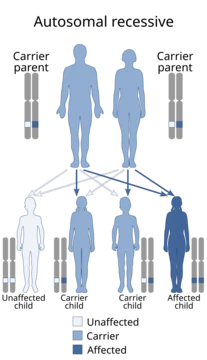
Genetically, Bruck syndrome differs from osteogenesis imperfecta. The latter typically involves dominant mutations in COL1A1 or COL1A2, which encode type 1 procollagen. Bruck syndrome is linked to mutations in two different genes, leading to two types. Type 1 results from a homozygous mutation in FKBP10, while type 2 results from a homozygous mutation in PLOD2. Many affected individuals belong to the same family, and pedigree data indicate autosomal recessive inheritance.
In type 1, the FKBP10 gene encodes FKBP65, a chaperone protein in the endoplasmic reticulum that helps fold collagen. Osteoblasts lacking FKBP65 accumulate procollagen aggregates in the endoplasmic reticulum, impairing bone formation. Patients also have under-hydroxylated lysine residues in the collagen telopeptide, leading to reduced hydroxylysylpyridinoline cross-links. In type 2, the PLOD2 gene encodes lysyl hydroxylase 2, which hydroxylates lysine residues in collagen cross-links. This enzyme is most active in osteoblasts because collagen cross-linking is tissue-specific. A PLOD2 mutation alters the telopeptide lysyl hydroxylase, preventing proper collagen type 1 fibril formation. Bone analysis again shows under-hydroxylated lysine residues in the telopeptides of collagen type 1.
Diagnosis requires distinguishing the combination of contractures and skeletal fragility from other conditions. Prenatal diagnosis can be done with ultrasoun
- field
- Medical genetics
- known_for
- Combination of congenital joint contractures and bone fragility
- inheritance
- Autosomal recessive
- types
- Type 1 (FKBP10 mutation) and Type 2 (PLOD2 mutation)
Lore & Background
Bruck syndrome was first described in 1897 by Bruck, who reported a male patient with bone fragility and bone contractures. The disease was named after him. Many affected individuals are within the same family, and pedigree data supports autosomal recessive inheritance. The syndrome has no effect on intelligence, vision, or hearing.
Reader's Guide
Bruck syndrome is significant because it represents a distinct genetic condition separate from typical osteogenesis imperfecta, despite sharing features of bone fragility. Its rarity—the concurrence of arthrogryposis multiplex congenita and osteogenesis imperfecta—makes research challenging. The discovery of two genetic types, linked to mutations in FKBP10 (type 1) and PLOD2 (type 2), has clarified the molecular mechanisms: both involve defective collagen processing, leading to under-hydroxylated lysine residues and reduced cross-links. Diagnosis requires distinguishing the association of contractures and skeletal fragility, often via ultrasound prenatally. Management is symptomatic, including orthopedic therapy, fracture management, and bisphosphonate drugs. The 2024 graphic novel memoir Brittle Joints by Maria Sweeney has brought public attention to the condition.
Did You Know?
- Bruck syndrome is divided into two types: type 1 caused by FKBP10 mutation and type 2 by PLOD2 mutation.
- Joint contractures in Bruck syndrome are primarily bilateral and symmetrical, most prone to the ankles.
- The first case was described in 1897 by Bruck, who reported a male with bone fragility and bone contractures.
- Bruck syndrome has no effect on intelligence, vision, or hearing.
More in Diseases named after discoverers 1-24
Spotted an error? Know more?
This is a living reference — every entry is fact-audited, and reader corrections feed straight into our audit queue. Suggest an edit · See this site's audit record