Bethlem myopathy
Slowly progressive myopathy with contractures and skin abnormalities.

Bethlem myopathy is a slowly progressive muscle disease marked by joint contractures, spinal stiffness, skin issues, and weakness in the muscles closest to the torso. It is considered a congenital type of limb-girdle muscular dystrophy and is usually inherited in an autosomal dominant pattern. The disorder was first identified by J. Bethlem and G. K. van Wijngaarden in 1976.
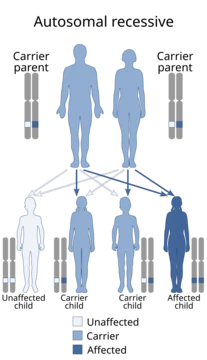
There are two forms of Bethlem myopathy, distinguished by which collagen type is affected. Type 1 (BTHLM1) results from a mutation in one of three genes that code for type VI collagen: COL6A1, COL6A2, or COL6A3. This form is typically autosomal dominant but can rarely be autosomal recessive. Type 2 (BTHLM2), previously called myopathic-type Ehlers–Danlos syndrome, is caused by a mutation in the COL12A1 gene for type XII collagen and is always autosomal dominant.
In 2017, an international workshop proposed updated criteria and names for limb-girdle muscular dystrophies. Bethlem myopathy 1 (collagen VI) was included and renamed LGMDD5 for dominant mutations and LGMDR22 for recessive ones. Bethlem myopathy 2 (collagen XII) was not addressed in that proposal.
Common signs and symptoms include Gowers's sign, toe walking, multiple joint contractures (especially of the long finger flexors, known as the "Bethlem sign"), skin abnormalities, and muscle weakness that is more pronounced in proximal than distal muscles. In early childhood, joint laxity may also appear. Neither type involves the heart, which helps distinguish it from Emery–Dreifuss muscular dystrophy. There is no cure; treatment focuses on symptom relief and improving quality of life.
Diagnosis is based on clinical examination and may be supported by laboratory tests. Genetic testing for known pathogenic variants is the preferred method. If a variant of uncertain significance is found, testing of dermal fibroblast culture can provide an accurate diagnosis.
Bethlem myopathy 1 is rare, affecting about 1 in 200,000 people. Bethlem myopathy 2 is ultra-rare, affecting fewer than 1 in 1,000,000 people.
**Signs and symptoms**
Bethlem myopathy progresses slowly and is defined by contractures, spinal rigidity, skin abnormalities, and proximal muscle weakness. Symptoms can appear in infancy with contractures and joint hyperlaxity, but some individuals do not notice them until adolescence or adulthood. Serum creatine kinase levels are usu
- field
- Neurology, Genetics
- known_for
- Description of Bethlem myopathy, a congenital limb-girdle muscular dystrophy with contractures and skin abnormalities
- prevalence_BTHLM1
- 1 in 200,000
- prevalence_BTHLM2
- less than 1 in 1,000,000
Lore & Background
Bethlem myopathy is divided into two types based on which collagen is affected. Bethlem myopathy 1 (BTHLM1) is caused by a mutation in one of three genes coding for type VI collagen: COL6A1, COL6A2, or COL6A3. It is typically autosomal dominant but can uncommonly be autosomal recessive. Bethlem myopathy 2 (BTHLM2), formerly known as myopathic-type Ehlers–Danlos syndrome, is caused by a mutation on the COL12A1 gene coding for type XII collagen and is autosomal dominant. In 2017, an international workshop proposed a redefined naming system for limb-girdle muscular dystrophies, renaming Bethlem myopathy 1 as LGMDD5 for dominant mutations and LGMDR22 for recessive mutations; Bethlem myopathy 2 was not addressed.
Reader's Guide
Bethlem myopathy is significant as a rare genetic disorder that highlights the role of collagen VI and XII in muscle integrity. Its hallmark features—multiple joint contractures (including the 'Bethlem sign'), skin abnormalities, and proximal muscle weakness—distinguish it from other myopathies like Emery–Dreifuss muscular dystrophy, which involves cardiac issues. Diagnosis relies on clinical examination and genetic testing of COL6A1, COL6A2, COL6A3, and COL12A1 genes; in cases of variants of uncertain significance, dermal fibroblast culture is used. There is no cure, and treatment is symptomatic, including physical therapy, orthoses, and surgery for contractures. The condition's rarity (1 in 200,000 for type 1; less than 1 in 1,000,000 for type 2) underscores the need for specialized care. Its inclusion in the 2017 limb-girdle muscular dystrophy reclassification reflects evolving understanding of genetic myopathies.
Did You Know?
- Bethlem myopathy 1 is caused by mutations in COL6A1, COL6A2, or COL6A3 genes coding for type VI collagen.
- The 'Bethlem sign' is the inability to make full contact of one hand against the other with palms facing each other and elbows raised, due to long finger flexor contractures.
- There is no cardiac involvement in either Bethlem myopathy 1 or 2, differentiating it from Emery–Dreifuss muscular dystrophy.
- Bethlem myopathy 2, formerly called myopathic-type Ehlers–Danlos syndrome, is caused by a mutation on the COL12A1 gene.
More in Diseases named after discoverers 1-24
Spotted an error? Know more?
This is a living reference — every entry is fact-audited, and reader corrections feed straight into our audit queue. Suggest an edit · See this site's audit record