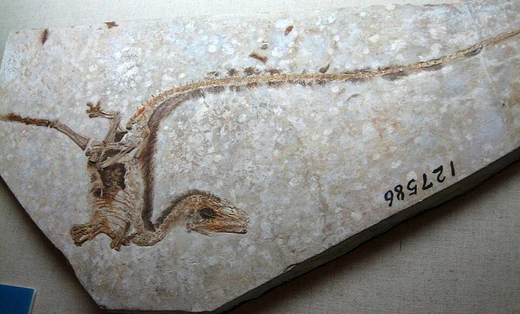
Lepidus praecisio
A fragmentary Triassic theropod from Texas.

Lepidus praecisio is an extinct theropod dinosaur from the Upper Triassic of the United States. It inhabited the Otis Chalk localities within the Dockum Group in Texas, during a span from 231 to 223 million years ago.
The site where Lepidus was found was discovered in mid-February 1941 by a Works Progress Administration paleontology team in Texas. While the exact location is unknown, it lies about eight miles southeast of Big Spring in Howard County. Using Google Earth and USGS maps, the authors later determined the fossils came from near Signal Peak, within the Colorado City Formation, which dates to the Carnian and Norian stages of the Upper Triassic.
Nesbitt and Ezcurra first described the taxon in 2015, naming it *Lepidus praecisio*. The genus name is Latin for "fascinating," and the species name means "fragment" or "scrap." The holotype consists of a tibia, astragalus, and fibula. Additional referred material includes a femur and a maxilla, though the authors stressed the maxilla cannot be confidently assigned to *Lepidus*; its morphology most closely resembles neotheropods among known archosaurs from the Colorado City Formation. The holotype is well-preserved, showing muscle scars. The astragalus is separate from the calcaneum, with no fusion between them. The tibia’s overall shape resembles that of neotheropods, including *Camposaurus*, *Coelophysis*, *Tawa*, *Eodromaeus*, and *Herrerasaurus*. *Lepidus* was one of eighteen dinosaur taxa described in 2015 in open-access or free-to-read journals.
A phylogenetic analysis was performed both with and without the referred material. More recent studies have recovered this genus as a member or sister taxon of Neotheropoda, outside Coelophysoidea.
Quick Facts
- Genus
- Lepidus
- Species
- praecisio
Facts from the source article.
Lore & Background
The locality from which Lepidus is known was discovered in mid-February 1941 by the Works Progress Administration paleontology team in Texas. The precise geographic locality is unknown, but it is known to be eight miles southeast of Big Spring in Howard County, Texas. Using Google Earth and USGS maps, the describing authors deduced the fossils were in the vicinity of Signal Peak, within the Colorado City Formation, which dates to the Carnian to Norian stages of the Upper Triassic.
The species was first described in 2015 by Nesbitt & Ezcurra, who named it Lepidus praecisio. The generic name is Latin for 'fascinating', and the specific name is Latin for 'fragment' or 'scrap'. The holotype material includes a tibia, astragalus, and fibula. Other referred material includes a femur and a maxilla, though the authors stressed that the maxilla cannot be referred to Lepidus with confidence, noting its morphology is most similar to neotheropods among archosaurs known from the formation.
The holotypic material is well-preserved and shows signs of muscle scars. The astragalus is separate from the calcaneum, with no fusion between them. The tibia resembles that of neotheropods, particularly Camposaurus, Coelophysis, Tawa, Eodromaeus, and Herrerasaurus. Lepidus was one of eighteen dinosaur taxa from 2015 to be described in open access or free-to-read journals.
Reader's Guide
Lepidus praecisio represents a small, early theropod from the Late Triassic of North America, a period critical to understanding the early diversification of dinosaurs. Its fragmentary remains—primarily hindlimb bones—provide enough anatomical detail to place it within Neotheropoda, the group that includes all later theropods. The fusion of the astragalus and calcaneum and the neotheropod-like tibia support this classification, though the referral of a maxilla remains uncertain. Phylogenetic analyses have recovered Lepidus as a member or sister taxon of Neotheropoda outside Coelophysoidea, suggesting it occupies a basal position within the neotheropod lineage. Its discovery highlights the importance of historic WPA collections and the continued value of reexamining old localities with modern techniques. As one of several open-access dinosaur descriptions from 2015, it also reflects a shift toward greater accessibility in paleontological publishing. Despite its scrappy nature, Lepidus contributes to the growing picture of Triassic theropod diversity in what is now Texas.
Did You Know?
- The generic name Lepidus is Latin for 'fascinating', and the specific name praecisio is Latin for 'fragment' or 'scrap'.
- The holotype material includes a tibia, astragalus, and fibula; a referred maxilla cannot be confidently assigned to the genus.
More in Dinosaur species 1-24
Spotted an error? Know more?
Reader corrections go straight into our review queue. Suggest an edit · How this site is sourced