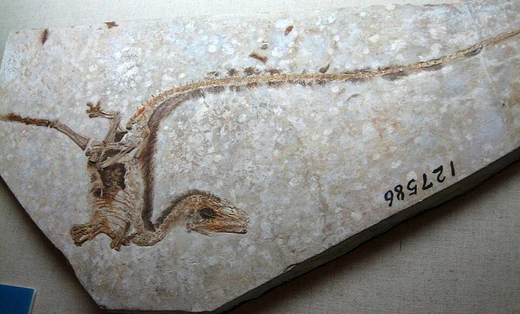
Balaur bondoc
A stocky, island-dwelling paravian theropod from Cretaceous Romania.

Balaur bondoc was a paravian theropod dinosaur that lived during the late Cretaceous in what is now Romania. It is the only species in the genus *Balaur*, named after a dragon from Romanian folklore. The species name *bondoc* means "stocky," so the full name translates to "stocky dragon," referring to the animal's heavier musculature compared to its relatives. First described in August 2010, the genus is known from two partial skeletons, including the type specimen. Some researchers think *Balaur* might actually be the same animal as *Elopteryx*.
Its fossils come from the Densuș-Ciula and Sebeș Formations in Romania, which were part of Hațeg Island about 70 million years ago. This subtropical island in the Tethys Sea is often called the "Island of the Dwarf Dinosaurs" because its native dinosaurs showed island syndrome—differences in body shape, ecology, and behavior compared to mainland relatives. Examples include the giant pterosaur *Hatzegopteryx*, the dwarf titanosaur *Magyarosaurus dacus*, and *Balaur* itself, which had reduced flight ability. Depending on the analysis, *Balaur* may be a basal avialan (the group including modern birds), though some still place it within Velociraptorinae or Unenlagiinae, as in its original description. This loss of flight also occurs in living island birds like ratites and insular barn owls, as well as extinct ones like the moa and the dodo.
The first small bones of *Balaur bondoc*—six front limb elements—were found in 1997 by Dan Grigorescu. Their unusual shape led scientists to mistake them for an oviraptorosaur. A partial skeleton was discovered in September 2009 about 2.5 kilometers north of Sebeș, along the Sebeș River in the early Maastrichtian Sebeș Formation. Geologist and paleontologist Mátyás Vremir of the Transylvanian Museum Society found it and sent it to Zoltán Csiki at the University of Bucharest. The findings were published on August 31, 2010. The 1997 specimens came from a younger layer and belonged to an individual about 45% longer than the holotype.
The genus name *Balaur* (three syllables, stressed on the second /a/) comes from a winged dragon in Romanian folklore, hinting at the dinosaur's close relation to birds. The species name *bondoc* means "a squat, chubby individual" and also derives from the Turkish *bunduk* ("small ball"), alluding to a possible Asian origin for *Balaur*'s ancestors.
*Balaur* was a theropod about 1.8 to 2.5 meters long and weighing around 15 kilograms, similar in size to *Velociraptor*. Its bones were shorter and heavier than those of other early paravians. While most early paravians had a single large sickle claw on the second toe, *Balaur* had large retractable sickle claws on both the first and second toes of each foot. It also had a reduced, likely nonfunctional third finger with only one rudimentary phalanx. The type specimen is the most complete theropod fossil from the late Cretaceous of Europe. The skeleton came from red floodplain mudstone and includes vertebrae, much of the pectoral and pelvic girdles, and most of the limbs. It shows extensive bone fusion typical of avialans: wrist and metacarpals fused into a carpometacarpus, pelvic bones fused, shinbone and calfbone fused into a tibiotarsus, and ankle bones fused with metatarsals into a tarsometatarsus. *Balaur* had short, stocky feet and legs, with a metatarsus only twice as long as it was wide and 1.5 times wider than the lower leg—both unique traits among theropods. Large muscle attachment areas on the pelvis suggest it was built for strength, not speed. Csiki and colleagues described this as "a dramatic example of aberrant morphology developed in island-dwelling taxa."
Quick Facts
- Genus
- Balaur
- Species
- bondoc
Facts from the source article.
Lore & Background
Fossils of Balaur were found in the Densuș-Ciula and Sebeș Formations of Cretaceous Romania which correspond to Hațeg Island, a subtropical island in the European archipelago of the Tethys sea approximately 70 million years ago. Hațeg Island is commonly referred to as the 'Island of the Dwarf Dinosaurs' on account of the extensive fossil evidence that its native dinosaurs exhibited island syndrome. Examples included island gigantism of Hatzegopteryx, island dwarfism of the titanosaur Magyarosaurus dacus, and a reduction in flight capacity in Balaur.
Reader's Guide
Balaur is a genus of theropod dinosaurs estimated to have lived about 70 million years ago in the late Cretaceous (Maastrichtian), and contains the single species B. bondoc. The bones of this species were shorter and heavier than those of basal paravians. While the feet of most early paravians bore a single, large 'sickle claw' on the second toe which was held retracted off the ground, Balaur had large retractable sickle claws on both the first and second toes of each foot. In addition to its strange feet, the type specimen of Balaur is unique for its status of being the most complete theropod fossil from the late Cretaceous of Europe. It also possesses a great number of additional autapomorphies, including a reduced and presumably nonfunctional third finger, consisting of only one rudimentary phalanx.
Did You Know?
- Balaur bondoc means 'stocky dragon' in Romanian.
- The first small bones of Balaur were discovered in 1997 but were initially mistaken for an oviraptorosaur.
- Some researchers suggest Balaur may be a junior synonym of Elopteryx.
The Serendipitous Unearthing and a Dragon's Name
The story of Balaur bondoc began not with a dramatic excavation but with a handful of small, puzzling bones. In 1997, Romanian paleontologist Dan Grigorescu recovered six front-limb elements that would later be assigned to this species. Their arm morphology was so unlike anything recognized at the time that researchers misidentified them as belonging to an oviraptorosaur, and the fragments sat unexplained for over a decade. The breakthrough came in September 2009, when geologist Mátyás Vremir of the Transylvanian Museum Society in Cluj-Napoca uncovered a partial skeleton roughly 2.5 kilometres north of the town of Sebeș, along the river of the same name. Vremir forwarded the material to Zoltán Csiki at the University of Bucharest, and the genus was formally described on August 31, 2010, in the Proceedings of the National Academy of Sciences. The name draws on Romanian folklore: "balaur" evokes the mythical winged dragon, while "bondoc" captures the animal's squat, robust build. The epithet also traces back to the Turkish word bunduk, meaning "small ball," a subtle nod to the probable Asian ancestry of these island-dwelling theropods.
A Stocky Build and Unusual Feet
Balaur bondoc presents a skeletal profile that stands apart from its close relatives. Its bones were consistently shorter and more robust than those of other basal paravians, and the animal's overall dimensions—roughly 1.8 to 2.5 metres in length and approximately 15 kilograms in mass—place it in the same size bracket as Velociraptor. Perhaps the most striking anatomical feature is the foot: rather than the single large sickle claw on the second toe typical of early paravians, Balaur possessed prominent, hyperextendable sickle claws on both the first and second digits of each foot. The first toe had re-evolved into a weight-bearing structure, a reversal not seen elsewhere in the lineage. The metatarsus measured only twice its own width, and the foot was 1.5 times wider than the lower leg—proportions unique across all theropods. The pelvis carried extensive muscle-attachment surfaces, suggesting an animal built for raw power rather than sprinting. Additionally, the skeleton displays a remarkable degree of bone fusion: wrist and hand elements merged into a carpometacarpus, pelvic bones fused together, and the lower leg and foot consolidated into tibiotarsus and tarsometatarsus structures, a pattern characteristic of the avialan branch that leads to modern birds.
Life on Hațeg Island
Around 70 million years ago, in the late Maastrichtian, the region now known as Transylvania was home to Hațeg Island, a subtropical landmass surrounded by the warm Tethys Sea. The fossil record from the Densuș-Ciula and Sebeș Formations reveals that this isolated environment produced a suite of dinosaurs with striking departures from their mainland relatives—a phenomenon collectively termed island syndrome. On Hațeg, the pterosaur Hatzegopteryx grew to enormous size, the titanosaur Magyarosaurus dacus shrank dramatically, and Balaur bondoc lost much of its flight capacity. This reduction in aerial ability mirrors patterns observed in living island birds such as the ratites and insular barn owls, as well as in the now-extinct moa of New Zealand and the dodo of Mauritius. The discoverers of Balaur described its unusual body plan as a dramatic illustration of aberrant morphology evolving in island-dwelling lineages. The combination of shortened, heavier bones, reduced wing elements including a vestigial third finger consisting of a single rudimentary phalanx, and a stocky terrestrial build all point to an animal that had traded the open sky for a life of powerful, low-slung movement across the island's floodplain habitats.
A Persistent Taxonomic Puzzle
Determining exactly where Balaur bondoc belongs on the tree of life has proven stubbornly difficult. The original 2010 phylogenetic analysis positioned it as the closest known relative of the Mongolian dromaeosaurid Velociraptor mongoliensis, placing it within Velociraptorinae. A 2013 reanalysis by Brusatte and colleagues, using a modified dataset, yielded a less resolved picture: Balaur appeared in an uncertain relationship with the dromaeosaurids Deinonychus and Adasaurus, with some alternative tree topologies suggesting it diverged before the common ancestor of those two genera while others retained it as Velociraptor's nearest kin. Other researchers have argued that the genus may simply represent a junior synonym of the earlier-described Elopteryx, or alternatively that it fits more naturally within Unenlagiinae. Some phylogenetic analyses have even suggested a basal avialan position, grouping it with the lineage that ultimately gives rise to modern birds. The monotypic nature of the genus—known from only two partial skeletons—means that new material or revised analyses could still shift its placement, keeping the debate alive well beyond the initial description.
Frequently Asked Questions
What is Balaur bondoc?
It is a small, flight-reduced paravian theropod whose name translates to "stocky dragon," a nod to a Romanian folklore creature and the animal's comparatively heavy build. It was formally described in 2010 from two partial skeletons recovered in modern-day Romania.
What makes Balaur bondoc unique among dinosaurs?
It carried a pair of double sickle-shaped claws on its forelimbs, a trait rarely seen in paravians, and its wings were notably shortened. These features suggest it was a compact, ground-adapted predator rather than a glider or flyer.
Where and when did Balaur bondoc live?
It roamed the Hațeg Island region of present-day Romania during the Maastrichtian stage of the Late Cretaceous, roughly 70 million years ago. The island's isolated, lowland habitat likely favored its stocky, claw-driven body plan.
How big was Balaur bondoc?
It measured about 1.8 to 2.5 meters in length and weighed in the neighborhood of 15 kilograms. Despite its modest size, its dense, compact frame set it apart from the more slender builds of its close relatives.
Is Balaur bondoc still considered a valid, distinct species?
Although first named in 2010, some researchers have argued it may be the same animal as the previously described Elopteryx. That ongoing taxonomic debate means its standing as a separate genus is still discussed within paleontology.
More in Dinosaur species 1-24
Spotted an error? Know more?
Reader corrections go straight into our review queue. Suggest an edit · How this site is sourced