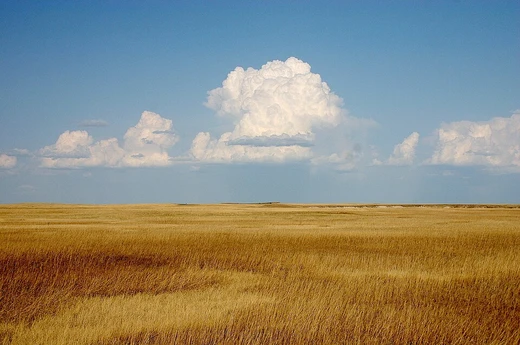
Syrian desert
A vast West Asian expanse of desert, semi-desert, and steppe, home to ancient trade routes and nomadic traditions.
The Syrian desert (Bādiyat Ash-Shām), also known as the North Arabian desert, the Jordanian steppe, the Syrian steppe, or the Badiya, or Badiyat al-Sham, is a region of desert, semi-desert, and steppe, covering about 500,000 km² of West Asia, including parts of northern Saudi Arabia, eastern Jordan, southern Syria, and western Iraq. It accounts for about 85% of the land area of Jordan and 55% of Syria. To the south, it borders and merges into the Arabian Desert. The land is open, rocky or gravelly desert pavement, cut with occasional wadis, or river valleys, generally dry riverbeds.
- location
- West Asia, including parts of northern Saudi Arabia, eastern Jordan, southern Syria, and western Iraq
- percentage_of_Jordan
- 85%
- percentage_of_Syria
- 55%
- notable_ancient_settlements
- Palmyra and Dura-Europos
Quick Facts
- Other Name
- ar · بادية الشام
- Country
- Syria / Jordan / Iraq / Saudi Arabia
- Area Km2
- 500,000
- Country Type
- Countries
Facts from the source article.
Lore & Background
The desert is bounded by the Orontes Valley and the volcanic field of Harrat al-Shamah to the west, and by the Euphrates to the east. In the north, the desert gives way to the more fertile areas and to the south it runs into the deserts of the Arabian Peninsula. Parts of the Syrian Desert have been referred to otherwise, such as Homs Desert, Palmyrene Desert for the part around Palmyra, and, from an Iraqi point of view, Western Desert for the part of the eastern section of the Syrian Desert that lies entirely within the borders of Iraq. The name Shamiyah has also been used for the Syrian Desert, the name having been translated in the past as Badiyat al-Sham or Badiyat ash-Sham. The 700-900 m region in the middle of the desert is the Hamad Plateau, a rather flat, stony semi-desert consisting of limestone bedrock covered with chert gravel. What little rain arrives on the plateau flows into local salt flats. The highest peaks of the plateau are those of the 1000 m+ Khawr um Wual in Saudi Arabia, and the 960 m Jebel Aneiza, at the border tripoint of Jordan, Iraq and Saudi Arabia. Together with the other deserts of the Arabian Peninsula, the Hamad Desert has been described as one of the most arid deserts of the world. The Syrian Desert is the origin of the golden hamster. The desert was historically inhabited by nomadic Arabs (Bedouins) and nomadic Aramean tribes, and many tribes still remain in the region, their members living mainly in towns and settlements built near oases. Some Bedouin still maintain their traditional way of life in the desert. Safaitic inscriptions, proto-Arabic texts written by literate Bedouin, are found throughout the Syrian Desert. These date roughly from the first century BC to the fourth century AD. One of the most important ancient settlements in the Syrian desert is Palmyra; first mentioned in the second millennium BC, the city was an important trading center in Roman times. Another important ancient settlement is the city of Dura-Europos on the Euphrates. During the Ottoman Empire's Armenian genocide, large numbers of victims were deported across the Euphrates River into the desert to die. The Syrian desert was first traversed by motor vehicle in 1919. During the Iraq War, the desert served as a major supply line for the Iraqi resistance. During the Syrian civil war and concurrent War in Iraq, ISIS managed to occupy most of the dese
Reader's Guide
With low rainfall and poor-quality soils, today the region is principally used as rangeland for livestock. Bedouin herdsmen, many of whom are still nomadic, graze about twelve million sheep and goats here, as well as a smaller number of camels. The International Fund for Agricultural Development aims to alleviate rural poverty, and in 1995, in cooperation with the Syrian government, it started a project to rehabilitate over a million hectares of degraded land in the Syrian Badia. In some areas, when grazing was restricted, there was a spontaneous return of many of the native plants. In other areas which were more heavily degraded, grazing restrictions were supplemented by reseeding and the planting of fodder species. By the time the project ended in 2010, nearly a quarter of a million hectares had been reseeded, and nearly a hundred thousand hectares had been planted with native fodder shrubs. The result has been a great success, with some herdsmen reporting tenfold increases in the productivity of their livestock.
Did You Know?
- The Syrian Desert accounts for about 85% of the land area of Jordan and 55% of Syria.
- The highest peaks of the Hamad Plateau include the 1000 m+ Khawr um Wual in Saudi Arabia and the 960 m Jebel Aneiza at the border tripoint of Jordan, Iraq and Saudi Arabia.
- The Syrian Desert is the origin of the golden hamster.
- The Syrian desert was first traversed by motor vehicle in 1919.
More in Desert Landscapes 1-18
Spotted an error? Know more?
This is a living reference — every entry is fact-audited, and reader corrections feed straight into our audit queue. Suggest an edit · See this site's audit record