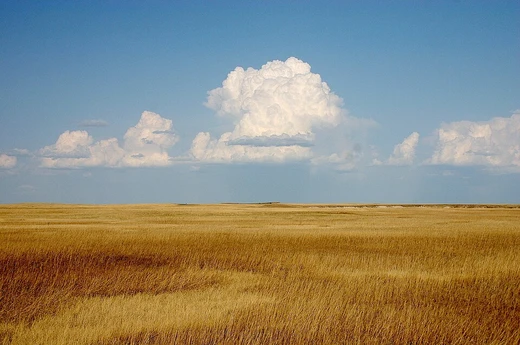
Kharga Oasis
The largest oasis in the Libyan Desert, gateway to ancient trade routes and Roman fortresses.

Wikipedia / Wikimedia Commons
Kharga Oasis (also known as "Oasis of Hib" and "Oasis of Psoi") is the southernmost of Egypt's five western oases. It is located in the Western Desert, about 200 km (125 miles) west of the Nile valley. "Kharga" or "El Kharga" is also the name of a major town located in the oasis, the capital of New Valley Governorate. The oasis, known as the 'Southern Oasis' to the Ancient Egyptians, the 'outer' (he Exotero) to the Greeks, and Oasis Magna to the Romans, is the largest of the oases in the Libyan Desert of Egypt. It lies in a depression about 160 km (100 miles) long and between 20 km (12 miles) and 80 km (50 miles) wide. Its estimated population is 87,482 as of 2023.
- location
- Western Desert, Egypt
- ancient names
- Southern Oasis (Egyptian), Exotero (Greek), Oasis Magna (Roman)
- modern name origin
- Arabic 'al-Ḫāriǧa' meaning 'the outer'
- climate
- Hot desert (Köppen BWh)
Verified Timeline
Quick Facts
- Settlement Type
- Town
- Subdivision Type
- Country
- Subdivision Name
- Egypt
- Subdivision Type1
- Governorate
- Subdivision Name1
- New Valley
- Area Total Km2
- 1017
- Population As Of
- 2023
- Population Total
- 87,482
- Population Density Km2
- auto
- Population Blank1 Title
- Ethnicities
- Timezone
- EET
- Utc Offset
- +2
Facts from the source article.
Lore & Background
The Temple of Hibis is a Saite-era temple founded by Psamtik II, which was erected largely c. 500 BC. It is located about 2 kilometres north of modern Kharga, in a palm-grove. There is a second 1st millennium BC temple in the southernmost part of the oasis at Dush. An ancient Christian cemetery at El Bagawat functioned at the Kharga Oasis from the 3rd to the 7th century AD. It is one of the earliest and best preserved Christian cemeteries in the ancient world. The first list of sites is due to Ahmad Fakhri but serious archaeological work began in 1976 with Serge Sauneron, director of the Institut Français d'Archéologie Orientale.
Reader's Guide
A regular bus service connects the oasis to the other Western oases and to the rest of Egypt. In 1907, the narrow gauge Western Oasis Lines provided twice-weekly train services. A standard gauge railway line Kharga → Qena (Nile Valley) → Port Safaga (Red Sea) has been in service since 1996, but was decommissioned soon after.
Did You Know?
- The Darb El Arba'īn caravan route, meaning 'the Way of Forty,' passed through Kharga and was described by Herodotus as a road 'traversed…in forty days.'
- After being condemned as a heretic in 431, theologian Nestorius was exiled to a monastery in the Great Oasis of Hibis (El Kharga), where he lived for the rest of his life.
- In June 2016, a report attributed the iron dagger buried with Pharaoh Tutankhamun to a meteorite discovered near Kharga Oasis.
More in Desert Landscapes 1-18
Spotted an error? Know more?
This is a living reference — every entry is fact-audited, and reader corrections feed straight into our audit queue. Suggest an edit · See this site's audit record