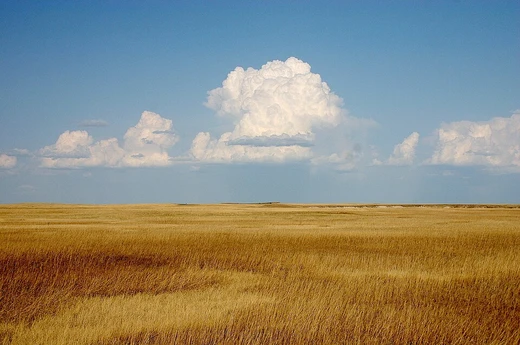
Sechura Desert
Coastal desert in Peru, subject to flooding and tsunamis.
The Sechura Desert runs along Peru’s northern Pacific coast, starting south of the Piura Region and stretching inland to the lower slopes of the Andes. Its dryness comes from cold coastal waters rising to the surface and sinking subtropical air, yet heavy rains during El Niño years can cause sudden flooding. The desert holds the Bayóvar Depression, the lowest point in both Peru and the entire Southern Tropics.
This desert forms a narrow strip through southern Piura and western Lambayeque, reaching from the shore to the Andes’ secondary ridges. Near the city of Piura, it gives way to the Tumbes–Piura dry forests, an equatorial dry forest habitat that covers much of eastern Lambayeque. Short rivers flowing from the Andes cross the desert, supporting intensive farming on fertile bottomlands. Two of Peru’s five largest cities, Piura and Chiclayo, lie within this agricultural zone in the north.
Despite its aridity, the Sechura has seen flooding from rivers and Pacific storms. In 1728, an earthquake-generated tsunami swept inland, destroying the original town of Sechura, which was then closer to the coast. Survivors moved inland and rebuilt it where it stands today. During El Niño years, flooding is common. In 1998, runoff from swollen rivers poured into the desert, creating a temporary lake that filled the Bayóvar Depression. Where there had been barren, hard ground for 15 years, the second-largest lake in Peru suddenly appeared, with dry sand and clay domes rising from its surface.
The Pacific Ocean moderates temperatures, keeping the range narrow. Summer (December to March) is warm and sunny, with daytime highs above a certain mark and nights averaging above another. Winter (June to September) is cool and cloudy, with temperatures varying from a low at night to a high during the day. The desert is among the most arid on Earth due to the cold coastal upwelling and subtropical air subsidence.
The Bayóvar Depression marks the desert’s lowest point. Short rivers crossing the area supported prehistoric indigenous settlements for thousands of years. Urban cultures like the Moche thrived here, eating fish, guinea pigs, camelids, squash, and peanuts. The Sican Culture (around 800–1300 CE) followed the Moche, developing advanced lost-wax goldsmithing. Today, the same rivers sustain irrigated agriculture on the fertile lowlands.
- area
- 5,000 km² (1,931 sq mi)
- location
- Southern Piura and western Lambayeque regions, Peru
- lowest_point
- Bayóvar Depression
- climate
- Extremely arid, with low temperature variation due to Pacific Ocean
- notable_event
- Temporary lake formed in 1998, 145 km long
Lore & Background
The Sechura Desert has been shaped by both aridity and sudden water events. In 1728, a tsunami generated from an earthquake swept inland, destroying the town of Sechura, which was then located closer to the water. Survivors moved inland and re-established the town in its present location. During El Niño years, flooding regularly occurs; in 1998, runoff from flooding rivers formed a temporary lake 145 km long, 32 km wide, and 3.0 m deep, filling the Bayóvar Depression.
Reader's Guide
The Sechura Desert is significant as one of the most arid deserts on Earth, yet it supports intensive irrigated agriculture on fertile bottomlands fed by short rivers from the Andes. These rivers sustained prehistoric indigenous settlements for millennia, including the Moche and Sican cultures. The Sican developed refined lost wax goldsmithing. Today, two of Peru's five largest cities, Piura and Chiclayo, lie within the agricultural region in the north. The desert's extreme aridity results from cold coastal water upwelling and subtropical atmospheric subsidence, but its history of tsunamis and El Niño flooding demonstrates its vulnerability to sudden, dramatic water events.
Did You Know?
- The Bayóvar Depression is the lowest point in Peru and all of the Southern Tropics.
- In 1728, a tsunami destroyed the town of Sechura, which was then rebuilt inland at its present location.
- In 1998, runoff from flooding rivers created a temporary lake 145 km long, 32 km wide, and 3.0 m deep in the desert.
- The Sican culture (circa 800–1300 CE) developed refined techniques of lost wax goldsmithing in this region.
- Two of Peru's five largest cities, Piura and Chiclayo, lie within the agricultural region in the north of the desert.
More in Desert Landscapes 1-18
Spotted an error? Know more?
This is a living reference — every entry is fact-audited, and reader corrections feed straight into our audit queue. Suggest an edit · See this site's audit record