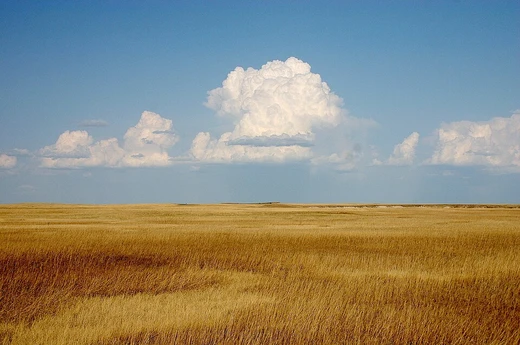
Painted Desert (Arizona)
A colorful badlands desert in the Four Corners area, named by Coronado's expedition in 1540.
The Painted Desert is a United States desert of badlands in the Four Corners area, running from near the east end of Grand Canyon National Park and southeast into Petrified Forest National Park. It is most easily accessed from the north portion of Petrified Forest National Park. The Painted Desert is known for its brilliant and varied colors: these include the more common red rock, but also shades of lavender.
- Location
- Four Corners area, Arizona, United States
- Climate
- Cold desert climate (Köppen BWk)
- Geological formation
- Triassic Chinle Formation
Quick Facts
- Native Name
- tag1=es · name1=El Desierto Pintado · tag2=nv · name2=Halchíítah
- Country
- United States
- State
- Arizona
- Length
- 160 m
- Area
- 93500 acre
- Area Mi2
- 7500
- Border
- Little Colorado and Puerco rivers
Facts from the source article.
Lore & Background
The Painted Desert was named by a Spanish expedition under Francisco Vázquez de Coronado during his 1540 quest to find the Seven Cities of Cibola. He located these some 40 mi east of Petrified Forest National Park. Finding the cities were not made of gold, Coronado sent an expedition to find the Colorado River to gain supplies. Passing through the wonderland of colors, they named the area El Desierto Pintado ('The Painted Desert').
Reader's Guide
Much of the Painted Desert within Petrified Forest National Park is protected as Petrified Forest Wilderness, where motorized travel is limited. The park offers both easy and longer hikes into the colored hills. The Painted Desert continues north into the Navajo Nation, where off-road travel is allowed only by permit. Much of the region is accessible only by foot or unpaved road though major highways and paved roads cut across the area. The towns of Cameron and Tuba City, both on the Navajo Nation, are two major settlements. A permit is required for all backroad travel on the Navajo Nation.
Did You Know?
- The desert is composed of stratified layers of siltstone, mudstone, and shale of the Triassic Chinle Formation, which erode easily.
- These fine-grained rock layers contain abundant iron and manganese compounds, which provide the pigments for the various colors of the region.
- The Painted Desert extends roughly from Cameron–Tuba City southeast to past Holbrook and the Petrified Forest National Park, about 120 mi long by about 60 mi wide, making it roughly 7500 mi² in area.
- Owing to the strong rain shadow of the Mogollon Rim, the Painted Desert has a cold desert climate (Köppen BWk), with hot, dry summers and chilly (though virtually snow-free) winters.
More in Desert Landscapes 1-18
Spotted an error? Know more?
This is a living reference — every entry is fact-audited, and reader corrections feed straight into our audit queue. Suggest an edit · See this site's audit record