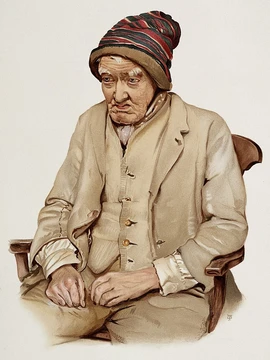
Reminiscence
Recalling past experiences for therapy and memory study.

Reminiscence is the act of recollecting past experiences or events. It is used both in everyday conversation and as a technical term in psychology, where it can refer to a therapeutic tool for older adults, particularly those with dementia, or to a phenomenon of improved memory performance after rest. The concept has been explored by figures such as Dr. Robert Butler, who proposed its therapeutic potential, and earlier researchers like Ballard and Oehrn, who studied it experimentally.
- field
- Psychology, Geriatric Medicine
- known_for
- Reminiscence therapy, reminiscence bump
- key_figure
- Dr. Robert Butler (1927–2010)
Lore & Background
Reminiscence therapy is a non-pharmacological intervention used primarily with elderly populations, especially those with forms of dementia. It improves self-esteem and provides a sense of fulfillment and comfort. Sessions may be formal or informal, one-on-one or in groups, and often use tangible prompts like photographs, household items, music, or archive recordings. Dr. Robert Butler, a psychiatrist specializing in geriatric medicine, first proposed that reminiscing could be therapeutic in his article 'The Life Review: An Interpretation of Reminiscence in the Aged.'
Reader's Guide
Reminiscence has dual significance: as a therapeutic practice and as a cognitive phenomenon. In therapy, it alleviates symptoms of depression and improves well-being, ego-integrity, purpose, cognitive performance, social integration, and death preparation in aging adults. A 2018 Cochrane review found probable benefits for cognition, mood, and communication in dementia patients, though inconsistencies in interventions limited further conclusions. In cognitive psychology, reminiscence refers to improved performance on a partially learned task after rest, first demonstrated by Oehrn in 1896 and coined by Ballard in 1913. The reminiscence bump—stronger recollection of memories from ages 10 to 30—is a natural phenomenon that persists even in dementia until advanced stages. Reminiscence also contributes to memory consolidation and can recalibrate memory through social interaction.
Did You Know?
- Reminiscence therapy was first proposed as therapeutic by psychiatrist Dr. Robert Butler.
- The term 'reminiscence' in cognitive psychology was coined by Ballard in 1913 to describe improved performance after rest.
- The reminiscence bump refers to stronger recollection of memories from ages 10 to 30.
- A 2018 Cochrane review found probable benefits of reminiscence therapy for cognition, mood, and communication in dementia patients.
More in Dementia 1-24
Spotted an error? Know more?
This is a living reference — every entry is fact-audited, and reader corrections feed straight into our audit queue. Suggest an edit · See this site's audit record