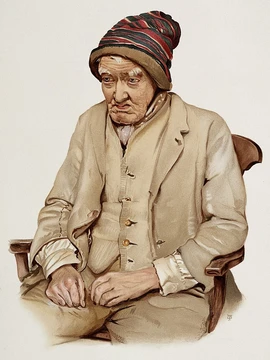
Apraxia of speech
A neurogenic disorder impairing motor planning for speech.

Apraxia of speech (AOS), also called verbal apraxia, is a speech sound disorder affecting an individual's ability to translate conscious speech plans into motor plans, which results in limited and difficult speech ability. By the definition of apraxia, AOS affects volitional movement patterns, but it usually also affects automatic speech. People with AOS have difficulty connecting speech messages from the brain to the mouth, representing a loss of prior speech ability resulting from a brain injury such as a stroke or progressive illness.
- field
- Speech-language pathology, neurology
- known_for
- Disorder of motor planning for speech production
- causes
- Stroke, brain injury, progressive neurological disorders, tumors, trauma
- diagnosis
- By a speech-language pathologist through oral mechanism exams and differential diagnosis
- key_characteristics
- Effortful groping, self-correction, abnormal prosody, inconsistent articulation, difficulty initiating utterances
Quick Facts
- Symptoms
- Oral motor planning, speech delay
Facts from the source article.
Lore & Background
Apraxia of speech is a neurogenic communication disorder affecting the motor programming system for speech production. Individuals with AOS demonstrate difficulty in speech production, specifically with sequencing and forming sounds. According to the Levelt model, apraxia of speech falls into the articulation region. The individual does not have a language deficiency but has difficulty in the production of language in an audible manner, and this difficulty is limited to vocal speech, not affecting sign-language production. Individuals with acquired AOS demonstrate hallmark characteristics of articulation and prosody errors, including groping, effortful speech, self-correction, abnormal rhythm, stress, and intonation, and inconsistent articulation errors on repeated speech productions.
Reader's Guide
Apraxia of speech is significant as a distinct neurogenic disorder that separates motor planning from language comprehension. Its diagnosis requires careful differential diagnosis to rule out similar disorders such as expressive aphasia, conduction aphasia, and dysarthria. The disorder can arise from stroke, traumatic brain injury, progressive neurological disorders, or tumors, with stroke-associated AOS being the most common form, making up about 60% of reported acquired AOS cases. Recent research has established primary progressive apraxia of speech caused by neuroanatomic motor atrophy, though it remains rare and not fully understood. The disorder's legacy lies in highlighting the complexity of speech production and the need for specialized assessment by speech-language pathologists.
Did You Know?
- AOS affects volitional movement patterns but usually also affects automatic speech.
- About 11% of stroke cases involve apraxia of speech.
- Individuals with AOS know exactly what they want to say but have a disruption in the part of the brain that sends the signal to the muscle for movement.
- AOS does not affect sign-language production.
The Disconnect Between Thought and Sound
Apraxia of speech is a neurogenic communication disorder that strikes at the motor programming system responsible for converting conscious speech plans into actual muscle commands. Situated within the Levelt model of speech production—which breaks the process into conceptualization, formulation, and articulation—AOS falls squarely in the articulation stage. The person fully understands what they wish to communicate and retains intact language; the breakdown occurs in the brain's ability to dispatch the precise signal to the muscles of the mouth. What results is a loss of previously acquired speech ability, typically triggered by a brain injury such as a stroke or a progressive neurological illness. Crucially, this disruption is confined to vocal speech and does not extend to sign-language production, underscoring that the problem is motor rather than linguistic. While the classical definition of apraxia centers on volitional, purposeful movement patterns, AOS in practice also impairs automatic speech, making the condition far more pervasive in everyday communication than the narrow definition might suggest.
The Five Hallmark Speech Patterns
Wertz and colleagues identified five characteristic features that distinguish AOS from other speech disorders. First, effortful trial-and-error with groping: the mouth literally searches for the correct position to form a sound, causing syllables to be held, repeated, or silently voiced. A person might produce a sound effortlessly in conversation yet struggle to repeat it on command, because volitional control engages a different pathway. Second, self-correction: because receptive language remains intact, speakers recognize their own errors—distorted consonants, vowel substitutions—and attempt to fix them, revealing a wide gap between understanding and expression. Third, abnormal prosody: pitch, rate, and rhythm become irregular, syllables receive equal stress, and speech takes on a flat, robotic quality, as in rendering 'tectonic' as 'tec-ton-ic' rather than 'tec-TON-ic.' Fourth, inconsistency: the same word may be articulated differently each time it is attempted, and certain sounds can seem to vanish temporarily. Fifth, difficulty initiating utterances, with errors compounding as word length increases, pushing speakers toward simple syllables and a narrow set of consonants and vowels.
Origins and the Brain's Role
Pinpointing the exact brain region responsible for AOS has remained a point of ongoing debate. Damage to left subcortical structures, the insula, and Broca's area have all been linked to the disorder, suggesting no single locus explains every case. The most frequent trigger is a vascular lesion: stroke accounts for roughly sixty percent of all acquired AOS diagnoses, though only about eleven percent of strokes produce this particular speech disorder. In the majority of stroke-related cases the impairment is mild, but in the most severe instances every linguistic motor function is lost and must be rebuilt from scratch. Because most affected individuals are fifty or older, full recovery to pre-injury speech levels is uncommon. Beyond stroke, AOS can emerge from tumors, traumatic brain injury, traumatic dementia, and progressive neurological conditions. More recently, researchers have confirmed a form called primary progressive apraxia of speech, driven by neuroanatomic motor atrophy. For years this condition was lumped together with dysarthria and other motor speech disorders, obscuring its distinct identity.
Childhood Apraxia of Speech
When the motor-planning deficit for speech appears during a child's language-learning years, the condition goes by several names: developmental verbal dyspraxia, childhood apraxia of speech, or developmental apraxia of speech. In this developmental form, the child is unable to recruit the motor planning necessary to execute the mouth movements that speech demands, and the difficulty surfaces while the child is still building their speech repertoire. Although the underlying causes differ from those of acquired AOS in adults—where a stroke, tumor, or progressive illness damages already-established neural pathways—the core characteristics and the treatment approaches are broadly similar. Both forms share the central problem of impaired sequencing and formation of speech sounds, the struggle with articulation adjustments between phonemes, and the persistent gap between what the speaker intends and what actually emerges from the mouth. Recognizing that the two presentations share a common motor-planning deficit, even when their etiologies diverge, has helped clinicians apply consistent therapeutic frameworks across the lifespan.
Frequently Asked Questions
Who is Apraxia of speech?
Apraxia of speech (AOS), also called verbal apraxia, is a neurogenic speech sound disorder in which the brain fails to translate a conscious speech plan into coordinated mouth movements. It is a motor-planning failure rather than a language deficit: the person knows what they intend to say but cannot reliably execute the physical act of speaking.
What are Apraxia of speech's powers/role?
AOS disrupts volitional movement patterns for speech, producing effortful groping, inconsistent articulation, abnormal prosody, and difficulty initiating utterances. It typically also bleeds into automatic speech, and individuals often attempt self-corrections as they struggle to link brain signals to the oral musculature.
How does Apraxia of speech's story end?
There is no single canonical ending; outcomes range from meaningful recovery with intensive speech-language therapy to persistent impairment, depending on whether the trigger was a one-time event like a stroke or a progressive neurological disease. In progressive cases the motor-planning deficit generally worsens over time rather than resolving.
Why is Apraxia of speech important?
AOS sits at the crossroads of neurology and speech-language pathology and is a well-known diagnostic challenge because it must be differentiated from dysarthria, aphasia, and other speech disorders through oral-mechanism exams and careful differential diagnosis by a speech-language pathologist. Accurate identification matters because targeted motor-planning therapy differs substantially from the interventions used for other speech impairments.
What causes Apraxia of speech to appear?
AOS emerges when brain regions responsible for motor planning are damaged by events such as stroke, traumatic brain injury, tumors, or progressive neurological disorders. It represents a loss of previously acquired speech-motor ability rather than a new weakness of the speech muscles themselves.
More in Dementia 1-24
Spotted an error? Know more?
This is a living reference — every entry is fact-audited, and reader corrections feed straight into our audit queue. Suggest an edit · See this site's audit record