Apraxia
Motor planning disorder from brain damage, affecting task performance.

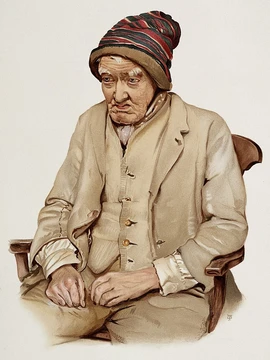
No machine-readable author provided. Mediciman90 assumed (based on copyright cla · Public domain
Apraxia is a motor planning disorder stemming from brain damage, particularly in the posterior parietal cortex or corpus callosum. The term comes from the Greek *a-* ("without") and *praxis* ("action"). The severity of the condition depends on the extent of the damage, and the fact that there is no sensory loss or paralysis helps account for the specific difficulties experienced. Some children are born with apraxia for reasons that remain unknown, with symptoms typically appearing early in development. When apraxia develops later in life—called acquired apraxia—it is usually linked to events like traumatic brain injury, stroke, dementia, Alzheimer's disease, a brain tumor, or other neurodegenerative disorders. The various types of apraxia are defined by which abilities or body parts are affected.
There are several recognized types. Apraxia of speech (AOS) involves trouble planning and coordinating the movements needed for speech, such as saying "totapo" instead of "potato." This can occur independently of issues with understanding speech, reading, writing, articulation, or prosody. Buccofacial or orofacial apraxia is the most common type, marked by an inability to perform facial movements on request—like licking the lips, winking, or whistling when asked—even though voluntary tongue, cheek, lip, pharynx, or larynx movements are affected. Constructional apraxia is the inability to draw, build, or copy simple configurations, such as intersecting shapes. Gait apraxia involves losing normal lower-limb function, like walking, without any loss of motor or sensory abilities. Ideational or conceptual apraxia is the inability to conceptualize a task and carry out multistep actions in the right order; for instance, a person might butter bread before toasting it or put on shoes before socks. They may also misuse objects, like trying to write with a screwdriver or comb hair with a toothbrush. Ideomotor apraxia involves deficits in planning or completing motor actions that rely on semantic memory—patients can explain how to do something but cannot act it out on command, such as pretending to brush their teeth. However, they may still perform the action automatically when cued, a phenomenon called automatic-voluntary dissociation. Limb-kinetic apraxia is the inability to make precise, voluntary movements of the limbs, such as waving, tying shoes, or typing, and is common
- field
- Neurology, Motor Disorders
- known_for
- Difficulty with motor planning for tasks or movements due to brain damage
- types
- Apraxia of speech, buccofacial/orofacial apraxia, constructional apraxia, gait apraxia, ideational/conceptual apraxia, ideomotor apraxia, limb-kinetic apraxia, oculomotor apraxia
- causes
- Lesions in dominant hemisphere (usually left), stroke, acquired brain injuries, neurodegenerative diseases
- treatment
- Speech therapy, occupational therapy, physical therapy; no medications indicated
Quick Facts
- Field
- Neurology, psychiatry
- Treatment
- Occupational therapy, physical therapy
Facts from the source article.
Lore & Background
Apraxia is most often due to a lesion located in the dominant (usually left) hemisphere of the brain, typically in the frontal and parietal lobes. Lesions may be due to stroke, acquired brain injuries, or neurodegenerative diseases such as Alzheimer's disease or other dementias, Parkinson's disease, or Huntington's disease. Ideomotor apraxia is typically due to a decrease in blood flow to the dominant hemisphere and particularly the parietal and premotor areas, frequently seen in patients with corticobasal degeneration. Ideational apraxia has been observed in patients with lesions in the dominant hemisphere near areas associated with aphasia, but more research is needed. Constructional apraxia is often caused by lesions of the inferior nondominant parietal lobe, and can be caused by brain injury, illness, tumor, or other condition that can result in a brain lesion.
Reader's Guide
Apraxia is significant as a motor disorder that impairs the ability to plan and execute learned movements, despite intact sensory and motor functions. Its multiple types—including apraxia of speech, buccofacial apraxia, constructional apraxia, gait apraxia, ideational apraxia, ideomotor apraxia, limb-kinetic apraxia, and oculomotor apraxia—are categorized by the specific ability or body part affected. Diagnosis remains challenging, with little consensus on proper assessment methods; the Test to Measure Upper Limb Apraxia (TULIA) is one validated tool. Treatment includes speech therapy, occupational therapy, and physical therapy, with no medications indicated. Rehabilitative treatment using contextual cues and gesture therapy has shown positive impact on apraxia and activities of daily living. The condition often co-occurs with aphasia, and patients may experience reduced functional independence. The field is in early stages of treatment design, with no single proven best approach.
Did You Know?
- The term 'apraxia' comes from Ancient Greek ἀ- (a-) 'without' and πρᾶξις (praxis) 'action'.
- Apraxia of speech can cause errors like saying 'totapo' for 'potato'.
- Buccofacial apraxia is the most common type, involving inability to carry out facial movements on demand.
- Ideomotor apraxia patients can explain how to perform an action but cannot act it out on command.
What Apraxia Is: A Disorder of Motor Planning
Apraxia is a neurological condition in which the brain's capacity to plan and sequence voluntary movements breaks down, even though the muscles themselves remain fully functional. The damage responsible typically involves the posterior parietal cortex or the corpus callosum, and the extent of that damage largely dictates how severe the resulting difficulties will be. A defining clinical feature is the absence of paralysis or sensory loss; the person can feel and move their limbs, yet cannot organize the movements into purposeful action. The condition can appear in two broad forms. Some children are born with apraxia, and no definitive cause has been identified for this congenital presentation—symptoms tend to surface during the earliest stages of motor and language development. In adults, what is termed acquired apraxia usually follows a traumatic brain injury, a stroke, a brain tumor, or a progressive neurodegenerative illness such as Alzheimer's disease. The disorder is further subdivided according to which specific ability or body region is impaired. The very name carries a transparent Greek origin: the prefix a- meaning "without" combined with praxis, meaning "action," capturing the essence of a condition defined by the loss of purposeful movement.
The Many Faces of Apraxia
The clinical landscape of apraxia is remarkably diverse, with distinct subtypes each targeting a different channel of motor expression. Apraxia of speech disrupts the planning of articulatory movements, producing distortions such as saying "totapo" for "potato," while leaving comprehension, reading, and writing intact. Buccofacial apraxia, the most frequently encountered form, robs a person of the ability to perform requested facial gestures—winking, whistling, or licking one's lips—despite full muscular capacity. Constructional apraxia impairs the copying or drawing of even simple geometric configurations. Gait apraxia strips away the coordinated function of the lower limbs without any underlying motor or sensory deficit. Ideational apraxia scrambles the logical sequence of multi-step tasks, leading a person to butter bread before toasting it or to slip on shoes before socks. Ideomotor apraxia presents a particularly striking paradox: the individual can verbally describe how to brush their teeth yet cannot mime the motion, while the same action flows effortlessly when triggered by an automatic cue such as a phone ringing. Limb-kinetic apraxia undermines fine, precise finger and hand movements, and oculomotor apraxia disrupts voluntary eye movements, forming one pillar of Balint's syndrome.
Neurological Roots and Causal Pathways
The anatomical origin of apraxia is most commonly a lesion situated in the dominant hemisphere of the brain, which in the majority of people is the left side, typically involving the frontal and parietal lobes. The inciting event behind that lesion can range from an ischemic stroke to a traumatic brain injury, a brain tumor, or the slow accumulation of damage in neurodegenerative conditions such as Alzheimer's disease, Parkinson's disease, or Huntington's disease. Different subtypes trace back to subtly different regions. Ideomotor apraxia, for instance, is frequently linked to reduced blood flow to the parietal and premotor areas of the dominant hemisphere and is a hallmark finding in patients with corticobasal degeneration. Ideational apraxia has been associated with lesions near the cortical regions that also underlie aphasia, and its localization in the frontal and temporal lobes helps explain both the motor-planning deficit and the diagnostic challenge of separating it from language disorders. Constructional apraxia, by contrast, is most often tied to damage in the inferior parietal lobe of the nondominant hemisphere, whether that damage stems from injury, infection, a tumor, or another pathological process. The precise location and nature of the lesion thus shape which specific motor-planning circuitry is compromised.
The Challenge of Diagnosis and Assessment
Identifying apraxia in a clinical setting remains an unsolved puzzle. Despite the existence of both qualitative and quantitative research tools, the field has yet to reach a consensus on a single gold-standard assessment protocol. Earlier testing methods have been criticized for failing to satisfy basic psychometric criteria and for being designed around narrow research questions that do not translate well into everyday clinical practice. One instrument that has attempted to address these gaps is the Test to Measure Upper Limb Apraxia, or TULIA, which evaluates gesture production through subtests covering the imitation and pantomime of nonsymbolic, intransitive, and transitive movements, supplemented by discrimination and recognition tasks. Its reliability and validity have been more rigorously examined than those of its predecessors. Yet even well-constructed tests may not capture how a person actually functions in daily life. A thorough evaluation therefore calls for a multi-layered approach: standardized formal testing, measurement of activities of daily living, direct observation of routines, self-report questionnaires, and structured interviews with both the patient and family members. Clinicians must also remain vigilant not to conflate apraxia with aphasia, even though the two conditions frequently co-occur.
Gallery
Frequently Asked Questions
What is Apraxia?
Apraxia is a neurological condition in which the brain cannot properly plan or sequence voluntary movements, even though the person retains full muscle strength and sensation. The name comes from Greek roots meaning 'without action.'
What causes Apraxia?
It most often results from damage to the posterior parietal cortex or the corpus callosum, triggered by events such as stroke, acquired brain injury, or progressive neurodegenerative disease. When the lesion falls in the dominant (typically left) hemisphere, symptoms tend to be more pronounced.
What types of Apraxia exist?
The condition appears in several distinct forms, including speech apraxia, buccofacial apraxia, constructional apraxia, gait apraxia, ideomotor apraxia, and limb-kinetic apraxia. Each subtype impairs a different category of motor planning, from producing speech to walking to coordinating hand movements.
How is Apraxia treated?
No medication currently cures the condition, so management centers on targeted rehabilitation such as speech therapy, occupational therapy, and physical therapy. The specific therapy mix is chosen based on which motor-planning deficits the individual is experiencing.
How is Apraxia different from paralysis?
A defining distinction is that people with apraxia have no sensory loss or muscle weakness; the difficulty lies purely in the brain's inability to organize and initiate the movement. This is why the impairment is task-specific rather than a general loss of physical capability.
More in Dementia 1-24
Spotted an error? Know more?
This is a living reference — every entry is fact-audited, and reader corrections feed straight into our audit queue. Suggest an edit · See this site's audit record