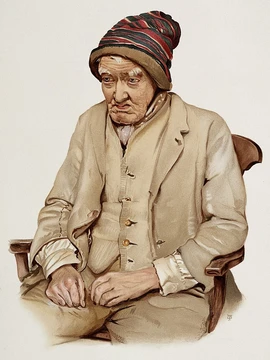
Myxedema psychosis
Psychosis from untreated hypothyroidism, treatable with thyroid hormone.

Myxedema psychosis is an uncommon psychiatric complication of untreated hypothyroidism. It can arise in conditions like Hashimoto's thyroiditis or when the thyroid has been surgically removed and the patient is not taking thyroxine. A persistently underactive thyroid may cause a slow decline in cognitive function, delirium, and in severe cases—especially among older adults—hallucinations, coma, or psychosis. The exact prevalence of myxedema psychosis is not known. A related condition, myxedema coma, occurs at a rate of about 0.22 per 100,000 people annually. Some research suggests that 5 to 15 percent of patients with myxedema develop some form of psychosis. Diagnosis is made by measuring thyroid-stimulating hormone levels, and treatment involves administering L-thyroxine. With this treatment, more than 80 percent of patients achieve complete recovery from the psychosis.
**Signs and symptoms** A person with myxedema psychosis may show signs of a thought disorder, including delusions, visual or auditory hallucinations, perseveration, loose associations, and paranoia. Alongside these psychotic features, the patient typically has severe hypothyroidism. Symptoms of hypothyroidism can include fatigue, cold sensitivity, constipation, dry skin, goiter, hoarseness, coarse and thinning hair, muscle weakness, bradycardia, depression, and memory problems. Symptoms of myxedema itself may involve low systolic and high diastolic blood pressure, respiratory depression, hypothermia, hyponatremia, shock, hypoxemia, hypercapnia, coma, seizures, respiratory failure, and death.
**History** The condition was first identified in 1888 by the Committee of the Clinical Society of London, which had been appointed in 1883 to study myxedema. The committee reported delusions and hallucinations in nearly half of the cases they examined, with insanity appearing as a complication—described as "acute or chronic manias, dementia, or melancholia, with a marked predominance of suspicion and self accusation." In November 1932, Henry F. Stoll described six individuals with "chronic invalidism with marked personality changes due to myxedema." In 1944, Hermann Zondek and Dr. Gerda Wolfsohn published a single case of psychosis occurring alongside myxedema. Author A. J. Cronin wrote about "mad myxedema" in 1937. The term "myxoedematous madness" was introduced in 1949 by senior physician Richar
- field
- Medicine (endocrinology and psychiatry)
- known_for
- Psychosis resulting from untreated hypothyroidism
- prevalence
- Unknown; 5-15% of myxedematous patients have some form of psychosis
- treatment
- L-thyroxine; over 80% achieve complete remission
- related_condition
- Myxedema coma (0.22 per 100,000 per year)
Quick Facts
- Synonym
- Myxedematous psychosis · Myxedema madness
- Pronounce
- Mik-suh-DEE-muh · sy-KOH-sis
- Specialty
- Endocrinology
- Symptoms
- Thought disorder, psychosis, delusions, hallucinations, hypothyroidism
- Complications
- Long term cognitive impairment
- Onset
- Can occur after weeks to months of poorly managed hypothyroidism
- Duration
- Varies significantly
- Causes
- Severe endocrinopathy, such as hypothyroidism, although rarely may be present in subclinical hypothyroid patients
- Diagnosis
- Thyroid function tests (TSH, T3, T4) and clinical evaluation based on hallmark symptoms such as marked bradyphrenia, hypothermia, non-pitting edema, and new onset psychosis
- Differential
- Primary psychotic disorder, illicit drug use, traumatic head injury, thyrotoxicosis, encephalitis, porphyria, sexually transmitted diseases
- Prevention
- Thyroid hormone replacement therapy, regular thyroid function tests, screening for thyroid dysfunction
- Treatment
- Thyroid hormone replacement therapy, supportive care, low-dose antipsychotics
Facts from the source article.
Lore & Background
The condition was first described in 1888 by the Committee of the Clinical Society of London, appointed in 1883 to research myxedema. The Committee had reported delusions and hallucinations in nearly half of the cases they investigated, with insanity as a complication, presenting as 'acute or chronic manias, dementia, or melancholia, with a marked predominance of suspicion and self accusation.' Henry F. Stoll had described six individuals with 'chronic invalidism with marked personality changes due to myxedema' in November 1932. In 1944, Hermann Zondek and Dr. Gerda Wolfsohn published a solitary case of psychosis occurring alongside myxedema. Author A. J. Cronin wrote an account in 1937 describing 'mad myxedema.'
Reader's Guide
Myxedema psychosis represents a critical intersection between endocrinology and psychiatry, highlighting how an organic disease—untreated hypothyroidism—can produce severe psychotic symptoms that mimic primary psychiatric disorders. Its recognition is essential because it is treatable: with administration of L-thyroxine, over 80% of patients achieve complete remission of psychosis. The condition was first documented in 1888 by the Committee of the Clinical Society of London, and later elaborated by figures such as Richard Asher, who in 1949 introduced the term 'myxoedematous madness' and described fourteen cases, nine of which had dramatic recovery with thyroid hormone treatment. Asher postulated that myxedema psychosis may be underdiagnosed because it closely resembles paranoia, schizophrenia, melancholia, and mania, and that psychotic symptoms may stem from an underlying organic disease rather than a primary psychiatric disorder. This insight underscores the importance of screening for hypothyroidism in patients presenting with psychosis, especially in the elderly. The condition is diagnosed through measurement of thyroid stimulating hormone and treated with L-thyroxine. Its prevalence remains unknown, though research suggests 5-15% of myxedematous patients experience some form of psychosis.
Did You Know?
- The condition was first described in 1888 by the Committee of the Clinical Society of London, appointed in 1883 to research myxedema.
- Richard Asher introduced the term 'myxoedematous madness' in 1949 in a paper published to the British Journal of Medicine.
- With L-thyroxine treatment, over 80% of patients achieve complete remission of psychosis.
- Myxedema coma, a related condition, affects approximately 0.22 per 100,000 per year.
More in Dementia 1-24
Spotted an error? Know more?
This is a living reference — every entry is fact-audited, and reader corrections feed straight into our audit queue. Suggest an edit · See this site's audit record