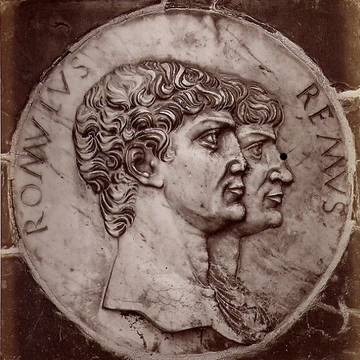
Obodas I
Nabataean king who defeated invaders and was possibly deified.

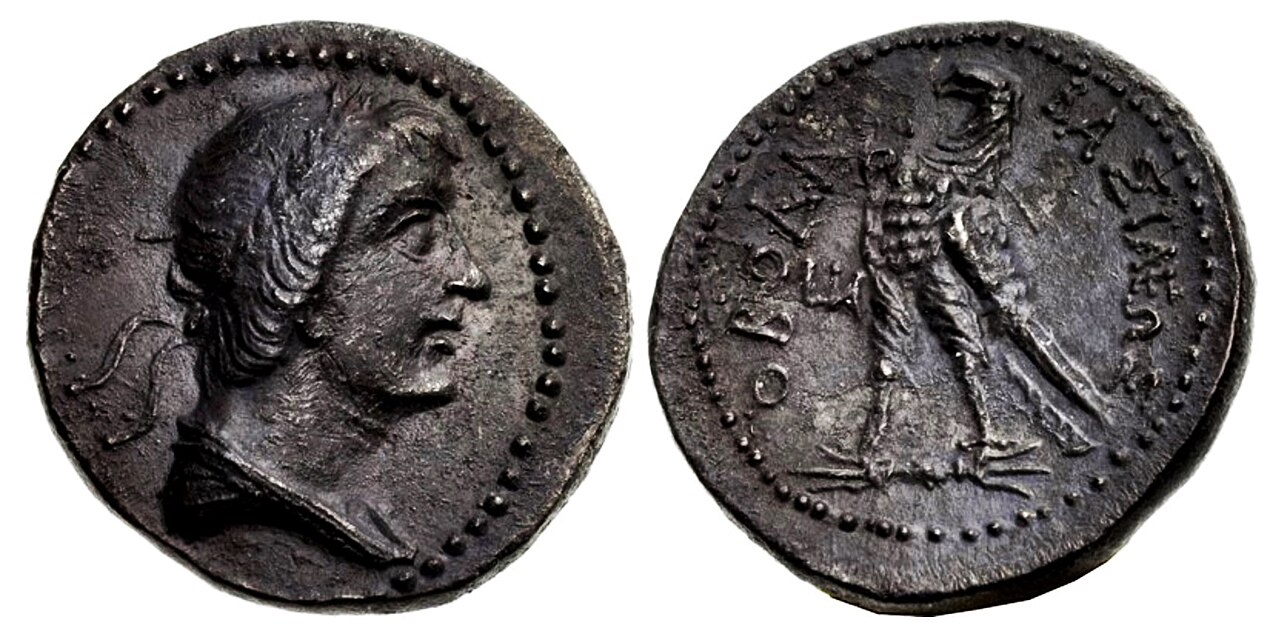
Classical Numismatic Group (CNG), Inc., www.cngcoins.com · CC BY-SA 3.0
Obodas I was a Nabataean king who ruled from 96 to 85 BC. He is celebrated for defeating both Hasmonean and Seleucid forces that invaded Nabataea, and may have been deified after death, though this is debated. An inscription honoring him at Ein Avdat, written in Nabataean Aramaic, has been cited by some as an early example of poetic verse, but it is not considered Arabic poetry.
- Reign
- 96–85 BC
- Field
- Monarchy, military leadership
- Nationality
- Nabataean
- Known for
- Defeating Hasmonean and Seleucid invaders; possible deification; namesake of Avdat
Lore & Background
Obodas I succeeded Aretas II, inheriting a war with the Hasmonean kingdom. Around 93 BC, he engaged Alexander Jannaeus near Gadara, using camel cavalry to force Jannaeus into a valley ambush. Jannaeus nearly died, and Nabataea gained control over Moab and Gilead, though the historical record does not consistently describe these regions as fully 'returned' to Nabataea. Around 86 BC, Seleucid ruler Antiochus XII Dionysus invaded Nabataea; at the Battle of Cana, Antiochus was slain and his army perished. The exact cause and timing of Obodas's death are unknown.
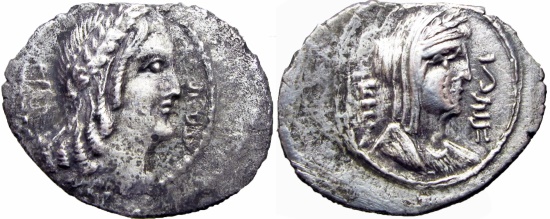
Obodas was succeeded by his brother Aretas III. He is presumed buried in the Negev at a place renamed 'Abdeh in his honor, but his tomb remains unlocated. Inscriptions praising 'Obodas the god' or 'Zeus Obodas' suggest veneration, though some scholars argue worship may have centered on a local deity for whom Obodas I and later kings were named. Holy sites were dedicated to him at Ein Avdat and Petra.
Reader's Guide
Obodas I holds significance as a military leader who secured Nabataean independence against two major Hellenistic powers. His victories over the Hasmoneans and Seleucids brought renown and territorial recovery. The Ein Avdat inscription, dated to no later than 150 CE, is a landmark in Arabic linguistic history, being the oldest known example of Arabic poetic verse, though written in Nabataean script. The question of his deification reflects broader uncertainties about Nabataean religion. Inscriptions at Petra and a bronze disc mentioning 'Obodas the god' indicate cultic activity, but scholars debate whether this worship was directed at Obodas I, a later king, or a pre-existing deity. His legacy endures in the town of Avdat, named after him, and in the ongoing scholarly interest in Nabataean culture and language.
Did You Know?
- The Ein Avdat inscription honoring Obodas I is written in Nabataean Aramaic and has been cited as an early example of poetic verse, but it is not considered Arabic poetry.
- Obodas I used camel cavalry to ambush Hasmonean king Alexander Jannaeus near Gadara around 93 BC.
- No tomb for Obodas I has yet been found; he is presumed buried in the Negev at a place renamed 'Abdeh.
- A bronze disc inscribed with 'Obodas the god' was discovered in Khirbet al-Falahat in Wadi Musa.
Warfare and the Two Great Victories
Obodas I inherited a kingdom already locked in conflict with the Hasmonean dynasty, a struggle passed down from his father Aretas II. Around 93 BC, he met the forces of Alexander Jannaeus in Nabataean territory near Gadara, a site just east of the Sea of Galilee close to the Golan Heights. Employing camel cavalry, Obodas lured Jannaeus into a narrow valley and sealed the ambush. The Hasmonean king nearly perished in the engagement, and in the aftermath the mountainous regions of Moab and Gilead—previously seized by the Hasmoneans from Nabataean hands—were restored to the kingdom. A decade later, around 86 BC, the Seleucid ruler Antiochus XII Dionysus launched an invasion into Nabataea. At the Battle of Cana, Antiochus was killed and his demoralized troops were lost in the desert. Obodas achieved extraordinary renown for repelling both the Hasmoneans and the Greeks, yet he died shortly after this second triumph, possibly succumbing to wounds received in combat. His brother Aretas III then took the throne.
The Question of Deification
After his death, Obodas I became the subject of a remarkable religious phenomenon. Multiple inscriptions across Nabataean territory refer to him as "Obodas the god" or "Zeus Obodas," and the sixth-century Byzantine writer Uranios recorded that the Nabataeans worshipped him as a deity. Sacred sites dedicated to Obodas have been identified at both Ein Avdat and Petra, with surviving inscriptions confirming their existence. At Petra, a niche inscription above a cistern near the Ed-Deir complex mentions a "mrzh'"—interpreted as a small, exclusive religious body—devoted to "Obodat the god," suggesting the entire Deir area may have functioned as a cult center. A bronze disc found at Khirbet al-Falahat in Wadi Musa likewise bears the phrase "Obodas the god." Yet scholars remain divided: some argue the veneration actually centered on a pre-existing local deity named Obodat, to whom the kings were merely named, while others contend it was a later king sharing the name who received divine honors rather than Obodas I himself.
The Ein Avdat Inscription and Arabic Verse
Carved into a rock face overlooking the Ein Avdat gorge, roughly four kilometers from the ruins of a Nabataean city in the Negev, a six-line inscription bearing the king's name stands as one of the most significant textual discoveries connected to Obodas I. The first three lines are composed in Nabataean Aramaic, while the final three shift into a colloquial form of Arabic—what scholars call Nabataean Arabic. These closing lines employ a distinctly poetic register and have posed persistent challenges to translators. The Nabataean alphabet, being a variant of Aramaic script, could not fully capture the range of sounds present in spoken Arabic, and the visual similarity between the letters "d" and "r" in that script further complicates accurate decipherment. Damage to the stone obscures half of the second line, adding another layer of difficulty. Dated no later than 150 CE, this text is recognized as the oldest known inscription in Arabic rendered in a non-Arabic alphabet, and it is regarded as one of the earliest surviving examples of poetic verse in the Arabic language.
Name, Town, and the Search for a Tomb
The king's name, as it appears in Nabataean Aramaic, is composed of four letters—ʾ-b-d-t—and is transliterated variously as ʿŌbōdaṯ, ʿAbda(t), or Abdeh. The scholar Al-Mallah renders it in Arabic as ʿubādah, a word meaning "submission, obedience, or worship of God." This name is directly tied to the town of Avdat, whose original Arabic form was Abda(t), named in his honor. Obodas I is presumed to have been buried in the Negev at the very place that later took his name, yet no tomb has ever been located. The Nabataeans wrote using a developed form of Aramaic script while speaking a dialect of Old Arabic, a linguistic duality visible in many of their inscriptions. Several texts mention Obodas, most carved into stone and at least one inscribed on a bronze object. At Petra, a dedication to the deity Dushara addresses him as both "king of the Nabataeans" and "king of the Arabs," the same dual titles his father Aretas II had carried. After Obodas I's death, the throne passed to his brother Aretas III, continuing the dynastic line through a name that would echo through Nabataean history.
Gallery
Frequently Asked Questions
Who is Obodas I?
Obodas I was a Nabataean king who held the throne from 96 to 85 BC and is best remembered for his military victories against foreign invaders. He is sometimes discussed in the context of posthumous deification among Nabataean rulers, though scholars continue to debate whether that elevation actually took place.
What role does Obodas I play in the deified-monarch tradition?
Within Nabataean royal veneration, Obodas I is honored as a warrior-king who repelled both Hasmonean and Seleucid armies from Nabataean territory. If his deification is accepted, he occupies the place of a divine sovereign whose martial prowess was elevated to a sacred status after death.
Why is Obodas I important to the Nabataean legacy?
He is credited with defending Nabataean sovereignty against two major external powers and securing the kingdom's independence during a vulnerable period. His name endures through the site of Avdat, and the inscription found there is occasionally cited as an early example of poetic verse in Nabataean Aramaic.
Is the Ein Avdat inscription considered Arabic poetry?
No; the text is written in Nabataean Aramaic rather than Arabic, and although some scholars have noted rhythmic or verse-like qualities, it is not classified as Arabic poetry. It remains a key artifact for understanding how Obodas I was commemorated after his death.
More in Deified male monarchs 1-24
Spotted an error? Know more?
Reader corrections go straight into our review queue. Suggest an edit · How this site is sourced