Kʼinich Janaabʼ Pakal
Maya ajaw of Palenque who reigned 68 years.

K'inich_Janaab_Pakal_I.jpg : Jami Dwyer derivative work: Simon Burchell ( talk ) · CC BY-SA 2.0
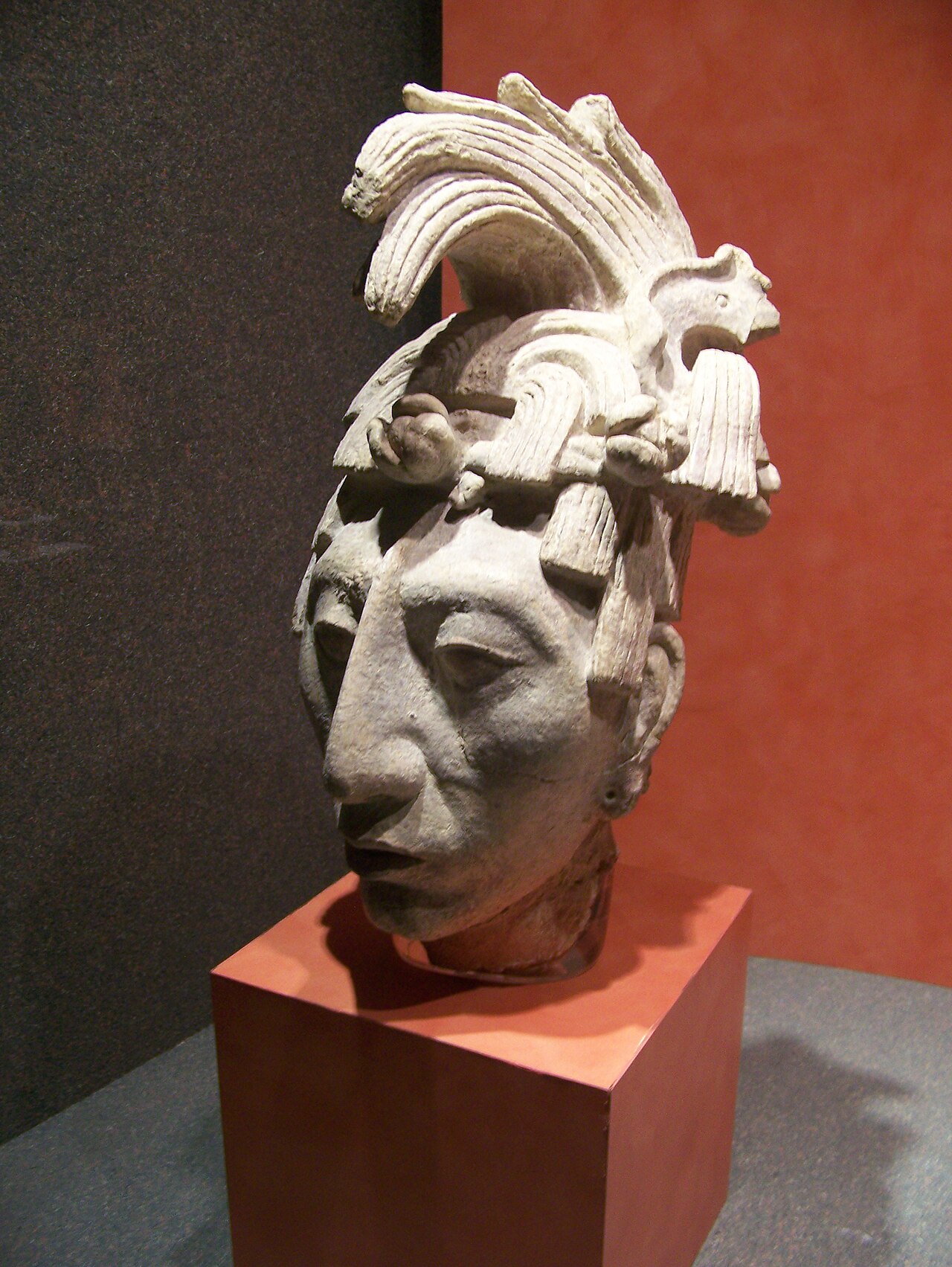
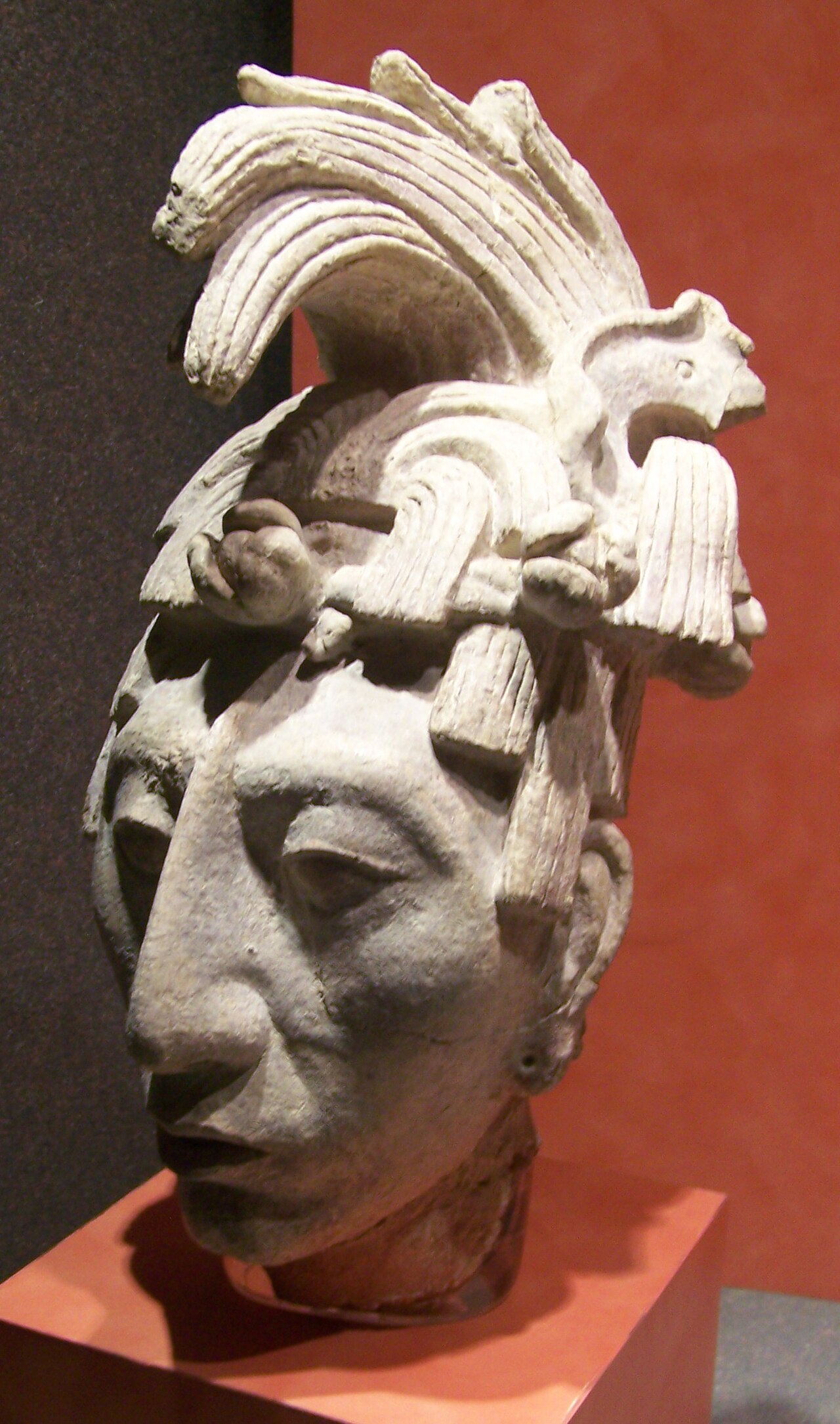
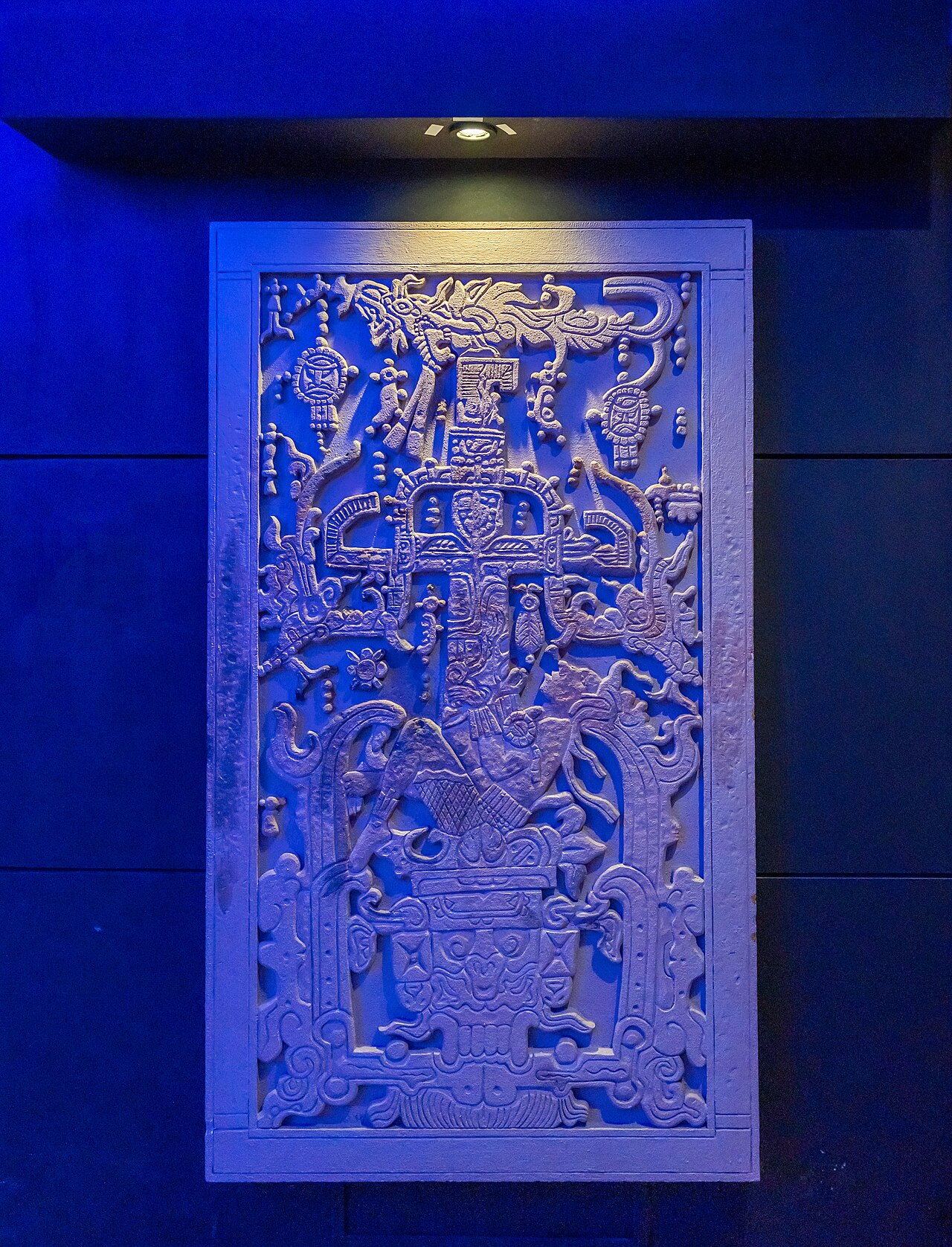
Kʼinich Janaabʼ Pakal I (24 March 603 – 29 August 683), also known as Pacal or Pacal the Great, was ajaw of the Maya city-state of Palenque during the Late Classic period. He acceded to the throne in July 615 at age 12 and ruled for 68 years, one of the longest verified reigns of any sovereign monarch in history. He is best known for his extensive building program and the elaborate carved lid of his sarcophagus, which has attracted pseudoarchaeological speculation.
Quick Facts
- Title
- Kʼuhul Baakel Ajaw · (Divine Lord of Palenque)
- Coronation
- 27 July 615
- Succession
- King of Palenque
- Reign
- 27 July 615 – 29 August 683
- Predecessor
- Sak Kʼukʼ
- Successor
- Kʼinich Kan Bahlam II
- Spouse
- Lady Tzʼakbu Ajaw of Uxteʼkʼuh
- Issue
- Kʼinich Kan Bahlam II / Kʼinich Kʼan Joy Chitam II / Tiwol Chan Mat (probable)
- Father
- Kʼan Moʼ Hix
- Birth Date
- 24 March 603
- Birth Place
- Palenque (now in Chiapas, Mexico)
- Death Date
- 29 August 683 · 603 · 03 · 19
Facts from the source article.
Lore & Background
Kʼinich Janaab Pakal was born in Palenque on 9.8.9.13.0 (March 603) to Lady Sak Kʼukʼ and Kʼan Moʼ Hix. His birth came during a turbulent period: Palenque had been sacked by Calakmul four years earlier, and another attack occurred in 611. The deaths of Ajaw Ajen Yohl Mat and Pakal's maternal grandfather Janahb Pakal in 612 triggered a succession crisis. After an interim regency by his mother, Pakal ascended the throne on 9.9.2.4.8 (July 615) at age 12. He married Ix Tzʼakbu Ajaw in March 626; they had at least two sons, Kan Bahlam and Kʼan Joy Chitam, and probably a third, Tiwol Chan Mat. Pakal expanded Palenque's power, capturing prisoners from Pipaʼ and Santa Elena, and made Santa Elena a tributary. His building projects included the Palace (adding Houses A, B, C, and E) and the Temple of the Inscriptions. He died on 9.12.11.5.18 (August 683) at age 80, after ruling 68 years and 33 days.
Reader's Guide
Pakal's significance lies in his long, stable reign that transformed Palenque into a major Maya power. His building program produced some of the finest art and architecture of Maya civilization, including the Palace and the Temple of the Inscriptions, where his tomb was discovered in 1952 by Alberto Ruz Lhuillier. The carved sarcophagus lid became iconic, though it has been subject to pseudoarchaeological interpretations. After his death, Pakal was deified as a patron god of Palenque. Later inscriptions depict him as still active decades after his biological death, handing ritual instruments to his grandson in 736 and commissioning the Tablet of the 96 Glyphs. His skeletal remains show artificial cranial elongation and filed teeth shaped to mimic the Ikʼ glyph, reflecting Maya cultural practices. His reign is the second-longest in the history of the Americas and was the longest in world history for over a millennium.
Did You Know?
- Pakal's full name, Kʼinich Janaab Pakal, means 'Radiant Corn-Flower (?) Shield' in Classic Maya.
- He was buried in a colossal sarcophagus within the Temple of the Inscriptions, which took four years to excavate after its discovery in 1948.
- His maximum living stature was calculated at 163 cm, within the male range for Prehispanic Maya.
- Pakal's two central upper incisors were filed to mimic the Ikʼ glyph, meaning 'wind' or 'breath'.
Ascension Amid Crisis
Kʼinich Janaab Pakal was born on 24 March 603 in Palenque to Lady Sak Kʼukʼ of the ruling dynasty and her husband Kʼan Moʼ Hix. His arrival fell in the shadow of repeated devastation: Calakmul had sacked Palenque just four years before his birth, and in 611, during his early childhood, the Calakmul ajaw Scroll Serpent led yet another catastrophic assault. The following year compounded the disaster, as both the reigning ajaw Ajen Yohl Mat and his heir Janahb Pakal—Pakal's own maternal grandfather and namesake—died in quick succession. This cascade of losses plunged the city-state into a succession crisis. Pakal's mother stepped forward as regent, steadying the throne until her son was ready to assume the role. On 9.9.2.4.8, corresponding to July 615, the twelve-year-old Pakal formally took the rulership of Palenque. He would hold that position for the remainder of his life, ultimately completing a reign of sixty-eight years and thirty-three days—the fifth-longest verified sovereign tenure in recorded history and the longest in the Americas for well over a millennium.
Architectural and Artistic Program
Pakal's most enduring material legacy is the sweeping construction and renovation program he directed across Palenque. He began his first major project in 647, at the age of forty-four, overseeing what is now called El Olvidado, a temple set apart from the main Lakamhaʼ complex. His most celebrated achievement, however, was the transformation of the Palace of Palenque. The structure already existed, but Pakal dramatically enlarged it, adding monument rooms atop the older level and erecting Building E, known in Classic Maya as Sak Nuk Naah, meaning White Skin House, for its distinctive white paint coat—a deliberate departure from the red used elsewhere in the palace. The east court served as a ceremonial space celebrating military victories. Houses B and C followed in 661, and House A in 668, its walls covered with frescoes depicting prisoners taken in 662. The inscriptions and monuments tied to his name, including the Oval Palace Tablet, the Hieroglyphic Stairway, the Subterranean Thrones, the Tableritos, the Olvidado piers, and the sarcophagus texts, remain among the finest surviving examples of Maya art and epigraphy.
Military and Diplomatic Reach
Throughout his long tenure, Pakal steadily extended Palenque's influence across the western Maya region. In 628, one of his officials, an aj kʼuhuun, was seized by the rival state of Piedras Negras; just six days later, Nuun Ujol Chaak, the ajaw of Santa Elena, was captured and brought to Palenque, after which Santa Elena became a tributary of Pakal's court. In 659 he took six prisoners, among them Ahiin Chan Ahk, identified as a lord from Pipaʼ, a polity generally linked to the site of Pomona. Four years later, in 663, Pakal slew another Pipaʼ lord and captured six additional individuals from Santa Elena, reinforcing his dominance over that settlement. These military successes were carefully inscribed and displayed: the east court of the Palace marked triumphs, and the frescoes in House A recorded the 662 captives. Combined with his diplomatic marriage in March 626 to Ix Tzʼakbu Ajaw, a descendant of the former Toktahn ruling dynasty from the satellite settlement of Uxteʼkʼuh, these campaigns wove a network of alliances and subordination that anchored Palenque's regional authority for decades.
Death, Deification, and Popular Memory
Pakal died on 9.12.11.5.18, the equivalent of 29 August 683, at the age of eighty, after sixty-eight years and thirty-three days on the throne. His wife Ix Tzʼakbu Ajaw had already been gone for eleven years, having passed in November 672 after forty-seven years of marriage, and his third son Tiwol Chan Mat had been buried eight years before Pakal's own passing. Upon his death, Pakal was elevated to divine status, becoming one of the patron gods of Palenque, survived by his sons Kan Bahlam and Kʼan Joy Chitam. In modern popular culture, however, Pakal is perhaps most instantly recognizable for the carved lid of his sarcophagus, an image that has spawned decades of pseudoarchaeological speculation far removed from the historical record. His full name, Kʼinich Janaab Pakal, was not securely deciphered from extant inscriptions until relatively recently, and before that he went by approximations such as Sun Shield or 8 Ahau. The regnal numbering of Pakal I versus Pakal II remains a source of confusion, since his maternal grandfather also bore the name Janahb Pakal, while two later successors, Kʼinich Janaab Pakal II around 742 and Janaab Pakal III around 799, carry the same personal name.
Gallery



Frequently Asked Questions
Who is Kʼinich Janaabʼ Pakal?
Kʼinich Janaabʼ Pakal I, often called Pacal the Great, was the ajaw (ruler) of the Maya city-state of Palenque during the Late Classic period. He ascended to the throne in 615 CE at just twelve years old and governed the city for nearly seven decades.
What was Kʼinich Janaabʼ Pakal's role and what is he best known for?
As ajaw of Palenque, he directed an ambitious building program that produced landmarks such as the Palace complex and the Temple of the Inscriptions. His 68-year reign stands as one of the longest verified tenures of any sovereign ruler in recorded history.
Why is Kʼinich Janaabʼ Pakal considered important in Maya history?
His extraordinarily long reign allowed him to consolidate Palenque's political and architectural identity across multiple generations. The monuments he commissioned remain among the most studied examples of Late Classic Maya civic and funerary design.
What is the controversy surrounding Kʼinich Janaabʼ Pakal's sarcophagus lid?
The carved lid depicting a figure in a spread-eagle posture has been misread by some fringe writers as evidence of ancient astronauts or space travel. Mainstream Mesoamerican scholars explain the imagery as a standard Maya representation of the soul's descent into the underworld.
More in Deified male monarchs 1-24
Spotted an error? Know more?
Reader corrections go straight into our review queue. Suggest an edit · How this site is sourced