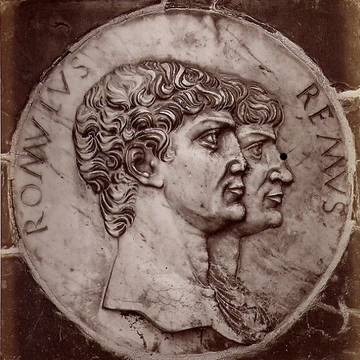
Antiochus II Theos
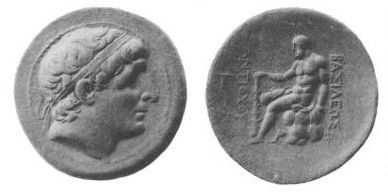
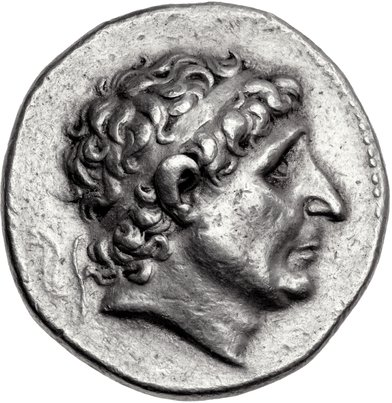
The Seleucid king who was called 'God' by the Milesians.

CNG · CC BY-SA 2.5
Antiochus II Theos (286–246 BC) ruled the Hellenistic Seleucid Empire from 261 to 246 BC. He took the throne after his father, Antiochus I Soter, died in the winter of 262–61 BC. Antiochus II was the younger son of Antiochus I and Stratonice, a princess who was the daughter of Demetrius Poliorcetes.
Although Antiochus II was not originally expected to become king, his older brother Seleucus was executed in 267 BC on charges of rebellion, clearing the path. Antiochus II proved a forceful ruler who managed to keep the sprawling Seleucid realm largely intact during his lifetime. However, his decision to divorce his first wife, Laodice, and marry the Ptolemaic princess Berenice as part of a peace treaty created a succession crisis after his death that weakened the empire and led to major territorial losses.
Soon after taking power, Antiochus II faced ongoing tensions with Ptolemaic Egypt and launched the Second Syrian War alongside Antigonus II of the Antigonid dynasty. The fighting took place mainly along the coasts of Asia Minor and was complicated by local despots and restless city-states. Antiochus II made some gains there, capturing Miletus and Ephesus, which gave him direct access to the Aegean Sea. During the war, he took the title Theos (“God”) after the Milesians hailed him as such for killing the tyrant Timarchus. Around the same time, he attempted to establish a foothold in Thrace, though details are scarce; a mint in Byzantium briefly issued coins in his name.
The war did not significantly shift the balance of power in the Eastern Mediterranean. Coele-Syria, the main disputed region between the Seleucids and Ptolemies, stayed firmly under Ptolemaic control. In 257 BC, the Ptolemaic pharaoh Ptolemy II Philadelphus invaded Seleucid-held Syria, but the outcome is unknown. By 253 BC, with his Antigonid allies sidelined by rebellions, Antiochus II made peace with Ptolemy II. As part of the settlement, he divorced Laodice and married Ptolemy II’s daughter Berenice, agreeing that any children from this union would inherit the throne. Laodice was well provided for in the divorce: she received large land grants in Anatolia, including estates in the Hellespont, properties near Cyzicus, Ilion, and Caria, plus revenues and tax exemptions. A royal record at Sardis stated her land titles were to be treated as royal possessions.
Laodice remained politically powerful and continued scheming to regain her position as queen. By 246 BC, possibly after hearing of Ptolemy II’s death, Antiochus II left Berenice and their infant son Antiochus in Antioch and returned to live with Laodice in Asia Minor. He died suddenly soon after, and Laodice was widely suspected of poisoning him. He was buried in the Belevi Mausoleum.
A succession struggle erupted immediately. Berenice initially held Antioch, but her son was an infant. Laodice proclaimed her eldest son, Seleucus, as King Seleucus II and moved from Asia Minor, claiming Antiochus II had reversed his decision on his deathbed and named Seleucus his heir. Berenice’s brother, Ptolemy III, marched from Egypt to support her, only to find her and her son murdered by Laodice’s partisans. Enraged, Ptolemy III launched the Third Syrian War, which proved disastrous for the Seleucid Empire.
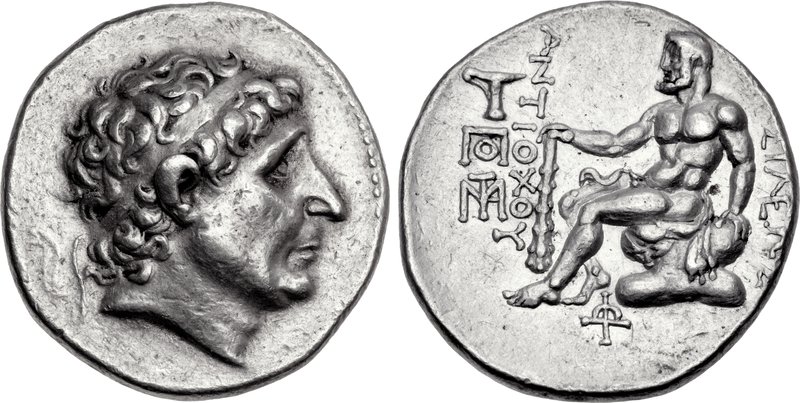
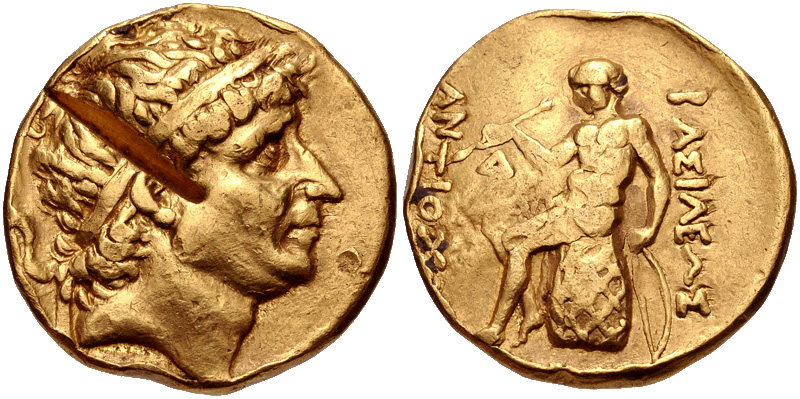
Little is known about Antiochus II’s activities in the eastern Upper Satrapies, such as Media, Parthia, Bactria, and Persis. Preoccupied with Mediterranean conflicts and family issues, he appointed independent-minded men like Diodotus and Andragoras as satraps there. These appointments eventually led to the creation of the independent Greco-Bactrian Kingdom and the Parthian Empire. The quantity of Antiochus II’s coinage in Bactria declined compared to his father’s, which scholars have interpreted in various ways. Some argue that ambitious satraps may have weakened ties with the central government during his reign without openly declaring independence. However, posthumous coinage of a popular king was common in the Hellenistic period, and Antiochus II may have minted coins in his father’s name to legitimize his own rule and dynasty.
An uncertain Antiochus appears in the Edicts of Ashoka as one of the recipients of the Indian emperor’s Buddhist proselytism. Most scholars, however, believe the Greek king mentioned is Antiochus II’s father, Antiochus I Soter, who had closer ties to the East.
Quick Facts
- Title
- Basileus
- Succession
- Basileus of the Seleucid Empire
- Reign
- 2 June 261 – July 246 BC
- Predecessor
- Antiochus I Soter
- Successor
- Seleucus II Callinicus
- Spouse
- Laodice I / Berenice
- Issue
- with Laodice: / Seleucus II Callinicus / Antiochus Hierax / Apama / Stratonice of Cappadocia / Laodice / with Berenice: / Antiochus
- House
- Seleucid dynasty
- House Type
- Dynasty
- Mother
- Stratonice
- Birth Date
- 286 BC
- Birth Place
- Syria
Facts from the source article.
Lore & Background
Antiochus II inherited lasting tensions with Ptolemaic Egypt and soon initiated the Second Syrian War in alliance with Antigonus II of the Antigonid dynasty. The war was largely fought along the coasts of Asia Minor and conflated with the constant intrigues of petty despots and restless city-states in Asia Minor. Antiochus II made some gains in Asia Minor and acquired direct access to the Aegean Sea by capturing Ephesus. During the war he assumed the title Theos, being such to the Milesians in slaying the tyrant Timarchus. At around the same time Antiochus II also made some attempt to get a footing in Thrace, details of which are largely unknown. In the end the war did little to alter the general balance of power. Coele-Syria remained firmly in the hands of the Ptolemies. In 253 BC, with his Antigonid allies knocked out of the war by rebellions, Antiochus II made peace with Ptolemy II. As part of the settlement, he divorced Laodice and married Ptolemy II's daughter Berenice. Laodice remained powerful and influential. By 246 BC, possibly at the news of Ptolemy II's death, Antiochus II had left Berenice and their infant son in Antioch to live again with Laodice in Asia Minor. He soon suddenly died and Laodice was widely accused of having him poisoned. He was buried in the Belevi Mausoleum. A succession struggle erupted, leading to the Third Syrian War. Very little is known about any Antiochus II's activities in regards to the eastern Upper Satrapies. An uncertain Antiochus is mentioned in the Edicts of Ashoka, but a majority opinion holds that the Greek king mentioned there is in fact Antiochus II's father, Antiochus I Soter.
Reader's Guide
Antiochus II Theos was a Seleucid king who reigned 261–246 BC. He fought the Second Syrian War, assumed the title Theos after slaying the tyrant Timarchus at Miletus, and made peace by marrying Berenice. His repudiation of Laodice led to a succession crisis after his death.
Did You Know?
- Antiochus II assumed the title Theos after the Milesians granted it to him for slaying the tyrant Timarchus.
- He captured Ephesus during the Second Syrian War, not Miletus, which was already under Seleucid control.
- His sudden death in 246 BC was widely blamed on poisoning by his first wife Laodice.
The Second Syrian War and Mediterranean Ambitions
Antiochus II inherited a kingdom perpetually locked in rivalry with Ptolemaic Egypt, and he wasted no time in testing that tension. Allying himself with Antigonus II of the Antigonid dynasty, he launched the Second Syrian War, a conflict that played out primarily along the coasts of Asia Minor amid the constant scheming of local despots and restless city-states. His most tangible military successes came in that region: he seized Miletus and Ephesus, giving the Seleucid realm direct access to the Aegean Sea. It was in Miletus, after slaying the local tyrant Timarchus, that the citizens of that city bestowed upon him the honorific title Theos, meaning God. Around the same period, he also made an ill-documented attempt to establish a foothold in Thrace, evidenced only by a brief run of coins struck at Byzantium in his name. Yet despite these localized victories, the war ultimately failed to shift the broader balance of power in the Eastern Mediterranean. Coele-Syria, the principal territory contested between the two great Hellenistic kingdoms, remained firmly under Ptolemaic control, and in 257 BC Ptolemy II even launched an invasion into Seleucid-held Syria whose outcome remains unknown to historians.
The Marriage That Undid an Empire
By 253 BC, his Antigonid allies had been driven out of the fighting by internal uprisings, and Antiochus II was forced to seek terms with Ptolemy II Philadelphus. The settlement carried a deeply personal cost: the terms demanded he put away his first wife Laodice and take Ptolemy II's daughter Berenice as his new queen, with the stipulation that offspring from this marriage would carry the right to the Seleucid throne. Laodice was not left destitute. Surviving inscriptions document a generous settlement: large estates along the Hellespont, additional holdings in the vicinity of Cyzicus and Ilion, and properties in Caria, supplemented by territorial revenues and tax exemptions. A royal record at Sardis specified that her land titles were to be treated as royal possession. Yet Laodice never relinquished her political ambitions. By 246 BC, perhaps prompted by news of Ptolemy II's passing, Antiochus abandoned Berenice and their baby son in Antioch and returned to share his life with Laodice in Asia Minor. His death came swiftly and without warning, and widespread suspicion fell on Laodice as the one who had administered poison. A dynastic crisis broke open with terrifying speed, culminating in the murder of Berenice and her infant child and Ptolemy III's devastating Third Syrian War, which shook the empire's foundations and caused massive territorial losses that this fateful marital decision had set in motion.
The Eastern Fraying
While Antiochus II consumed himself with Mediterranean warfare and domestic intrigue, the vast eastern reaches of the Seleucid realm—Media, Parthia, Bactria, and Persis—received remarkably little attention from his court. Rather than maintaining tight central control over those Upper Satrapies, he appears to have appointed independent-minded men to govern the region, most notably Diodotus and Andragoras. In the long run, these two men's tenures would give rise to the independent Greco-Bactrian Kingdom and the Parthian Empire respectively. Numismatic evidence compounds the concern: the volume of coinage bearing Antiochus II's name struck in Bactria drops sharply relative to the output of his father's reign. Scholars have interpreted this in various ways. One school of thought holds that ambitious provincial governors used the king's preoccupation elsewhere to steadily loosen their allegiance to the central authority, all without ever making a formal declaration of sovereignty. Alternatively, striking coins in the name of a beloved predecessor was a standard Hellenistic practice, and Antiochus may have invoked his half-Sogdian father's name on Bactrian coinage as a means of reinforcing his own legitimacy and that of his house.
A Throne Forged in Sibling Rivalry
Antiochus II was the younger son of Antiochus I Soter and the celebrated queen Stratonice, daughter of Demetrius Poliorcetes. As the second-born, he was never initially expected to inherit the Seleucid throne. That changed in 267 BC, when his father ordered the execution of his elder brother Seleucus, who had been charged with rebellion. With the way now clear, Antiochus took the throne in the winter of 262–61 BC, assuming command of one of the largest and most geographically sprawling kingdoms of the Hellenistic world. His parentage placed him at the intersection of two powerful royal houses, and his mother Stratonice's fame lent additional prestige to his claim. Yet the shadow of that fratricidal removal would linger throughout his reign and beyond. When the succession crisis erupted after his own death in 246 BC, Laodice declared her eldest son Seleucus the legitimate king, asserting that in his final moments Antiochus II had overturned his previous arrangement and designated Seleucus as his chosen heir. The irony was bitter: the very name that had been erased from the line of succession through execution in 267 BC now reappeared at the center of a dynastic war that would bleed the empire dry.
Gallery
Frequently Asked Questions
Who is Antiochus II Theos?
Antiochus II Theos was a Seleucid king who ruled from 261 to 246 BC, stepping into the throne after his father Antiochus I Soter. He was the younger son of Antiochus I and Stratonice, the latter being a daughter of Demetrius Poliorcetes.
What does the title 'Theos' signify for Antiochus II?
'Theos' is Greek for 'God' and was a royal epithet he adopted during his reign, following the Hellenistic convention of kings claiming a divine status. It signaled that his authority was meant to transcend ordinary mortal rule.
What is Antiochus II Theos most known for?
He is best remembered for his involvement in the Second Syrian War and for the explosive succession crisis he set off by repudiating his first wife, Laodice, in order to marry a Ptolemaic princess as a peace gesture. That single marital decision ultimately fractured the stability of his realm.
Why does Antiochus II Theos matter in Seleucid history?
Though his reign was relatively brief, he demonstrated a firm hand that held a vast and diverse empire together. His enduring legacy, however, is the dynastic conflict his marriage choices unleashed, which destabilized the Seleucid line for years after his death.
More in Deified male monarchs 1-24
Spotted an error? Know more?
Reader corrections go straight into our review queue. Suggest an edit · How this site is sourced