
Hamilton Tigers (NHL)
First NHL team to finish first and then dissolve due to a players' strike.

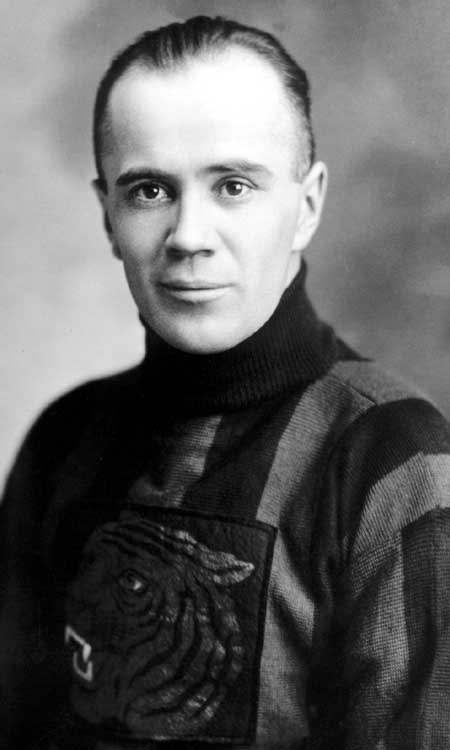
Hamilton Tigers · Public domain
The Hamilton Tigers were an NHL team based in Hamilton, Ontario, active from 1920 to 1925. The franchise came about when the Quebec Bulldogs were sold to buyers in Hamilton. The team struggled for years, then finished first overall in the 1924–25 season. However, a players’ strike ahead of the playoffs led to the end of the franchise. The players’ contracts were sold to a New York group to stock the expansion New York Americans. A separate amateur team using the Tigers name existed before and during the NHL club’s run, and a minor league professional Hamilton Tigers team played from 1926 to 1930.
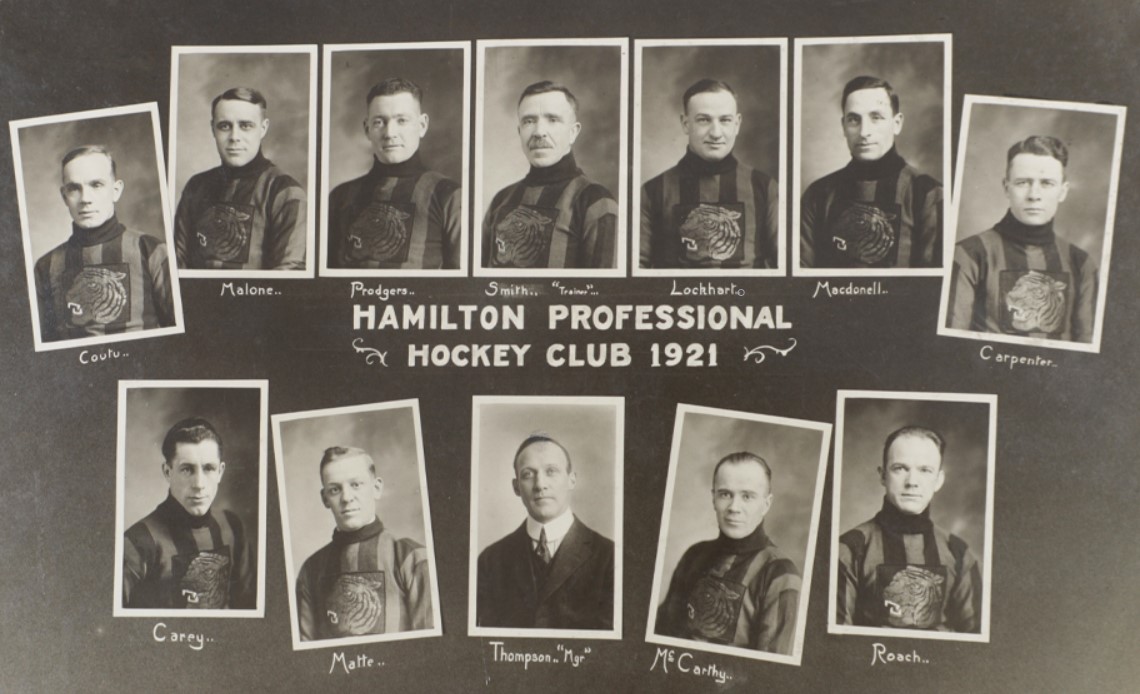
The team’s roots go back to the Quebec Hockey Club, which began in 1878 as an amateur side and turned professional in 1909. Quebec was an original NHL member in 1917, but financial troubles and the NHA-NHL dispute kept the franchise dormant until the 1919–20 season, when the Quebec Athletic Club ran it. That season was a disaster: despite having Joe Malone, the club won only four of 24 games. After that season, the NHL reclaimed the Quebec franchise and sold it to the Abso Pure Ice Company of Hamilton. The club moved to Hamilton for the 1920–21 season and was renamed the Hamilton Tigers. This move was made to block a rival league that was trying to place a team in Hamilton. At the time, Hamilton was Canada’s fifth-largest city and third-largest in Central Canada, with 114,200 people, making it a key market. Percy Thompson, part-owner and manager of the Barton Street Arena, became the team’s manager. The Tigers nickname was already used by many sports teams in the city. Newspapers often called the senior OHA team the “Tigers,” while the NHL team was either nameless or referred to as the “professionals.”
Moving to Hamilton did not help the record. The Tigers earned a shutout in their first game—the first team ever to do so—beating the Montreal Canadiens 5–0 on December 22, 1920, but they remained as uncompetitive as the Bulldogs had been. The NHL then ordered the other three teams to send players to Hamilton. Even with better talent, the Tigers finished last with 6 wins, 18 losses, and no ties in 24 games. Malone, who missed the first four games for business reasons, scored 30 goals in 20 games. The next three seasons were equally poor.
Quick Facts
- Can Eng
- 1
- Team Name
- Hamilton Tigers
- Text Colorr
- #000000
- Founded
- 1878
- History
- Quebec Bulldogs / 1878–1920 / Hamilton Tigers / 1920–1925
- Arena
- Barton Street Arena
- City
- Hamilton, Ontario, Canada
- Team Colors
- Black, gold, white / #010101 #FFC72C #FFFFFF
Facts from the source article.
Lore & Background
The team originated from the Quebec Hockey Club, which turned professional in 1909 and was a charter NHL member in 1917. Financial difficulties and the NHA-NHL dispute left the franchise dormant until the 1919–20 season, when it was operated by the Quebec Athletic Club. After a dismal season with only four wins, the NHL sold the franchise to the Abso Pure Ice Company of Hamilton, and the team moved for the 1920–21 season, renamed the Hamilton Tigers. The move was partly to prevent a rival league from landing a club in Hamilton, then the fifth-largest city in Canada with a population of 114,200. The team played at the Barton Street Arena, managed by Percy Thompson. Despite earning a shutout in their first game—a 5–0 win over the Montreal Canadiens on December 22, 1920—the Tigers were noncompetitive, finishing last for five straight seasons (including the Bulldogs' final year). The NHL ordered other teams to supply players, but it was not enough. After the 1921–22 season, Art Ross was hired as coach, and superstar Joe Malone was traded to the Canadiens. In 1923–24, under coach Percy LeSueur, four players from the Sudbury Wolves—brothers Red and Shorty Green, Alex McKinnon, and Charlie Langlois—helped the team achieve a high of nine wins.
Reader's Guide
The Hamilton Tigers are significant as the first NHL team to finish first overall and then be dissolved due to a players' strike. In the 1924–25 season, the team roared to a 19–10–1 record, but during rail travel back from the final game, players demanded $200 pay for six extra games added to the schedule. Management refused, citing contracts that covered a fixed period regardless of game count. NHL president Frank Calder warned the players they would be suspended and replaced by fourth-place Ottawa. The impasse led Calder to declare the Montreal Canadiens league champions on March 14, 1925, and fine each player $200. The Canadiens then lost the Stanley Cup to the Victoria Cougars, the last time an NHL team lost to a rival league. The players' contracts were sold to New York bootlegger 'Big Bill' Dwyer for $75,000, stocking the expansion New York Americans. A Hamilton franchise was still considered for 1925–26 but never materialized. The last active Tigers player was Billy Burch, who retired in 1933.
Did You Know?
- The players' strike in 1925 was the first in NHL history.
- The franchise's players were sold to New York interests for $75,000 to form the New York Americans.
From Quebec to Hamilton: A Franchise in Search of Identity
The Hamilton Tigers trace their lineage to the Quebec Hockey Club, which first took the ice in 1878 as an amateur outfit before turning professional in 1909. As a charter member of the NHL in 1917, the Quebec franchise endured financial hardship and the NHA-NHL dispute, leaving it dormant until the 1919-20 season. That final year in Quebec was a disaster: even with Joe Malone on the roster, the club managed just four wins in 24 games. The NHL reclaimed the franchise and sold it to the Abso Pure Ice Company of Hamilton, Ontario, for the 1920-21 season. The relocation was strategic—Hamilton, with a population of 114,200, was the fifth-largest city in Canada and the third-largest in Central Canada, making it a vital hockey market. The move also served to block a rival league from establishing a foothold in the city. Percy Thompson, a part-owner and manager of the Barton Street Arena, took the helm. The 'Tigers' nickname was not new to Hamilton; it was already associated with multiple local sports teams, and contemporary newspapers often distinguished the NHL club simply as 'the professionals' to avoid confusion with the OHA senior team.
Five Seasons in the Cellar
The Tigers' first season in Hamilton opened with a historic note—their 5-0 shutout over the Montreal Canadiens on December 22, 1920, was the first ever recorded in NHL history. Yet that single bright moment did little to mask a team as noncompetitive as its Quebec predecessor. The NHL was forced to order the other three clubs to loan players to Hamilton, but even that intervention could not lift the Tigers out of last place. They finished with six wins, eighteen losses, and no ties in 24 games. Joe Malone, kept out of the first four games for business obligations, still managed 30 goals in just 20 appearances. The following three seasons brought no relief; the Tigers finished dead last every year, accumulating five consecutive last-place finishes when the 1919-20 campaign is included. In a desperate rebuilding effort after the 1921-22 season, the club hired Art Ross as coach and made sweeping roster changes, including trading the beloved Malone to Montreal for Bert Corbeau and Edmond Bouchard. Fans were outraged at the departure, but Malone's single goal in his lone season with the Canadiens vindicated their frustration. By 1923-24, new head coach Percy LeSueur and four acquisitions from the Sudbury Wolves—brothers Red and Shorty Green, Alex McKinnon, and Charlie Langlois—finally nudged the team to nine wins, a franchise high at the time.
The Strike That Ended a Franchise
Under new head coach Jimmy Gardner, the 1924-25 season marked a remarkable turnaround. The Tigers surged to a 10-4-1 start and, despite a mid-season slump, finished first overall in the NHL with 19 wins, 10 losses, and 1 tie, edging the Toronto St. Patricks. For the first time since their 1913 Stanley Cup triumph as the Quebec Bulldogs, the franchise seemed poised for a championship run. After the final regular-season game, on the rail journey home, the players confronted general manager Percy Thompson with a demand: $200 in back pay for the six additional games the NHL had added that year, expanding the schedule from 24 to 30 without any corresponding salary increase. Thompson, citing contracts binding players from December 1 to March 30 regardless of game count, refused and escalated the matter to the league. NHL president Frank Calder warned the players that sitting out the final meant suspension and replacement by fourth-place Ottawa, while ordering their back-pay held. On March 14, after Montreal defeated Toronto in the semifinal, Calder declared the Canadiens league champions and fined the Tigers' players $200. The Canadiens then lost the Stanley Cup to the Victoria Cougars—the last time an NHL team lost the Cup to a rival league.
Dissolution and the New York Connection
The Tigers' story ended not on the ice but in a boardroom. Thomas Duggan, owner of Montreal's Mount Royal Arena, held two expansion options for American teams. He sold one to Charles Adams, who launched the Boston Bruins, and the other to New York bootlegger 'Big Bill' Dwyer. At the April 17, 1925, NHL league meeting, Dwyer was granted a New York expansion franchise. Although Dwyer initially wanted to buy the Hamilton players outright, Abso-Pure briefly floated the idea of building a new arena to keep the team in the NHL. That arena never materialized. Dwyer ultimately purchased the rights to the Tigers' players from Thompson for $75,000, using them to stock his new New York Americans. The franchise's dissolution left Hamilton without an NHL club, though the city's hockey identity persisted. A namesake amateur team had existed both before and during the NHL Tigers' tenure, and a minor-league professional team also called the Hamilton Tigers competed from 1926 to 1930, keeping the name alive in local sports long after the NHL chapter had closed.
Gallery

More in Defunct Ice Hockey Teams 1-24
Spotted an error? Know more?
Reader corrections go straight into our review queue. Suggest an edit · How this site is sourced