
Atlanta Flames
NHL team in Atlanta, relocated to Calgary in 1980.

John Sherwell · CC BY-SA 3.0
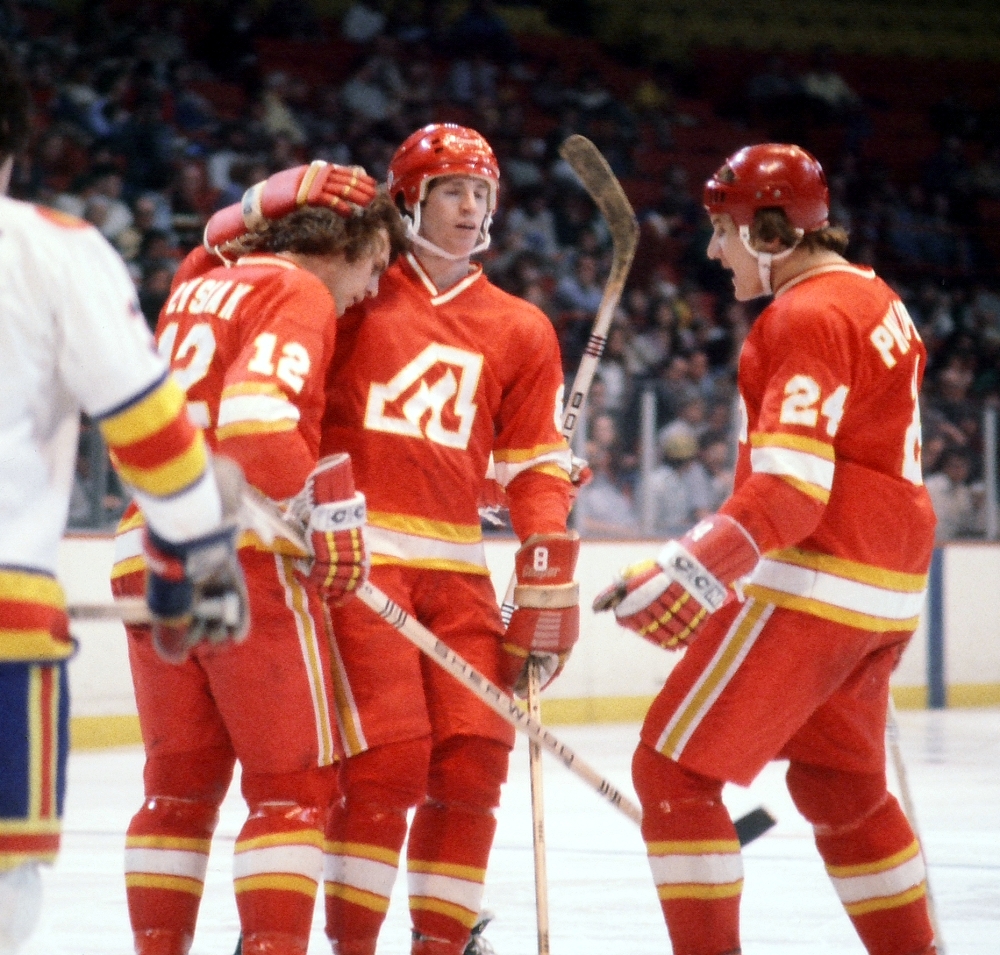
The Atlanta Flames were an NHL team that called Atlanta home for eight seasons, starting in 1972 and ending with a move to Calgary in 1980. They skated at the Omni Coliseum and competed in the West Division before shifting to the Patrick Division. The Flames and the New York Islanders were both added to the league in 1971, a direct response to the NHL’s rivalry with the upstart World Hockey Association. On the ice, the team had a decent run: they made the playoffs six times out of eight tries but never got past the first round, winning just two postseason games in total. Financial troubles for owner Tom Cousins, a real estate developer hit hard by the 1970s economy, led to the franchise being sold and relocated to Calgary, Alberta.
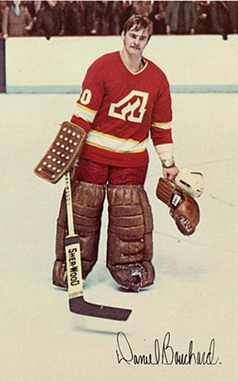
Eric Vail led the Flames in goals with 174, while Tom Lysiak topped the scoring list with 431 points. Guy Chouinard was the only Flame to net 50 goals in a single season. In net, Dan Bouchard posted the most wins (166) and shutouts (20) for the team. Two Flames won the Calder Memorial Trophy as the NHL’s top rookie: Vail in 1974–75 and Willi Plett the following year. Bob MacMillan took home the Lady Byng Memorial Trophy in 1978–79 for gentlemanly play. The only member of the Atlanta organization to enter the Hockey Hall of Fame was general manager Cliff Fletcher.
The NHL hadn’t planned to expand again until at least 1973, but the formation of the WHA in 1971 forced the league’s hand. To compete for players and markets, the NHL decided to put a team in the American South. On November 9, 1971, the league announced it would add franchises on Long Island and in Atlanta. Tom Cousins, who already owned the NBA’s Atlanta Hawks, paid $6 million for the new team, which would play in the just-built Omni Coliseum. Cousins named the club the Flames, a nod to General William Sherman’s burning of Atlanta during the Civil War.
Cliff Fletcher, previously with the St. Louis Blues, became the Flames’ general manager. Bernie Geoffrion, a former Montreal Canadiens star, was hired as head coach. The roster was built through an expansion draft on June 6, 1972. Fletcher prioritized goaltending, picking Phil Myre first and rookie Dan Bouchard second. The result was a young, inexperienced but competent squad. Two days later, the Flames selected Jacques Richard second overall in the 1972 amateur draft.
- Years active
- 1972–1980
- Home arena
- Omni Coliseum
- Divisions
- West Division, Patrick Division
- Playoff appearances
- 6
- Playoff series wins
- 0
- Top goal scorer
- Eric Vail (174 goals)
- Top point scorer
- Tom Lysiak (431 points)
- Calder trophy winners
- Eric Vail (1974–75), Willi Plett (1975–76)
- Lady byng winner
- Bob MacMillan (1978–79)
- Hall of fame member
- Cliff Fletcher (general manager)
Lore & Background
The Atlanta Flames were awarded to real estate developer Tom Cousins, who also owned the Atlanta Hawks of the NBA, and played in the newly built Omni Coliseum. The team cost $6 million. Cousins named the franchise the Flames in homage to the burning of Atlanta by General William Sherman during the American Civil War. Cliff Fletcher was hired as general manager, and Bernie Geoffrion as head coach. The team stocked its roster via an expansion draft on June 6, 1972, focusing on goaltending by selecting Phil Myre and Dan Bouchard. The Flames made their NHL debut on October 7, 1972, against the New York Islanders, winning 3–2. The team's first home game was a 1–1 tie with the Buffalo Sabres on October 14, 1972, before a sellout crowd of 14,568. The Flames missed the playoffs in their first season but qualified in six of the next seven. They never won a playoff series, winning only two post-season games total. The team struggled at the gate, with attendance falling from a peak of 14,161 per game in 1973–74 to 10,500 in 1977–78. Concerns about relocation surfaced by 1976, and the franchise was sold after the 1979–80 season and moved to Calgary, Alberta, due to owner Tom Cousins' massive financial losses from the struggling 1970s economy.
Reader's Guide
The Atlanta Flames were notable as one of two expansion teams created in 1971 in response to the formation of the World Hockey Association, marking the NHL's first foray into the American South. Despite qualifying for the playoffs in six of eight seasons, the team never won a playoff series, winning only two post-season games. Key players included Eric Vail (top goal scorer with 174), Tom Lysiak (top point scorer with 431), Guy Chouinard (the only 50-goal scorer), and goaltender Dan Bouchard (166 wins, 20 shutouts). Two Flames won the Calder Memorial Trophy as top rookie: Vail in 1974–75 and Willi Plett in 1975–76. Bob MacMillan won the Lady Byng Memorial Trophy in 1978–79. General manager Cliff Fletcher is the lone member of the Atlanta team to be named to the Hockey Hall of Fame. The franchise's relocation to Calgary after the 1979–80 season was driven by owner Tom Cousins' financial losses due to the struggling 1970s economy and declining attendance, which fell to 10,500 per game by 1977–78.
Did You Know?
- The team's first NHL game was a 3–2 win over the New York Islanders on October 7, 1972.
- Guy Chouinard was the only Flames player to score 50 goals in a single season.
- General manager Cliff Fletcher is the only member of the Atlanta Flames organization in the Hockey Hall of Fame.
Formation Born of Rivalry
The Atlanta Flames were born out of competitive necessity. When the World Hockey Association launched in 1971, the NHL abandoned its earlier plan to pause expansion until 1973 and instead rushed to add two new franchises—Long Island and Atlanta—announced on November 9, 1971. Atlanta real estate developer Tom Cousins, who also held ownership of the NBA's Atlanta Hawks, was awarded the franchise for a $6 million price tag. He chose the name "Flames" as a nod to General William Sherman's infamous burning of Atlanta during the Civil War. The team would call the newly constructed Omni Coliseum home. General manager Cliff Fletcher, recruited from the St. Louis Blues, built the initial roster through the June 6, 1972 expansion draft, prioritizing goaltending with selections of Phil Myre and Dan Bouchard. Head coach Bernie Geoffrion, a former Montreal Canadiens player, was tapped to lead the young squad. Two days after the expansion draft, Fletcher selected Jacques Richard second overall in the amateur draft, signaling the franchise's intent to develop talent from the ground up.
On-Ice Identity and Standout Performers
Over eight seasons the Flames developed a recognizable core of players who defined the franchise's identity. Eric Vail emerged as the team's premier goal scorer, amassing 174 goals and earning the Calder Memorial Trophy in 1974–75 for his 39-goal rookie campaign. Tom Lysiak, selected second overall in 1973, became the franchise's all-time leading point man with 431 points, topping the scoring charts in both 1973–74 and 1974–75. Guy Chouinard stood alone as the only Flames player to reach the 50-goal mark in a single season. Behind the net, Dan Bouchard anchored the team with 166 wins and 20 shutouts. The franchise also produced two Calder Trophy winners—Vail and Willi Plett, who scored 33 goals as a rookie in 1976–77—and Bob MacMillan captured the Lady Byng Memorial Trophy in 1978–79 for gentlemanly play. This depth of individual recognition underscored a team that, while never dominant, consistently fielded players of genuine NHL caliber.
Playoff Frustrations and Defining Moments
The Flames' postseason story is one of near-misses and persistent frustration. In their inaugural season of 1972–73, the team opened against the fellow expansion Islanders on October 7, winning 3–2 with Morris Stefaniw scoring the franchise's first-ever goal. That same game marked the first NHL goal at Nassau Veterans Memorial Coliseum. A week later the Flames hosted the very first event in Omni Coliseum history, tying Buffalo 1–1 before a sellout of 14,568. Despite qualifying for the playoffs in six of eight seasons, Atlanta never won a series and managed only two post-season victories across the franchise's entire run. Their 1974 debut against the Flyers ended in a four-game sweep. The team's first playoff win finally came on April 7, 1977, when Eric Vail scored the game-winner in a 3–2 victory over Los Angeles—though the Kings still eliminated Atlanta in the third game. Reaching the postseason only to fall in the preliminary round became the defining narrative of the Flames' competitive years.
Financial Collapse and Lasting Legacy
The Atlanta Flames' story ended not on the ice but in the boardroom. Owner Tom Cousins, a real estate developer who had also held the NBA's Atlanta Hawks, suffered devastating financial losses as the 1970s economy soured. After the 1979–80 season the franchise was sold and relocated across the continent to Calgary, Alberta, ending eight years of NHL hockey in the American South. The team's lasting legacy rests largely on the individuals who passed through its roster and front office. General manager Cliff Fletcher, who built the franchise from the ground up in 1972, remains the only member of the Atlanta Flames organization inducted into the Hockey Hall of Fame. His early decisions—prioritizing goaltending in the expansion draft, developing young talent like Bouchard and Lysiak—shaped a team that, while never a contender, produced multiple award winners and maintained respectable attendance, averaging over 12,000 fans per game in its first season. The Flames' brief existence in Atlanta stands as a reminder of the NHL's 1970s expansion ambitions and the economic vulnerabilities that could uproot even a well-intentioned franchise.
Gallery

More in Defunct Ice Hockey Teams 1-24
Spotted an error? Know more?
Reader corrections go straight into our review queue. Suggest an edit · How this site is sourced