
California Golden Seals
Least successful 1967 NHL expansion team; relocated to become Cleveland Barons.

Federal Writers' Project of the w:Works Progress Administration of Northern Cali · Public domain
The California Golden Seals played in the National Hockey League from 1967 to 1976, based in Oakland at the Oakland–Alameda County Coliseum Arena. They were one of six clubs added during the NHL’s 1967 expansion. The team went through several name changes: originally the California Seals, then the Oakland Seals during the 1967–68 season, followed by the Bay Area Seals in 1970, before settling on the California Golden Seals later that same year. Of all the 1967 expansion teams, the Seals were the least successful—they never posted a winning record and qualified for the playoffs only twice in nine seasons. Home games drew sparse crowds. In 1976, the franchise moved and became the Cleveland Barons, which merged with the Minnesota North Stars two years later. The Seals are the only franchise from that expansion group that never reached the Stanley Cup Final.
**History**
**Founding** In 1966, the NHL announced it would add six expansion teams as a new division for the 1967–68 season. The stated reason was a desire to enter new markets, but the move also aimed to block the Western Hockey League from becoming a major league. One WHL club, the San Francisco Seals, was purchased by Barry Van Gerbig, who intended to bring them into the NHL as an expansion team. Van Gerbig originally planned for the team to play in a new San Francisco arena, but that venue was never built. Instead, he moved the club across the Bay from the Cow Palace in Daly City to Oakland’s new arena, renaming them the California Seals. This name was chosen to appeal to San Francisco fans and to counter complaints from other NHL teams that Oakland lacked major-league status. A year later, the Seals entered the NHL as an expansion team. The expansion draft heavily favored the established Original Six clubs, who could protect nearly all their best players. The Seals, like the other expansion teams, were left with castoffs, aging veterans, and career minor leaguers. To maintain continuity for existing fans, the team kept several WHL roster players, including Charlie Burns, George Swarbrick, Gerry Odrowski, Tom Thurlby, and Ron Harris. Although the Bay Area was not seen as a strong hockey market, a new CBS television deal required two California-based expansion teams. The Los Angeles Kings were one; the Seals were the only other viable applicant.
Quick Facts
- Team Name
- California Golden Seals
- Text Color
- #000000
- Founded
- 1961 (WHL) / 1967 (as NHL expansion team)
- Arena
- Oakland–Alameda County Coliseum Arena
- City
- Oakland, California
- Stanley Cups
- 0
Facts from the source article.
Lore & Background
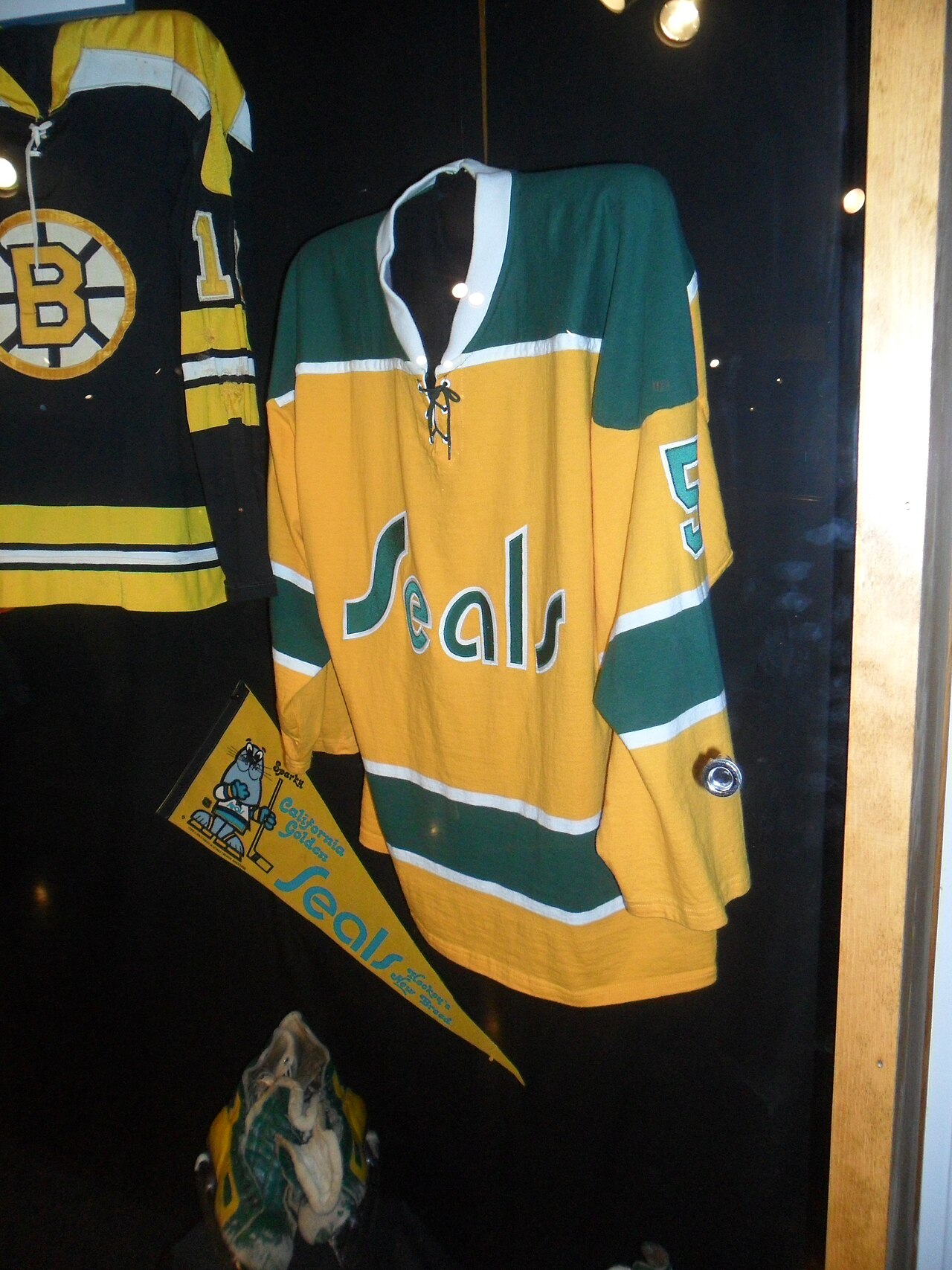
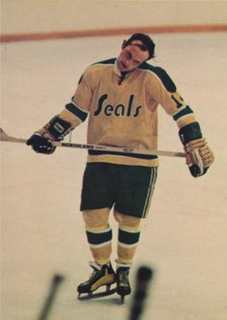
The franchise originated when the NHL awarded an expansion team to Barry Van Gerbig for the San Francisco Bay Area. Van Gerbig purchased the WHL's San Francisco Seals and planned to play in a new San Francisco arena, but when that arena was never built, he moved the team across the Bay to Oakland. He renamed the club the California Seals to appeal to San Francisco fans and address complaints that Oakland was not a major league city. The team entered the NHL in 1967 as part of the six-team expansion, but the expansion draft heavily favored the established Original Six teams, leaving the Seals with mostly castoffs and aging players. The Seals drew sparse crowds in Oakland, and Van Gerbig threatened to move the team. First-year coach Bert Olmstead advocated a move to Vancouver, leading to offers from Labatt Brewing Company and from the Knox brothers to relocate to Buffalo. The NHL rejected both proposals to protect its CBS television deal, instead expanding to those cities in 1970. The Seals made the playoffs only twice—in their second season (1969) and third season (1970)—but never advanced past the first round. Charles O. Finley purchased the franchise in 1970 and introduced numerous marketing gimmicks, including green and gold colors to match his Oakland Athletics, white skates, player names on jerseys, and first-class air travel. Despite these innovations, the team finished with the worst record in the NHL in 1970–71. A 1970 trade sent the Seals' 1971 first-round pick to Montreal, which became Guy Lafleur, later called one of the most one-sided deals in NHL history.
Reader's Guide
The California Golden Seals are significant as the least successful franchise from the 1967 NHL expansion, never achieving a winning record and making the playoffs only twice in nine seasons. Their sparse attendance and financial struggles led to multiple ownership changes and relocation threats. The team's inability to draw fans from San Francisco, despite name changes intended to broaden appeal, highlighted the challenges of establishing hockey in non-traditional markets. The franchise's relocation in 1976 to become the Cleveland Barons—who later merged with the Minnesota North Stars—made the Seals the only 1967 expansion team never to reach the Stanley Cup Final. Owner Charles O. Finley's innovations, such as player names on jerseys and first-class travel, influenced NHL practices, but his flamboyant marketing could not overcome the team's on-ice failures. The 1970 trade that sent a future first-round pick to Montreal for immediate help backfired spectacularly when that pick became Hall of Famer Guy Lafleur, cementing the Seals' legacy as a cautionary tale in franchise management. The team's brief existence and ultimate dissolution underscore the precarious nature of expansion franchises in leagues with established power structures.
Did You Know?
- The Seals were the only franchise from the 1967 NHL expansion to never reach the Stanley Cup Final.
- Owner Charles O. Finley introduced player names on the back of jerseys, setting a precedent for NHL teams.
- The Seals traded their 1971 first-round pick to Montreal, which became future Hall of Famer Guy Lafleur.
- The team wore white skates as part of Finley's marketing gimmicks.
Founding & the Bay Area Gambit
Barry Van Gerbig was granted an NHL expansion franchise for the San Francisco Bay Area in 1966 and immediately purchased the existing WHL San Francisco Seals, intending to elevate them into the major league. His original plan called for a brand-new arena in San Francisco, but that project never came to fruition. He instead moved the squad across the bay from the Cow Palace in Daly City to the newly opened Oakland-Alameda County Coliseum Arena, renaming the club the California Seals in a bid to court San Francisco fans and quiet rival NHL owners who argued Oakland lacked major-league stature. The Bay Area was hardly a natural hockey market, yet the league's CBS television contract mandated two expansion franchises in California. With the Los Angeles Kings already locked in, the Seals were the only viable second option. Despite the WHL Seals having drawn solid crowds at the Cow Palace, the NHL version struggled to fill seats in Oakland. By November 1967, Van Gerbig conceded the San Francisco appeal had failed and shifted the name to the Oakland Seals, refocusing on the East Bay.
A Roster Built on Castoffs
The 1967 expansion draft was structured heavily in favor of the Original Six clubs. Established teams were permitted to protect nearly all of their top talent, leaving the six new franchises to select from aging veterans, castoffs, and career minor leaguers. To soften the blow and preserve some continuity for existing Seals supporters, Van Gerbig retained several WHL players including Charlie Burns, George Swarbrick, Gerry Odrowski, Tom Thurlby, and Ron Harris. The result was a roster that could barely compete. Across nine NHL seasons, the Seals never posted a winning record and reached the postseason only twice. In their second year, a 69-point campaign earned them second place in the West Division and a playoff berth, but they were upset in seven games by the Los Angeles Kings despite being the favorites. The following season, a 58-point total barely edged out the Philadelphia Flyers for a final playoff spot, only to be swept by the Pittsburgh Penguins. After that first season, just seven of twenty players remained on the roster.
Ownership Chaos & the Relocation Fight
The Seals' front office was in constant flux. Van Gerbig repeatedly threatened to relocate the team, and first-year coach Bert Olmstead publicly pushed for a move to Vancouver. A Labatt Brewing Company offer to buy and relocate the franchise to Vancouver materialized, as did a proposal from the Knox brothers to move the team to Buffalo. The NHL, protecting its CBS television agreement, rejected both. As a compromise, the league expanded again in 1970, adding the Vancouver Canucks and Buffalo Sabres. The Knoxes briefly held a minority stake in the Seals in 1969 before selling it to fund their new Sabres franchise. The rejected Vancouver move prompted a lawsuit, San Francisco Seals Ltd. v. National Hockey League, arguing the league's relocation restrictions violated the Sherman Antitrust Act. The court ultimately ruled in 1974 that the NHL operated as a single entity, meaning its relocation rules did not constitute a restraint of trade. Ownership continued to churn: Trans-National Communications, backed by Pat Summerall and Whitey Ford, acquired the team for the 1969-70 season but quickly filed for bankruptcy, returning the franchise to Van Gerbig.
The Forgotten Expansion Franchise
Of the six teams added to the NHL in 1967, the California Golden Seals proved the least successful. They never compiled a winning record, made the playoffs only twice in nine seasons, and became the sole 1967 expansion franchise to never reach the Stanley Cup Final. The team cycled through multiple names—California Seals, Oakland Seals, Bay Area Seals, and finally California Golden Seals—reflecting an ongoing search for identity in a market that never embraced hockey. Sparse attendance at the Oakland-Alameda County Coliseum Arena plagued the franchise throughout its existence. In 1976, the Seals were relocated to Cleveland, where they became the Barons. The Barons themselves lasted only two seasons before merging with the Minnesota North Stars in 1978, effectively erasing the franchise from the NHL entirely. The Seals' brief existence stands as a cautionary tale of expansion into an unproven market, a one-sided draft process, and the difficulty of sustaining a professional hockey team in a region with no deep-rooted tradition of the sport.
Gallery


More in Defunct Ice Hockey Teams 1-24
Spotted an error? Know more?
Reader corrections go straight into our review queue. Suggest an edit · How this site is sourced