
Hartford Whalers
WHA charter member that joined the NHL in 1979.

Unknown author · Public domain
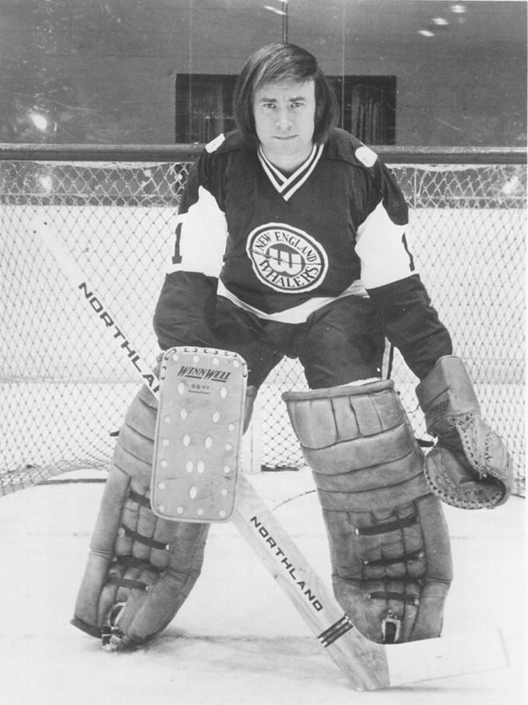
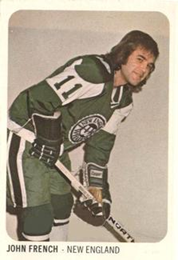
The Hartford Whalers were a professional ice hockey franchise that spent most of its 25 seasons in Hartford, Connecticut. The team began in the World Hockey Association (WHA) in 1972 and played there until 1979, then moved to the National Hockey League (NHL) from 1979 to 1997. Originally a charter member of the WHA based in Boston, the club was called the New England Whalers for all seven of its WHA seasons. After its second season, in April 1974, the team relocated 94 miles (151 km) southwest to Hartford. Five years later, as part of the 1979 NHL–WHA merger, the Whalers joined the NHL and changed their name to the Hartford Whalers because the Boston Bruins objected to sharing a regional market. After a quarter-century in New England, the franchise moved to North Carolina in 1997 and became the Carolina Hurricanes.
Quick Facts
- Team Name
- Hartford Whalers
- Text Color
- #000000
- Founded
- 1972
- History
- New England Whalers / 1972–1979 (WHA) / Hartford Whalers / 1979–1997 (NHL) / Carolina Hurricanes / 1997–present
- Arena
- Boston Arena / Boston Garden / Big E Coliseum / Springfield Civic Center / Hartford Civic Center
- City
- Hartford, Connecticut
- Avco
- 1 (1972–73)
- Division Titles
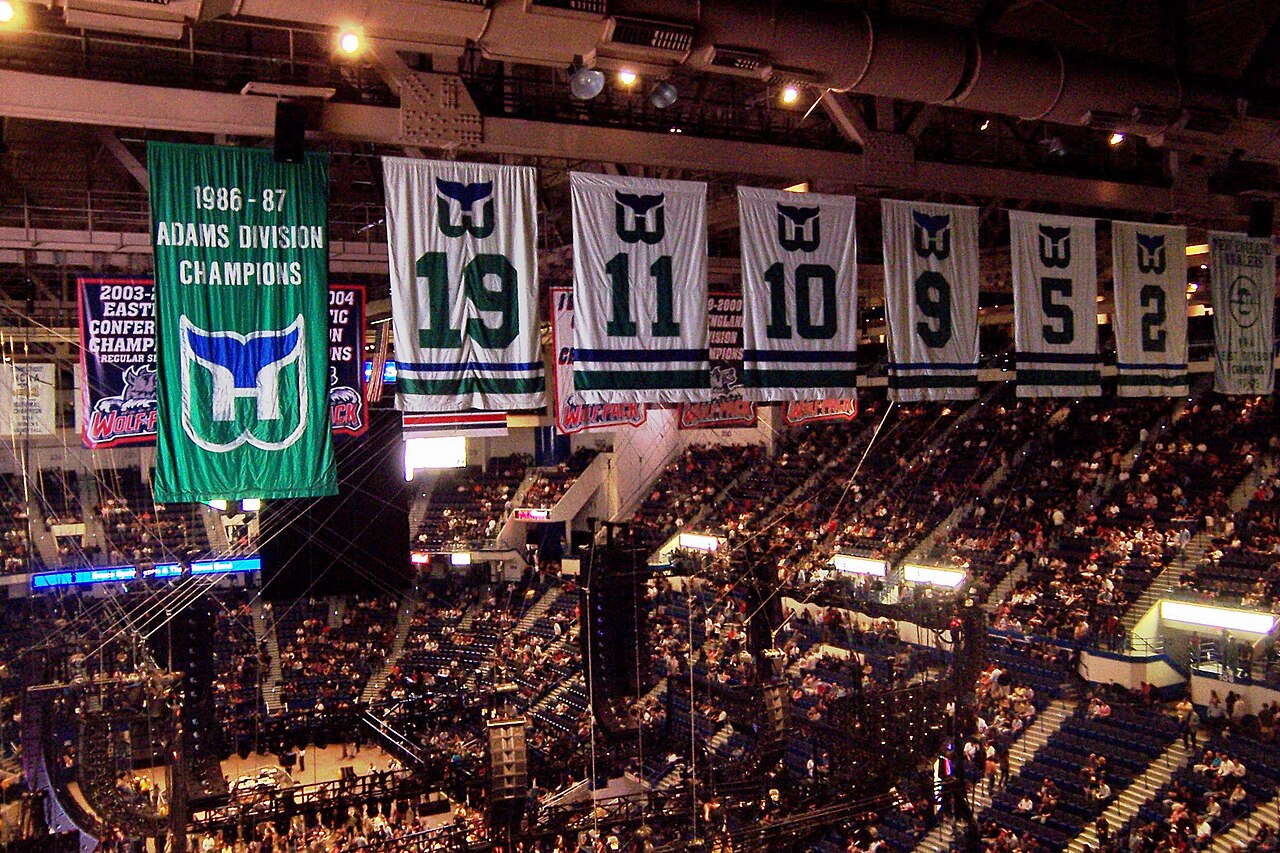
- 4 (1972–73, 1973–74, 1974–75, 1986–87)
- Conf Titles
- 2 (1972–73, 1977–78)
- Stanley Cups
- 0
Facts from the source article.
Lore & Background
The Whalers franchise was created in November 1971 when the World Hockey Association awarded a franchise to New England businessmen Howard Baldwin, W. Godfrey Wood, John Coburn, and William Edward Barnes to begin play in Boston. The team began auspiciously, signing former Detroit Red Wings player Tom Webster; hard-rock Boston Bruins' defenseman Ted Green (the team's inaugural captain); Toronto Maple Leafs' defensemen Rick Ley, Jim Dorey, and Brad Selwood; and former Pittsburgh Penguins' goaltender Al Smith. New England signed an unusually large number of American players, including Massachusetts natives and former U.S. Olympic hockey team members Larry Pleau, Kevin Ahearn, John Cunniff, and Paul Hurley. The Whalers had the WHA's best regular-season record in the 1972–73 season. Behind legendary ex-Boston University head coach Jack Kelley, the team defeated the Winnipeg Jets to win the inaugural WHA championship. The club played its first season's home games at Boston Garden and Boston Arena. However, the Arena was too small and antiquated to sustain a WHA team while the Garden was owned by the rival NHL Bruins in which the Whalers found themselves fourth in priority for dates behind the Bruins, Boston Celtics, and even the American Hockey League's Boston Braves. Fed up with the situation, Baldwin decided to move elsewhere. In late February 1974, he announced the Whalers' upcoming relocation to Hartford, targeted for early April. Hartford was about to open a new, modern downtown arena and convention center, the Hartford Civic Center. The Civic Center was still being finished when the 1974–75 season began, so the Whalers played the first part of the season at the Big E Coliseum in West Springfield, Massachusetts. On January 11, 1975, the team played its first game at the Hartford Civic Center in front of a sellout crowd. The franchise remained in Hartford until it relocated to North Carolina for the 1997–98 season, albeit with an interruption for three years (January 1977-February 1980) where the team elected to play at the Springfield Civic Center when heavy snow and rain caused the roof of the Hartford arena to collapse.
Reader's Guide
The Hartford Whalers are notable as one of the four WHA franchises admitted to the NHL in the 1979 merger, and the only American-based WHA team to join the NHL. Their history reflects the instability of the WHA and the challenges of operating in a small market. The team was originally based in Boston as the New England Whalers, but moved to Hartford after struggling for arena dates at Boston Garden, which was owned by the rival NHL Bruins. The relocation was enabled by the construction of the Hartford Civic Center, though the arena's roof collapse in January 1977 forced the team to play in Springfield for three years. In the NHL, the Whalers were never as successful as they had been in the WHA, recording only three winning seasons in 18 years and winning only one playoff series. They were hampered by Hartford being the smallest American market in the NHL, located on the traditional dividing line between the home territories for Boston and New York area teams, and by the Hartford Civic Center being one of the smallest arenas in the league, seating at most 15,635 for hockey. The team developed a heated rivalry with the Boston Bruins, but had an all-time head-to-head record of 37–69–12 against them. After 25 years in New England and in Hartford, the franchise relocated to North Carolina in 1997 and became the Carolina Hurricanes.
Did You Know?
- The Whalers were originally based in Boston and known as the New England Whalers for all seven WHA seasons.
- The team moved to Hartford in April 1974, ninety-four miles (151 km) southwest of Boston.
- The Hartford Civic Center roof collapsed in January 1977, forcing the team to play at the Springfield Civic Center for three years.
Origins in Boston and the Inaugural Championship
The Whalers franchise came into existence in November 1971 when the World Hockey Association granted a charter to a group of New England businessmen—Howard Baldwin, W. Godfrey Wood, John Coburn, and William Edward Barnes—to field a team in Boston. The club opened its roster with a blend of NHL veterans like Tom Webster, Ted Green, and Al Smith, while also leaning heavily on American talent, including several former U.S. Olympic team members such as Larry Pleau, Kevin Ahearn, and John Cunniff. Under head coach Jack Kelley, the team posted the league's best regular-season record in 1972–73 and went on to defeat the Winnipeg Jets for the inaugural WHA title. Yet the Boston tenure was short-lived. The team was stuck in fourth priority for Boston Garden dates, behind the Bruins, the Celtics, and even a minor-league AHA club, while the smaller Boston Arena was too cramped for a professional hockey operation. Frustrated, Baldwin announced the move to Hartford in late February 1974.
Taking Root in Hartford and WHA Dominance
Hartford welcomed the Whalers with open arms when the ABA team the city had hoped for never materialized. The new Hartford Civic Center was still under construction when the 1974–75 season tipped off, forcing the team to play its early home games at the Big E Coliseum in West Springfield, Massachusetts. The franchise finally took the ice at its new downtown home on January 11, 1975, to a sellout crowd. Over the next five WHA seasons, the Whalers built a reputation for roster stability that was rare in the league. Players like Rick Ley, Tom Webster, Brad Selwood, Larry Pleau, and Tommy Earl each logged more than 350 games with the club. The team never missed the playoffs and topped its division three times. In 1977, the franchise pulled off a stunning coup by signing 50-year-old Gordie Howe along with his sons Mark and Marty from the Houston Aeros. That veteran core, bolstered by future NHL stars Gordie Roberts and Mike Rogers, carried the Whalers back to the WHA finals in 1978. A brief interruption came when a roof collapse at the Hartford arena in January 1977 sent the team to Springfield for nearly three years.
The NHL Merger and a New Identity
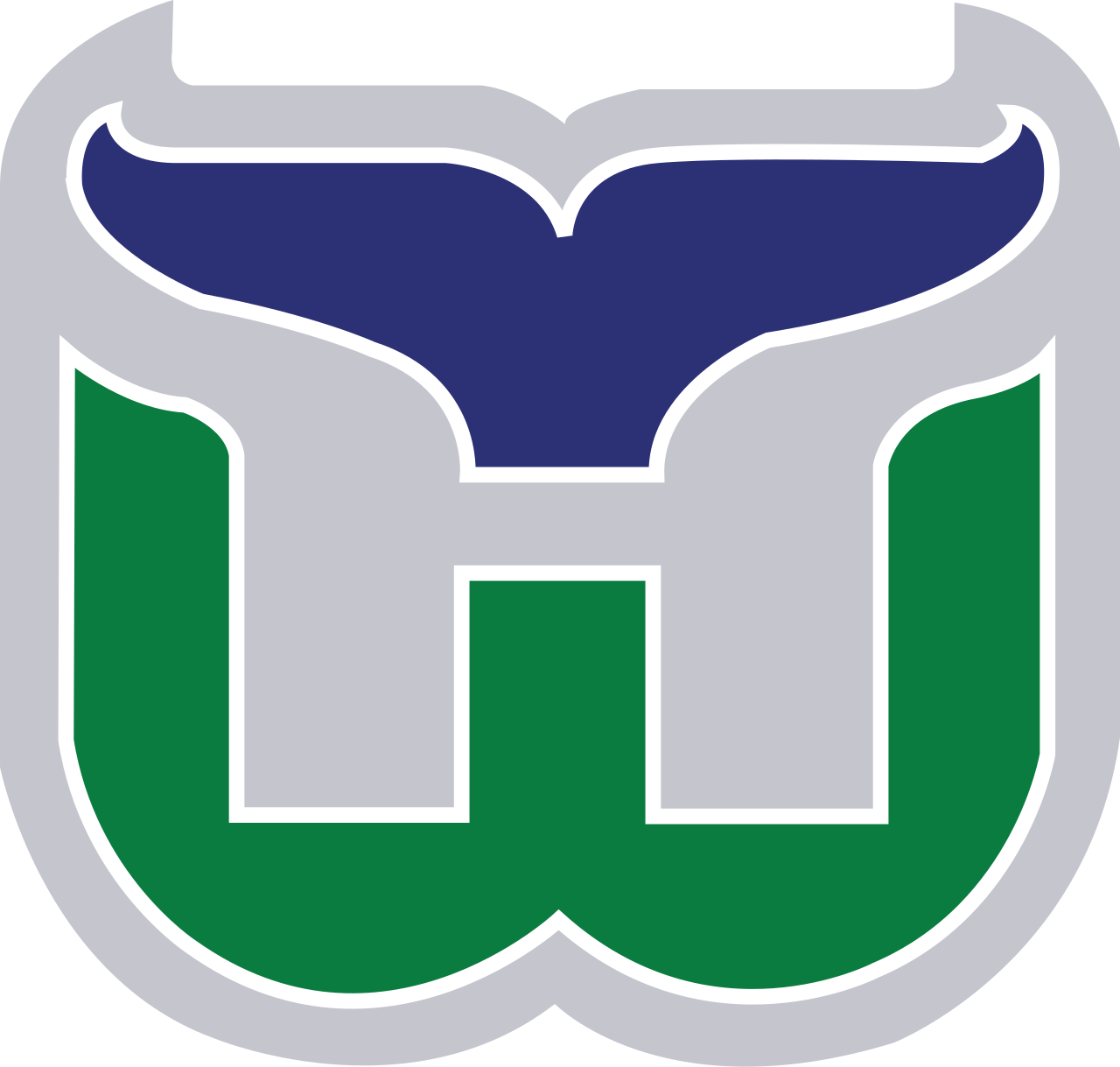
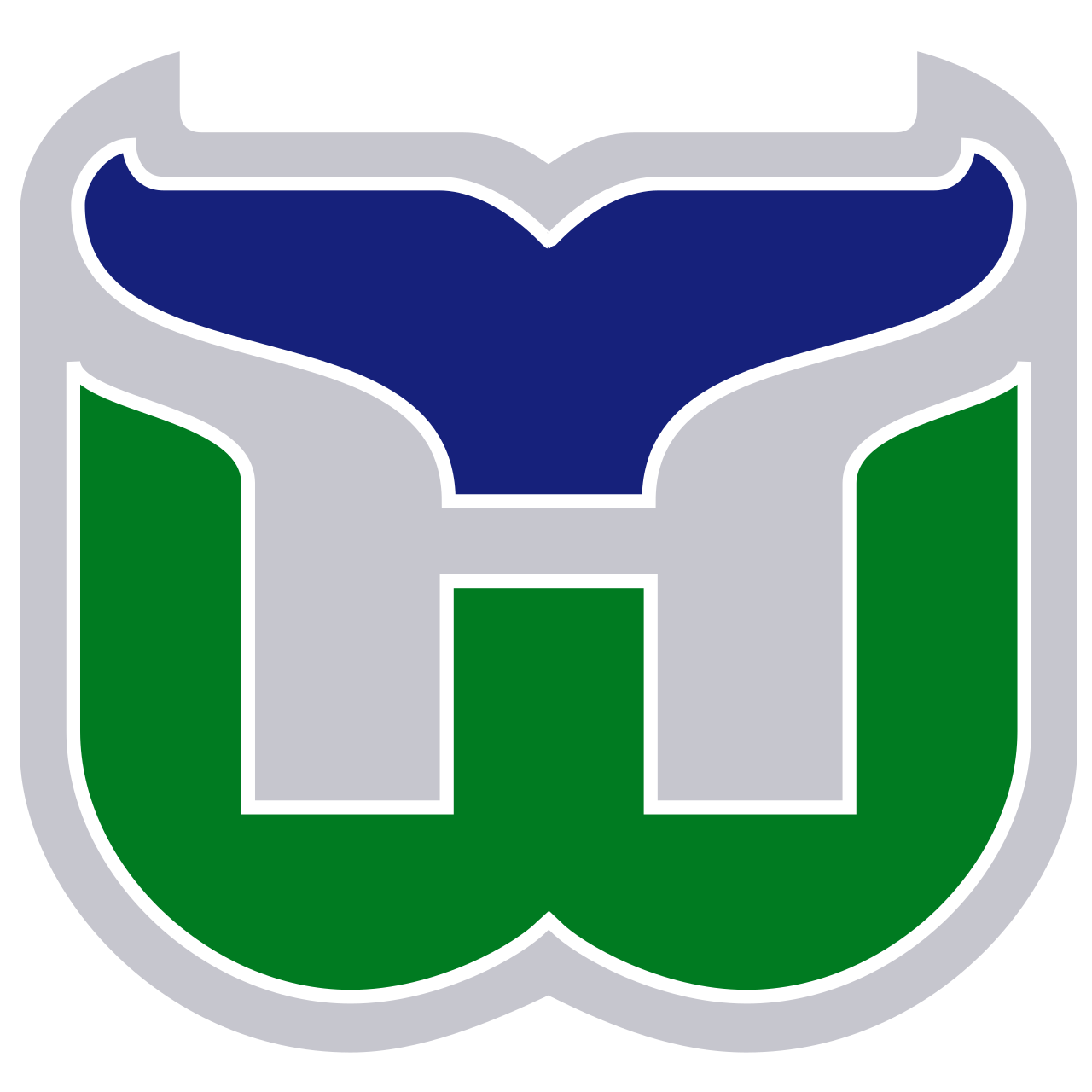
When the WHA and NHL merged in 1979, the Whalers were one of only four former WHA clubs admitted to the NHL—and the only one based in the United States. Crucially, unlike their WHA counterparts who lost most of their rosters, the Whalers retained nearly their entire core. The Howes, Rogers, Ley, Keon, Smith, Roberts, and Lacroix all stayed aboard for the transition. Only Selwood, George Lyle, and Warren Miller were reclaimed by their former NHL clubs. In a notable gesture, Detroit deliberately declined its option to re-sign Gordie Howe, honoring the legacy he had already built with the Red Wings. In May 1979, the Boston Bruins pressured the team to drop the "New England" name, and the franchise officially became the Hartford Whalers. Connecticut graphic designer Peter Good, working through the Jack Lardis Associates agency, crafted a new identity: a whale's tail draped over a "W," with the negative space between the two shapes forming an "H." Good also designed the green-and-blue uniforms that would define the team's NHL era.
The Forever .500s and a Final Departure
The Whalers' NHL chapter, spanning 18 seasons from 1979 to 1997, never matched the dominance they had shown in the WHA. Across those nearly two decades, the team managed just three winning seasons, qualified for the Stanley Cup playoffs eight times, and captured only a single playoff series. Fans and rivals alike coined the mocking nickname "The Forever .500s" to capture the team's perpetual hover around a .500 winning percentage. Despite the modest on-ice results, the franchise maintained a 25-year presence in New England, first in Boston and then in Hartford, before ultimately departing for North Carolina ahead of the 1997–98 season to become the Carolina Hurricanes. The Whalers left behind a legacy of early WHA success, a memorable logo, and a devoted Connecticut fanbase that had followed the team through a roof collapse, a league merger, and two decades of near-misses in the NHL.
Gallery
More in Defunct Ice Hockey Teams 1-24
Spotted an error? Know more?
Reader corrections go straight into our review queue. Suggest an edit · How this site is sourced