
Adhesive
A non-metallic substance that binds surfaces together, with a history spanning over 200,000 years.
Last updated

Cjp24 · CC BY-SA 3.0
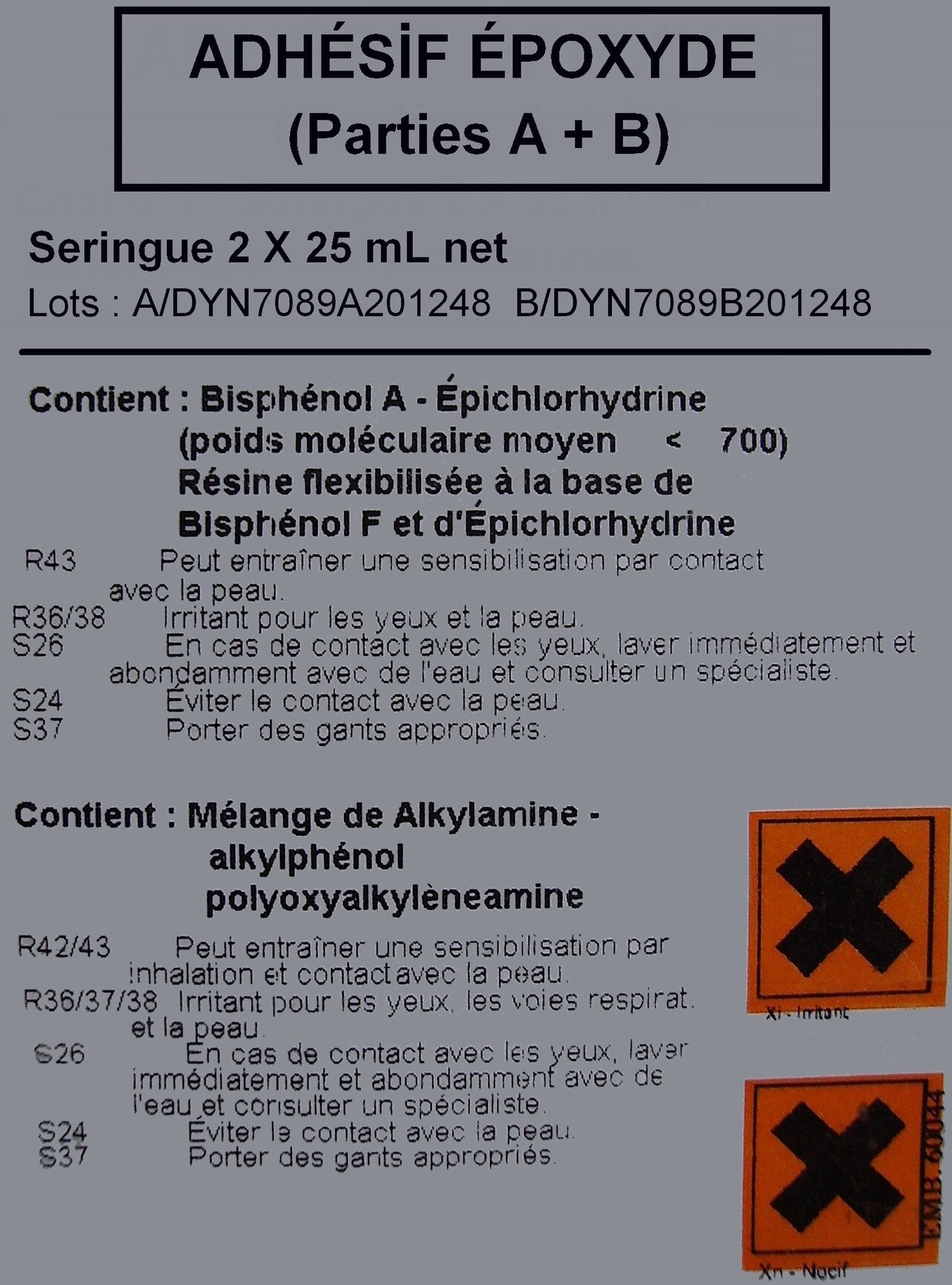
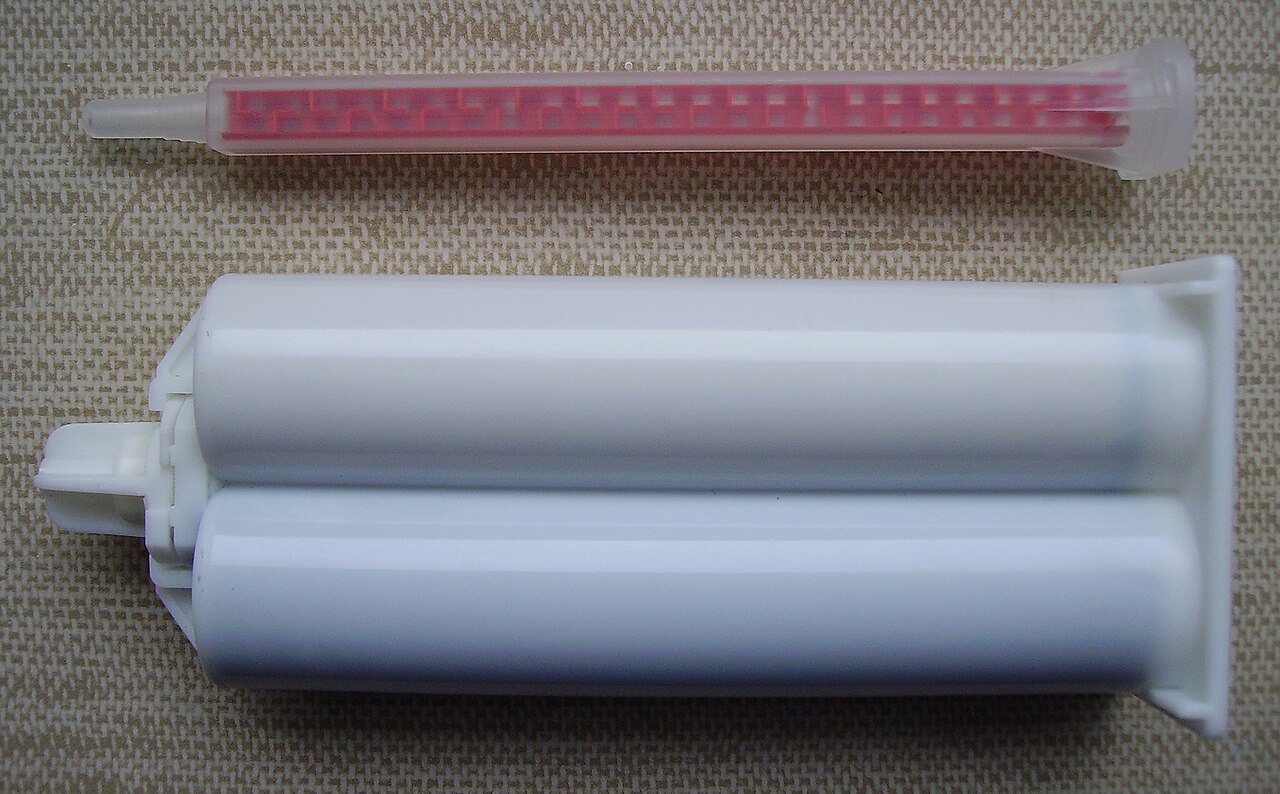
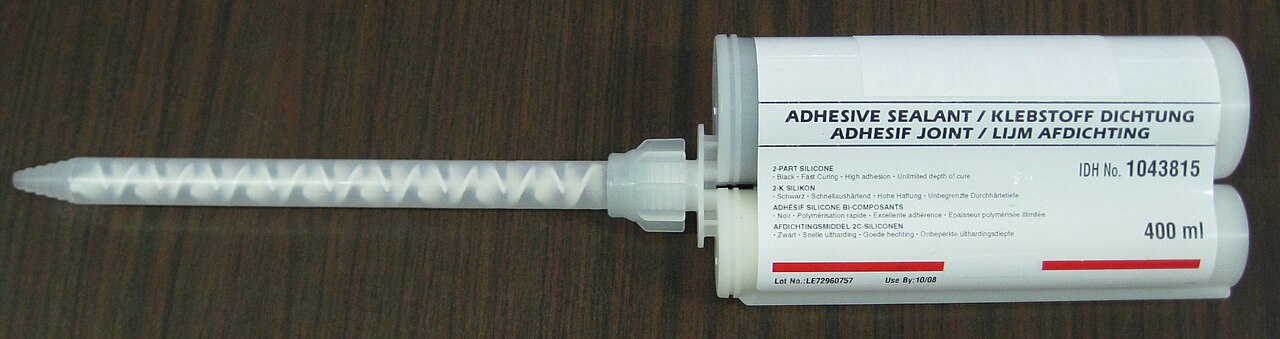
Adhesive is any non-metallic substance that binds two items together and resists their separation.[1] Both natural and synthetic sources can produce adhesives.[2] Classification of adhesives commonly starts with the adhesion method, followed by a division into reactive or non-reactive types based on whether a chemical reaction occurs during hardening.[3]
Quick Facts
- First literary references
- approximately 2000 BC
Facts from the source article.
Key facts and history
Three stone implements with birch bark tar indications were discovered in central Italy, dated to about 200,000 before present.[4] The Greeks and Romans made great contributions to adhesive development, including wood veneering and the use of pozzolanic cement.[5][6] Neanderthals created tar from birch bark through dry distillation around 200,000 years ago, representing the oldest known adhesive-like substance use by humans.[2] A 2019 experiment in archeology showed that burning birch bark directly beneath an overhanging rock surface can yield birch bark tar.[7]
At Sibudu, South Africa, archaeologists found 70,000-year-old stone segments coated with a compound adhesive of plant gum and red ochre, marking the earliest known use of such mixtures.[8] Literature from around 2000 BC contains the earliest known mentions of adhesives.[5] Glue saw limited use in Europe until the years 1500–1700 AD.[9] The Netherlands hosted the first commercial glue factory, established in 1690, which manufactured adhesives from animal hides.[9][10]
The modern adhesive era began in 1830 when natural rubber was first employed as an adhesive material.[11]

What the research sources say
The Appli-tec history notes that pre-mixed and frozen adhesives started with Hughes Electronics Defense Division post WWII and became a commercial product in the early 1960s.[12] Patrick Schmidt, Раду Йовита, Armelle Charrié‐Duhaut, and Gunther Heinz Dietrich Möller documented ochre-based compound adhesives at the Mousterian type-site in a 2024 study.[13]


References
- Wikipedia, "Adhesive" (CC BY-SA 4.0), which cites: Pike, "adhesive", Encyclopædia Britannica Inc.; Kinloch, "Adhesion and Adhesives: Science and Technology", Chapman and Hall, 1987, p. 1 (original not read by us) en.wikipedia.org
- Wikipedia, "Adhesive" (CC BY-SA 4.0), which cites: Mazza, P, "A new Palaeolithic discovery: tar-hafted stone tools in a European Mid-Pleistocene bone-bearing bed", Journal of Archaeological Science, January 2006, p. 1310; Kozowyk, "Experimental methods for the Palaeolithic dry distillation of birch bark: implications for the origin and development of Neandertal adhesive technology", Scientific Reports, 2017-08-31, p. 8033 (we also read that source) en.wikipedia.org
- Wikipedia, "Adhesive" (CC BY-SA 4.0), which cites: "MIL-HDBK-691B – Department of Defense – Military Standardization Handbook – Adhesive Bonding", Roof Online, p. 47 (original not read by us) en.wikipedia.org
- Wikipedia, "Adhesive" (CC BY-SA 4.0), which cites: Mazza, P, "A new Palaeolithic discovery: tar-hafted stone tools in a European Mid-Pleistocene bone-bearing bed", Journal of Archaeological Science, January 2006, p. 1310 (we also read that source) en.wikipedia.org
- Wikipedia, "Adhesive" (CC BY-SA 4.0), which cites: Ebnesajjad 2010, p. 137 (original not read by us) en.wikipedia.org
- Wikipedia, "Adhesive" (CC BY-SA 4.0), which cites: Mittal Pizzi 2003, p. 1; Ebnesajjad 2010, p. 137 (original not read by us) en.wikipedia.org
- Wikipedia, "Adhesive" (CC BY-SA 4.0), which cites: Schmidt, "Birch tar extraction does not prove Neanderthal behavioral complexity", PNAS, 2019, p. 17707–17711 (original not read by us) en.wikipedia.org
- Wikipedia, "Adhesive" (CC BY-SA 4.0), which cites: "Implications for complex cognition from the hafting of tools with compound adhesives in the Middle Stone Age, South Africa", Proceedings of the National Academy of Sciences of the United States of America, Jun 2009, p. ; Wadley, "Compound-Adhesive Manufacture as a Behavioral Proxy for Complex Cognition in the Middle Stone Age", Current Anthropology, 1 June 2010, p. S111–S119; Schmidt, "Ochre-based compound adhesives at the Mousterian type-site document complex cognition and high investment", Science Advances, 21 February 2024 (we also read th en.wikipedia.org
- Wikipedia, "Adhesive" (CC BY-SA 4.0), which cites: Stamm, "Principles of Wood Science and Technology", Springer Berlin Heidelberg, 2012, p. 1; Ebnesajjad 2010, p. 137 (we also read that source) en.wikipedia.org
- Wikipedia, "Adhesive" (CC BY-SA 4.0), which cites: Mittal Pizzi 2003, p. 1 (original not read by us) en.wikipedia.org
- Wikipedia, "Adhesive" (CC BY-SA 4.0), which cites: "Bonding- An Ancient Art", Adhesives.org; Wypych, "Handbook of Adhesion Promoters", Elsevier, 2018, p. 2; Mittal Pizzi 2003, p. 1 (original not read by us) en.wikipedia.org
- "History of Pre-Mixed and Frozen (PMF) Adhesives", Appli-tec. facts only, no text reused. appli-tec.com
- Patrick Schmidt, "Ochre-based compound adhesives at the Mousterian type-site document complex cognition and high investment", Science Advances (2024), doi:10.1126/sciadv.adl0822. OpenAlex metadata CC0; paper not read. doi.org
Each numbered sentence above was checked against the source it cites before publication. Sentences citing Wikipedia adapt text from the English Wikipedia article Adhesive (contributors), used under CC BY-SA 4.0; this entry is available under the same licence. Other sources were used for facts only; no text or images are copied from them.
More in Construction & Materials
Sources
Compiled from Wikipedia and the sources listed below. Text from Wikipedia is available under CC BY-SA 4.0; this entry is adapted from it.
- Wikipedia: Adhesive (CC BY-SA 4.0).
- Word definitions: the Codexery glossary, each quoted from its Wikipedia article.
Spotted an error? Know more?
Reader corrections go straight into our review queue. Suggest an edit · How this site is sourced