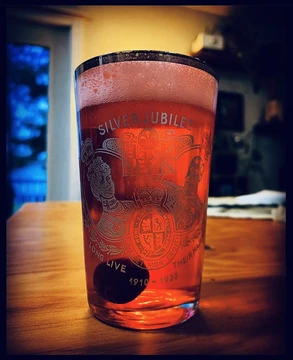
Mumma (drink)
A traditional Swedish Christmas mixed drink.

Mumma is a traditional Swedish drink, most often enjoyed with the Christmas buffet, or *julbord*. The basic recipe blends a dark beer with a sweet, fizzy soda, and sometimes a fortified wine is added. Some versions are spiced, typically with cardamom, or given a light alcoholic kick with spirits like gin or *brännvin*.
The word *mumma* has been part of Swedish since the 1500s, originally referring to Brunswick Mum, a strong, dark beer imported from Braunschweig, Germany. Old Swedish records mention varieties like *Stadtmumme* and the stronger *Schiffsmumme*. Over time, the term broadened to mean any sweet dark beer, and later a mixed beer drink that is sweetened and sometimes spiced or fortified. In figurative Swedish, *det är mumma* means “that is delicious” or “wholesome.”
Modern recipes vary by household and region. A common base is dark beer, often porter, mixed with a sweet carbonated drink like *sockerdricka* (sometimes *julmust* or a light lager is used). Optional additions include fortified wine (such as port, sherry, or Madeira), a small measure of gin or *brännvin*, ground cardamom, and cooled sugar syrup instead of granulated sugar. The drink is served chilled in a jug during the Christmas season.
The drink’s popularity shows up in phrases like *smaka mumma* (“taste good”) and *det är mumma (för x)* (“it is good for x”).
Quick Facts
- Origin
- Sweden
Facts from the source article.
Lore & Background
The word mumma has been used in Swedish since the 16th century, initially referring to the imported German beer Brunswick Mum (Braunschweiger Mumme), a dark, strong beer from Braunschweig. Historical Swedish sources distinguish varieties such as Stadtmumme and the stronger Schiffsmumme. Over time, Swedish usage broadened so that mumma could mean a sweet dark beer in general and later a mixed beer-based drink sweetened and sometimes spiced or fortified.
Reader's Guide
Mumma holds a place in Swedish culinary tradition as a festive drink for the Christmas buffet. Its significance lies in its evolution from a specific imported beer to a versatile homemade beverage, reflecting regional and household variations. The drink's cultural resonance is evident in Swedish phrases such as smaka mumma (“taste good”) and det är mumma (för x) (“it is good for x”), which extend its meaning to denote something delicious or wholesome. Modern recipes vary, but common elements include dark beer blended with a sweet carbonated drink, optional fortified wine, and occasional spicing or fortification. The drink is usually served chilled in a jug during the Christmas season, maintaining its association with holiday gatherings.
From German Taverns to Swedish Kitchens
The term mumma carries a lineage stretching back to at least the sixteenth century in Swedish, when it first entered the language as a label for a specific imported product: Brunswick Mum, known in German as Braunschweiger Mumme. This was a dark, robust beer originating from the city of Braunschweig, and Swedish historical records even differentiate between sub-varieties such as Stadtmumme and the more potent Schiffsmumme. What began as a narrow reference to one foreign brew gradually expanded in meaning. By the time the word settled into everyday Swedish, it could describe any sweet dark beer, and eventually it came to denote a broader category of mixed, beer-based drinks that might be sweetened, spiced, or fortified with wine or spirits. This semantic drift—from a single imported product to a flexible, home-made cocktail—mirrors how Swedish drinking culture absorbed and adapted foreign influences into something distinctly its own.
A Recipe Without a Fixed Formula
No two Swedish households will produce an identical mumma, and that is precisely the point. The drink resists standardization, with recipes shifting from family to family and from one region to another. At its core, most versions begin with a dark beer—porter being a frequent choice—blended into a sweet carbonated base such as sockerdricka, though some cooks substitute Julmust or a light lager for a different flavor profile. From there, the recipe opens up: a splash of fortified wine like port, sherry, or Madeira adds depth; a small measure of gin or brännvin lends a gentle warmth; and a dusting of ground cardamom introduces a fragrant, almost savory note. Sweetness is typically achieved not by stirring in granulated sugar but by folding in a cooled sugar syrup, which dissolves more cleanly into the cold mixture. The finished drink is poured into a jug and served well chilled, a practice that underscores its role as a refreshing counterpoint to the heavier fare of a Swedish winter table.
Mumma in the Swedish Lexicon
Few beverages leave as deep a mark on a language as mumma has on Swedish. The word has migrated far beyond the kitchen and the Christmas table, embedding itself in everyday idiomatic speech. The phrase smaka mumma, literally 'taste like mumma,' is used to describe anything that simply tastes wonderful, while det är mumma (för x) extends the metaphor further, meaning 'that is wholesome or good for x.' These expressions reveal how a seasonal mixed drink became a shorthand for pleasure, comfort, and well-being in the Swedish mind. The cultural footprint is reinforced by mumma's close association with the julbord, the traditional Christmas buffet, where it sits alongside other festive staples like glögg and sockerdricka. Its presence in both the pantry and the idiom suggests that mumma is not merely a drink Swedes consume but a concept they invoke whenever something feels genuinely, wholesomely good.
The Christmas Jug and Seasonal Ritual
Mumma is inextricably bound to the Swedish Christmas season, and its most recognizable role is as a staple of the julbord, the lavish buffet spread that anchors the holiday. Unlike year-round beverages, mumma is prepared specifically for this period, typically mixed in a jug and served chilled, which gives it a communal, table-side quality distinct from individually poured drinks. The act of assembling the mixture—pouring dark beer over sweet carbonated liquid, perhaps adding a thread of port or a pinch of cardamom—becomes a small domestic ritual that families repeat each December. The drink's seasonal exclusivity elevates it: it is not something one reaches for on a random Tuesday afternoon but a marker of the festive calendar. This temporal specificity, combined with its variable, home-made nature, positions mumma as a living tradition rather than a fixed commercial product, one that each generation reinterprets while preserving the essential pairing of dark beer and sweet fizz that has defined it since the word first appeared in Swedish records centuries ago.
Frequently Asked Questions
What is Mumma (drink)?
Mumma is a traditional Swedish mixed drink that pairs a dark beer, typically a porter, with a sweet, fizzy carbonated beverage. It is most closely linked to the Swedish Christmas buffet, known as the julbord.
What are the ingredients in Mumma?
At its core, Mumma blends a dark beer with a sweet soda such as sockerdricka or Julmust. Some versions add a splash of fortified wine like port or sherry, while others boost the alcohol with gin or brännvin and a pinch of cardamom.
When is Mumma traditionally served?
Mumma is a staple of the Swedish Christmas buffet (julbord), sipped alongside the holiday spread. It is not tied to a single moment at the table but accompanies the festive meal throughout the evening.
Where does the name 'Mumma' come from?
The word has appeared in Swedish since the 1500s and originally referred to Brunswick Mum, a strong dark beer imported from Braunschweig, Germany. Old records even distinguish lighter varieties like Stadtmumme from the stronger Schiffsmumme.
Is Mumma a high-alcohol drink?
The basic recipe is fairly mild, pairing dark beer with a sweet, low-alcohol or non-alcoholic soda. Adding fortified wine, gin, or brännvin can raise the alcohol content noticeably, depending on which version you prepare.
More in Cocktails with beer 1-24
Spotted an error? Know more?
Reader corrections go straight into our review queue. Suggest an edit · How this site is sourced