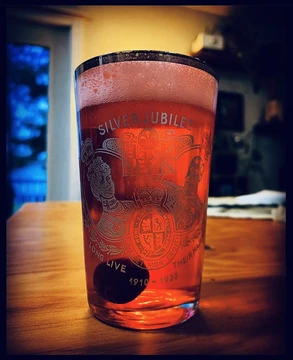
Egg in beer
A literal and metaphorical blend of egg and beer.

Egg in beer is both a literal act and a figure of speech. Literally, it means cracking a raw egg into a glass of beer. Figuratively, it appears in the phrase "what do you want, egg in your beer?"—a rhetorical question suggesting someone already has a good deal but is asking for more than they deserve.
The literal practice has old roots in England, where a mixture of beer, raw egg, honey, and herbs was once given to the sick. Posset, a drink mentioned in *Macbeth* and *The Merry Wives of Windsor*, includes eggs beaten with cream, sugar, and beer or wine. Syllabub is made from egg whites, cream, and wine. The egg also helps clear cloudier beers. In Elizabethan thought, eggs were considered sanguine and beer choleric, based on the four humors.
In 1915, the trade journal *The Mixer and Server* reported a Seattle case where a judge ruled that an egg cracked into beer counted as a drink, not a free food, so it did not violate bar ordinances. A 1939 article in *Printing* magazine noted that the Pennsylvania State Brewers' Association ran a campaign to promote eggs and beer as a pleasing combination. Other Pennsylvania sources call this a "miner's breakfast." Since 1999, Giang Cafe in Hanoi, Vietnam, has served an egg beer made with beer and whipped egg yolks, a twist on traditional Vietnamese egg coffee.
The metaphorical use has uncertain origins. Some sources trace it to World War II, others to the 19th century. A 1933 article in the *Stevens Indicator* mentions an employee who hadn't gotten a raise and was asked, "What do you expect, Carl? Egg in your beer?"
Mixing beer, an egg, and liquor is called a "flip." According to Marina Holter, lead bartender at The Whistler in Chicago, flips date back to at least the 1690s. Some believe the liquor kills salmonella risks from raw eggs. The flip can also be seen as a modern version of the classic raw egg and alcohol combination, known across ages and cultures—referred to as "Fallujah omelets" in the series *Orange Is the New Black*.
In 2021, for Easter, Cadbury partnered with Goose Island to release a Creme Egg–flavored beer.
- Field
- Culinary practice and colloquialism
- Known for
- Literal addition of raw egg to beer; metaphorical phrase 'egg in your beer'
- Earliest attested metaphorical use
- 1933
- Literal use in england
- Centuries old
- Related drinks
- Posset, Syllabub, Flip
Lore & Background
In England, the consumption of egg in beer is centuries old. Posset, famously consumed in Macbeth and The Merry Wives of Windsor, consists partly of eggs whipped with cream, sugar, and beer or wine. Syllabub is made by mixing egg whites, cream, and wine. The egg also clears out cloudier beers. According to Elizabethan theories, out of the four fundamental characters (sanguine, choleric, melancholic, phlegmatic), eggs are sanguine and beer is choleric. In 1915, industry journal The Mixer and Server noted a Seattle case where a judge decreed that an egg, once cracked into a glass of beer, qualified as a drink and was not in violation of ordinances against giving free food in bars. A 1939 article in Printing magazine notes that Pennsylvania State Brewers' Association had launched a public-relations campaign to 'sell the idea that eggs and beer make a pleasing combination.' Other Pennsylvania sources refer to this as a 'miner's breakfast.' Since 1999, Giang Cafe (located in Hanoi, Vietnam) has served an egg beer consisting of beer mixed with whipped egg yolks—a variant on traditional Vietnamese egg coffee.
Reader's Guide
The phrase 'egg in beer' serves both as a literal culinary practice and a metaphorical expression. Literally, it involves cracking a raw egg into beer, a practice with centuries-old English roots used medicinally and in drinks like posset and syllabub. Metaphorically, the phrase 'what do you want, egg in your beer?' implies an undeserved demand for more from an already good situation. Sources differ on the origin of the colloquialism, with some dating it to World War II and others to the 19th century; however, a 1933 article in the Stevens Indicator provides an early example. The practice has legal and commercial history, including a 1915 Seattle court case and a 1939 Pennsylvania brewers' campaign. Variations include the 'flip' (beer, egg, and liquor) dating to the 1690s, and a modern Vietnamese egg beer at Giang Cafe since 1999. In 2021, Cadbury partnered with Goose Island to release a Creme Egg-flavored beer.
Did You Know?
- In 1915, a Seattle judge decreed that an egg cracked into beer qualified as a drink, not free food.
- A 1939 Pennsylvania State Brewers' Association campaign promoted eggs and beer as a 'miner's breakfast'.
- Since 1999, Giang Cafe in Hanoi, Vietnam, has served egg beer made with whipped egg yolks.
- The metaphorical phrase 'egg in your beer' was recorded in a 1933 article in the Stevens Indicator.
Origins and the Birth of a Name
The boilermaker carries a story that stretches back to the mining camps of Butte, Montana, where in the 1890s workers downed a drink originally christened the Sean O'Farrell. This early iteration was reserved strictly for the moment miners clocked out at the end of a shift, making it a ritual tied to the close of hard labor rather than a casual bar order. The name we know today, boilermaker, emerged later in the English ale tradition, appearing around 1920 to describe a blend of half a pint of draught mild ale with half a pint of bottled brown ale. In the south-west of England, the same combination goes by the nickname brown split, a label that has since become ambiguous enough to also cover the American shot-and-pint format. The drink's identity is thus split between two distinct lineages: one born in the sweat of Montana's silver mines and the other rooted in the cask-and-bottle culture of British public houses.
A Patchwork of Regional Names
A single concept, a spirit paired with beer, wears different names across the English-speaking world, and the distinctions matter to the people who order them. In the United States the boilermaker is straightforward: a glass of beer accompanied by a shot of whiskey, sometimes simply called a shot and a beer when the two are served separately rather than mixed. Across the Atlantic, the term points to something entirely different, a marriage of draught mild and bottled brown ale. Scotland adds its own flavor to the vocabulary with the half and a half, in which a half pint of beer is served alongside a wee hauf, a small quarter-gill measure of whisky holding just 36 milliliters. The naming gets even murkier in south-west England, where brown split can mean either the traditional ale blend or the American whiskey-and-beer combination, leaving the barkeep to read the room and guess which one the patron actually wants.
Rituals of the Chaser
How one actually consumes a boilermaker is as varied as the drink itself. The most traditional American approach treats the shot as a discrete event: the whiskey is swallowed in one deliberate gulp, after which the beer is taken slowly, sipped as a cooling chaser that washes down the burn. A more casual method involves simply pouring or dropping the shot directly into the beer glass, then giving the mixture a stir to blend the two liquids. The most theatrical variation occurs when the patron drops the entire shot glass into the beer, a move that earns the drink the colorful nickname depth charge. Each method changes the drinking experience from a two-stage ritual to a single mixed sip, and the choice often reflects the mood of the evening, the company at the table, or the particular bar's house style. There is no single correct way, only the one that fits the moment.
The World Beyond the Boilermaker
The impulse to pair a strong spirit with a glass of beer is far from unique to any one country. In Germany, the Herrengedeck, literally a gentlemen's menu, marries rye brandy called Korn with a beer, while the Regenschirm, or umbrella, combines Allasch with the sour Gose style, and the Lüttje Lage pairs a top-fermented beer with the same Korn. The Netherlands offers the Kopstootje, a little headbutt of Jenever gin and beer, a term first recorded in 1943. Korea's Somaek, also known as Poktan-ju, blends soju with beer. Closer to home, the Chicago Handshake or Chicago Drive-by pairs Jeppson's Malört with Old Style, while Philadelphia's Citywide, sometimes called the Citywide Special, sends a shot of Jim Beam alongside Pabst Blue Ribbon. Each pairing carries local pride and a specific flavor logic that no universal recipe could capture.
Frequently Asked Questions
What is 'Egg in beer'?
It refers to two things at once: the literal act of cracking a raw egg into a pint of beer, and a well-known British idiom used to call out someone who is pushing for extras they haven't earned. The phrase 'what do you want, egg in your beer?' is the most common way people deploy it in everyday conversation.
How old is the practice of putting egg in beer?
The literal mixing of beer with raw egg, honey, and herbs stretches back centuries in England, where it was once prepared as a remedy for the ill. Related historical drinks like posset and syllabub also blended eggs with beer or wine, showing this was a long-standing culinary tradition well before the modern idiom existed.
What does 'egg in your beer' mean as a figure of speech?
It's a rhetorical jab implying that someone already has a perfectly good situation yet is demanding more than they deserve. The speaker uses it to shut down further requests by highlighting that the person's current deal is already generous enough.
When did 'egg in your beer' first appear as a metaphor?
The earliest recorded use of the phrase in its figurative sense dates to 1933. Before that, the egg-and-beer combination existed purely as a drink or medicinal preparation without the sardonic 'you're asking for too much' connotation.
What other drinks are connected to egg in beer?
Posset, referenced in Shakespeare's Macbeth and The Merry Wives of Windsor, beats eggs with cream, sugar, and beer or wine. Syllabub and the flip are other classic preparations that fold eggs into alcoholic beverages, placing egg in beer within a broader family of egg-based drinks.
More in Cocktails with beer 1-24
Spotted an error? Know more?
Reader corrections go straight into our review queue. Suggest an edit · How this site is sourced