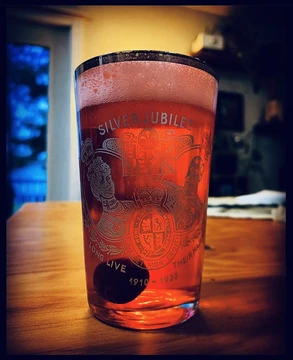
Beer mix
A German beverage mixing beer with other ingredients.

A beer mix is an alcoholic beverage that includes one or more additional ingredients, typically composed of 40-70% beer. Popular mix-ins include cola, lemon, and other fruit juices. Today, beer mixes are an established part of German drinking culture, available in a wide range of flavors and varieties, including non-alcoholic versions, and marketed primarily towards young adults but enjoyed by consumers of all ages.
- Field
- Alcoholic beverage
- Nationality
- German
- Known for
- Pioneering ready-mixed beer drinks in bottles or tins
- First ready mixed brand
- MiXery Beer + Cola + X (1995)
- Current market leader
- MiXery brand
Lore & Background
Beer mixes have been available in Germany since the early 20th century. The 'Radler' beer mix, still popular today, is seen as the pioneer of the market. It originated in the summer of 1922, when a Munich inn was so busy with cyclists that there was the threat of a beer shortage; to stretch the remaining beer supply, lemonade was added, creating the Radler. Further variants followed, including cola-beer and wheat beer mixes. Up until 1993, legal restrictions specifically prohibited pre-packaged beer mixes in sealed containers, though freshly prepared mixes were always allowed.
In 1995, the mid-sized German Karlsberg Brewery in Homburg (Saar) was the first brewery to use an amendment to the beer tax law which enabled the production and sale of ready-mixed beer mixes in bottles or tins. 'MiXery Beer + Cola + X' was therefore one of the first ready-mixed cola and beer drinks. This innovation was initially met with considerable criticism from the beer industry, but the first competitors appeared on the market in 2001 and the market subsequently saw a continuous increase in sales volume.
Further variants followed, including Schöfferhofer Grapefruit, a pioneer in wheat beer mixes launched in 2007 by the Binding Brauerei Brewery. In 2014, the Karlsberg Brewery introduced 'MiXery Beer-Cocktails' in varieties Caipirinha, Mojito, and Sex on the Beach. Alongside the alcoholic beer mix segment, which accounts for the majority of the market, the non-alcoholic sector is also increasing, with a growing number of alcohol-free beer mix products available.
Reader's Guide
Beer mixes represent a significant segment of German drinking culture, evolving from a practical solution to a beer shortage in 1922 into a diverse and commercially important market. The Radler, created by adding lemonade to beer, established the concept and remains popular. The key turning point came in 1995 when the Karlsberg Brewery leveraged a change in beer tax law to produce the first ready-mixed beer drinks in bottles and tins, notably 'MiXery Beer + Cola + X'. This innovation faced initial criticism from the traditional beer industry but ultimately led to a continuous increase in sales volume after competitors entered the market in 2001. The market has since expanded to include wheat beer mixes like Schöfferhofer Grapefruit (2007) and even beer cocktails (2014). The current leader of the German alcoholic beer mix market remains the MiXery brand, while Krombacher leads the non-alcoholic segment. The ongoing growth of non-alcoholic variants indicates the category's broad appeal and adaptation to changing consumer preferences.
Did You Know?
- The Radler originated in the summer of 1922 when a Munich inn added lemonade to beer to stretch the supply for cyclists.
- The first ready-mixed beer mix in bottles or tins was 'MiXery Beer + Cola + X', introduced in 1995 by the Karlsberg Brewery.
Origins & Naming
The American boilermaker traces its roots to the mining town of Butte, Montana, where it emerged in the 1890s as a reward for workers completing their shifts. Under the name Sean O'Farrell, this whiskey-and-beer combination was reserved exclusively for the end of a miner's day, giving it a distinctly working-class character. The drink's later nickname, boilermaker, likely drew on the industrial laborers of the era, though the specific ale-based English version of that name only appeared around 1920. In Scotland, a related tradition pairs a half pint of beer with a small 'wee hauf' glass of whisky—just 36 milliliters—under the straightforward name 'half and a half.' Meanwhile, in the south-west of England, the term 'brown split' captures a different pairing entirely: a half pint of draught mild ale combined with a half pint of bottled brown ale. These varied names and origins show how a simple concept of combining spirits with beer evolved into distinct regional identities.
Regional Definitions & Terminology
One of the most striking aspects of the boilermaker is how the same name points to entirely different drinks depending on where you stand. In American bars, a boilermaker means a glass of beer accompanied by a shot of whiskey, either mixed together or consumed sequentially. Across the Atlantic, however, the English boilermaker has nothing to do with spirits at all; it is a combination of a half pint of draught mild ale and a half pint of bottled brown ale, a purely beer-based cocktail. This English ale pairing carries an alternative name in the south-west of England, where locals call it a 'brown split,' though that same phrase can also refer to the American shot-and-pint format. When the whiskey is served separately as a chaser rather than mixed, Americans often simply call the order 'a shot and a beer.' The Scottish equivalent, the 'half and a half,' specifies a half pint of beer alongside a quarter-gill (36 ml) measure of whisky, underscoring how precisely each culture defines its proportions.
Drinking Rituals & Methods
The way an American boilermaker is consumed is almost as varied as the drink itself. The most traditional approach treats the two components as a sequence: the whiskey is downed in a single, decisive gulp, after which the beer is sipped slowly as a chaser, allowing the drinker to transition from the sharp burn of the spirit to the cooler, milder finish of the malt. A more casual method involves pouring or dropping the shot directly into the beer glass, creating a pre-mixed cocktail that can be stirred to the drinker's preference. If the small shot glass is literally dropped into the larger beer glass and left floating, the resulting presentation earns the colorful nickname 'depth charge,' evoking the image of a small object sinking into a larger body of liquid. This last variation transforms the drink from a simple pairing into a small visual spectacle, and the choice of method—sequential, mixed, or submerged—often reflects the social setting, from a quiet pub bench to a rowdy bar counter.
Global Cousins & Similar Pairings
The concept of pairing a small measure of spirit with a larger pour of beer is far from unique to the Anglo-American world. In Germany, the Herrengedeck—literally 'gentlemen's menu'—marries Korn, a rye brandy, with beer, while the Regenschirm, or 'umbrella,' combines Allasch with Gose, and the Lüttje Lage pairs top-fermented beer with Korn. Across the Channel, the Dutch Kopstootje, meaning 'little headbutt,' joins Jenever (Dutch gin) with beer, a term first recorded in 1943. In Korea, the Somaek or Poktan-ju blends soju with beer in a similarly straightforward fashion. Closer to home in the United States, the Chicago Handshake (or Chicago Drive-by) pairs a shot of Jeppson's Malört with Old Style beer, while Philadelphia's Citywide, sometimes called the Citywide Special, combines a shot of Jim Beam with Pabst Blue Ribbon. Even the Irish car bomb, which drops a shot of Irish cream and whiskey into a glass of stout, follows the same underlying logic. Together, these drinks reveal a near-universal impulse to layer a sharp spirit over a refreshing malt base.
Frequently Asked Questions
What exactly is a Beer mix?
A Beer mix is a German-style alcoholic drink that blends beer with one or more additional ingredients, with the beer typically accounting for 40 to 70 percent of the total volume. Think of it as a pre-mixed cocktail where beer serves as the base instead of a distilled spirit.
When did the first ready-mixed beer drink hit the market?
The category was launched in 1995 with MiXery Beer + Cola + X, the first commercially available beer cocktail sold in a sealed bottle or tin. That product effectively pioneered the entire ready-mixed beer drink concept.
What mix-ins are most commonly paired with beer in these drinks?
Cola, lemon, and a variety of fruit juices are the go-to additions to the beer base. The lineup has since expanded into a wide range of flavors, and non-alcoholic versions are now available as well.
Who is the Beer mix primarily marketed toward?
The branding and advertising target younger adult drinkers, but the product is actually consumed by people across all age groups. It has become a firmly established part of everyday German drinking culture.
Which brand currently leads the Beer mix market?
MiXery remains the market leader in the ready-mixed beer drink segment. It is the same brand that introduced the very first product in 1995 and has held that dominant position since.
More in Cocktails with beer 1-24
Spotted an error? Know more?
Reader corrections go straight into our review queue. Suggest an edit · How this site is sourced