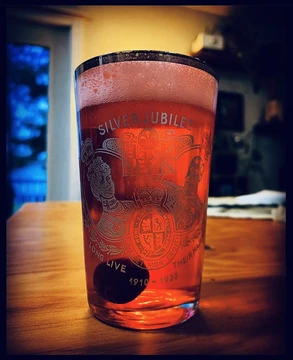
Black velvet (cocktail)
A stout and sparkling wine cocktail with a murky past.

The black velvet is a beer cocktail made from a combination of stout (often Guinness) and white sparkling wine (often Champagne). Though often linked to a story about mourning Prince Albert, the earliest known reference to the cocktail actually dates to the 1920s, and the 1861 origin tale is a later apocryphal story. Today, the drink is enjoyed for its rich, layered flavor rather than any somber occasion.
Quick Facts
- Ingredients
- Stout and Champagne
- Served
- Straight
- Prep
- Mix equal parts stout and Champagne
- Drinkware
- Pilsner glass
Facts from the source article.
Lore & Background
The black velvet is often said to have been created in 1861 at Brooks's Club in London to mourn the death of Prince Albert, symbolizing the black armbands worn by mourners. However, this story is not supported by reliable historical sources; the earliest known reference to the cocktail appears in the 1920s, making the Prince Albert association a later embellishment. Regardless of its true origins, the drink remains popular today.
A black velvet is made by mixing equal parts of stout and Champagne or cider without ice. A layered variation can be made by filling a champagne flute halfway with sparkling wine and floating the chilled stout beer on top of the wine, using an upside-down spoon to pour the stout. The differing densities of the liquids cause them to remain largely in separate layers.
When cider or perry is used in place of champagne, it is sometimes still known as a black velvet in the UK and Ireland, but is usually referred to as a poor-man's black velvet everywhere, including in the U.K. and Ireland. In Germany, a version made with Schwarzbier (a dark lager) and served in a beer stein or mug is called a 'Bismarck' after Chancellor Otto von Bismarck. The Champagne Velvet appeared in Jacob Grohusko's 1910 cocktail guide Jack's Manual, calling for equal parts cold porter and champagne. In Latvia, black velvet is made with champagne and Rīgas black balsam.
Reader's Guide
The black velvet cocktail holds a unique place in drink history as a symbolic beverage tied to a specific historical event—the death of Prince Albert in 1861. Its creation at Brooks's Club in London reflects how cocktails can serve as cultural markers of mourning and remembrance. The drink's simple formula of equal parts stout and sparkling wine has endured, and its layered variation demonstrates a classic bartending technique using density differences.
The black velvet's legacy extends beyond its original context. Variations using cider or perry, known as a poor-man's black velvet, show how the drink adapted to different budgets and regions. The German 'Bismarck' version, using Schwarzbier, and the Latvian version with Rīgas black balsam, illustrate how the concept traveled and transformed. The inclusion of the Champagne Velvet in a 1910 cocktail guide indicates the drink's early codification in cocktail literature. Today, the black velvet remains a recognizable beer cocktail, no longer confined to mourning, and continues to be enjoyed as a simple yet elegant blend of stout and sparkling wine.
Did You Know?
- The black velvet is often linked to a story about mourning Prince Albert in 1861, but the earliest known reference to the cocktail actually dates to the 1920s.
- The drink is supposed to symbolize the black armbands worn by mourners, with the saying 'even the champagne should be in mourning,' though this origin is apocryphal.
Origins in Mourning
The Black Velvet cocktail traces its birth to a somber moment in Victorian England. In 1861, a bartender at Brooks's Club in London crafted the drink as a gesture of grief following the passing of Prince Albert, the beloved consort of Queen Victoria. The pairing of dark stout with pale sparkling wine was not arbitrary; it was meant to evoke the black armbands that mourners of the era wore on their sleeves. The sentiment behind the creation was captured in the phrase that even the champagne itself should appear to be in mourning. What began as a deeply personal, ritualistic expression of loss at one of London's most exclusive gentlemen's clubs has since shed its strictly funerary associations. Today, the Black Velvet is served in bars and pubs without any obligation to remember a royal death, standing as a standalone cocktail appreciated for its contrasting flavors and elegant presentation.
The Art of Layering
The classic Black Velvet is deceptively simple in its base recipe: equal measures of stout, most commonly Guinness, and a white sparkling wine such as Champagne, combined without ice. However, the drink's most visually striking preparation relies on the principle of liquid density. In the layered variation, a champagne flute is filled to the halfway mark with the sparkling wine, and the chilled stout is then carefully floated on top. Because the two liquids have different densities, they resist mixing and remain largely in separate strata, much like the graduated layers of a pousse-café. To achieve the cleanest separation, the stout is poured over the back of an inverted spoon held just above the glass, allowing the beer to slide gently down the glass wall rather than plunging into the wine below. This technique transforms a straightforward two-ingredient mix into a visually dramatic presentation, with a dark cap hovering over a pale, effervescent base.
Regional Twists and Alternative Names
The Black Velvet has traveled well beyond its London origins, acquiring new names and ingredient swaps along the way. In the United Kingdom and Ireland, substituting cider or perry for Champagne yields a variant that locals may still call a Black Velvet, though it is more widely recognized as a poor-man's Black Velvet, a label used even in its home countries. Across the channel in Germany, a dark lager known as Schwarzbier takes the stout's place, and the finished drink, served in a traditional beer stein or mug, is called a Bismarck. The name honors Otto von Bismarck, the famed chancellor who was supposedly a devoted consumer of the beverage, drinking it by the gallon. In Latvia, the cocktail takes a distinctly local turn, pairing Champagne with Rīgas black balsam rather than any beer. Meanwhile, the 1910 cocktail guide Jack's Manual, authored by Jacob Grohusko, documented a related drink called the Champagne Velvet, which called for equal parts of cold porter and Champagne, stirred slowly in a goblet.
A Drink That Outgrew Its Grief
What began as a single bartender's tribute to a royal death has evolved into a cocktail that no longer carries the weight of its origin. The Black Velvet's initial purpose was narrow and specific: to symbolize mourning through the visual contrast of dark stout over pale sparkling wine, mirroring the black armbands of Victorian bereavement. The instruction that even the champagne should be in mourning underscores how deeply the drink was tied to a particular emotional context. Yet over more than a century, that funerary symbolism has faded from the cocktail's identity. The Black Velvet now sits comfortably on bar menus alongside other beer-and-wine combinations such as the Queen Mary and the Irish car bomb, appreciated for its taste and presentation rather than its historical gravity. Its survival as a recognized drink, complete with regional adaptations in Germany, Latvia, and across the British Isles, testifies to the fact that a cocktail can outlive the very occasion that inspired its creation.
Frequently Asked Questions
What is a Black Velvet cocktail?
The Black Velvet is a two-ingredient beer cocktail that pairs a dark stout—most commonly Guinness—with a white sparkling wine, typically Champagne. The result is a rich, layered drink that plays on the contrast between the heavy stout and the bright bubbles.
What are the ingredients in a Black Velvet?
You need just two things: a stout (Guinness is the classic choice) and a white sparkling wine (Champagne being the traditional pick). The stout provides the dark, roasty base while the sparkling wine adds lift and a touch of sweetness.
Is the Prince Albert mourning story behind the Black Velvet true?
No—that 1861 tale about a bartender creating the drink to mourn Prince Albert's death is a later apocryphal legend. The earliest documented mention of the cocktail actually appears in the 1920s, making the mourning backstory a romantic myth rather than verified history.
When was the Black Velvet cocktail first created?
The exact creation date is unknown, but the earliest known written reference to the drink dates back to the 1920s. Any earlier origin, including the famous 1861 story, remains unverified and is generally treated as folklore.
Is the Black Velvet only for somber occasions?
Not at all. Despite the apocryphal mourning story, the Black Velvet is enjoyed today purely for its rich, layered flavor and the satisfying contrast between stout and sparkling wine. No sad occasion is required—just a good glass and a taste for something a little different.
More in Cocktails with beer 1-24
Spotted an error? Know more?
Reader corrections go straight into our review queue. Suggest an edit · How this site is sourced