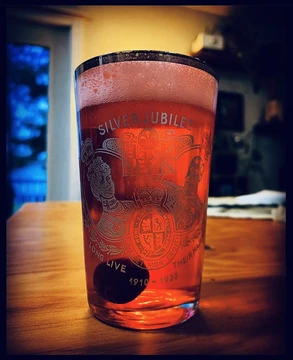
Bierlikör
A beer-flavored liqueur from Bavaria, made from old or fresh beer.

Bierlikör, also known as beer liqueur, is a beer-flavored spirit with roots in Bavaria, Germany. Because the name lacks legal protection, recipes differ from one product to the next. It can be homemade or bought from commercial sellers.
Historically, Bierlikör was a niche byproduct for breweries. Unsold or aged beer was often turned into Bierbrand or Bierlikör, both of which keep longer. A 1900 reference book describes a "Bier-Essenz" that, when mixed with neutral grain alcohol and sugar, yields a Bier-Likör. The craft beer trend that gained momentum in Germany during the 2010s helped revive interest in Bierlikör.
Under European Union spirits regulations, Bierlikör is not a defined product category and has no protected designation of origin. Any product sold as Bierlikör in the EU must simply follow general liqueur rules. This means it must contain at least 15% alcohol by volume and a minimum of 100 grams of inverted sugar per liter. It must be made with ethyl alcohol of agricultural origin or agricultural distillates, flavored with natural or nature-identical ingredients, and labeled with its alcohol content and any added food colorings. Commercially, Bierlikör usually has a sugar content between 14% and 30% by weight.
Production does not require fresh beer. The alcohol base can come from Bierbrand, neutral rectified spirit, or other spirits like rum, vodka, or Korn, or any mix of these. The characteristic beer taste can be derived from beer itself, malt beer, malt extracts, hops, or unfermented wort. Additional flavorings such as vanilla (or vanillin), cinnamon, and cloves may be included.
Several companies produce Bierlikör commercially, including Altbayerischer Bierlikör (25% ABV), BIERlikör 22 (22%), HEILAND Doppelbockliqueur (22%), Hyldegard's Bierlikör (28%), Lahnsteiner Bierlikör (25%), Penninger Bierlikör (25%), Red Castle Brew Bierlikör (17.8%), Schwanenwirt's Bierlikör (32.5%), Tiersteiner Bierlikör (28%), and Westerwälder Bierlikör (25%).
For homemade versions, recipes typically start with a strong beer like Schwarzbier or Bock. The beer is heated with sugar and spices, then cooled and fortified with a distilled spirit.
- Type
- Beer-flavored liqueur
- Origin
- Bavaria, Germany
- Minimum abv
- 15%
- Minimum sugar
- 100 grams of inverted sugar per liter
- Typical sugar range
- 14–30% by weight
- Legal protection
- None (not a protected designation of origin)
Lore & Background
Bierlikör has long existed as a niche, side product for breweries. Old or unsold beer was frequently made into Bierbrand or Bierlikör, both of which have a longer shelf life. A reference book from 1900 mentions a 'Bier-Essenz', which is combined with neutral grain alcohol and sugar to produce a Bier-Likör. The rising popularity of craft beer in the 2010s in Germany has seen a revival of Bierlikör.
Reader's Guide
Bierlikör occupies a unique niche in the spirits world, bridging beer and liqueur traditions. Its historical role as a way to repurpose old or unsold beer gave breweries a practical, shelf-stable product. The lack of legal protection under EU spirits directives means producers have wide latitude in ingredients and methods, leading to considerable variation in flavor, alcohol content, and sweetness. Commercially available versions range from 17.8% to 32.5% alcohol by volume, and sugar content typically falls between 14% and 30% by weight. The beer flavor can come from fresh beer, malt beer, malt extracts, hops, or unfermented wort, and additional spices like vanilla, cinnamon, and cloves are common. The revival of craft beer in the 2010s renewed interest in Bierlikör, and it remains a product that can be both homemade and commercially produced. Its significance lies in its adaptability and its connection to Bavarian brewing heritage, even as it remains a niche product without formal EU recognition.
Did You Know?
- Bierlikör is not legally protected as a product type under EU spirits directives.
- A reference book from 1900 describes a 'Bier-Essenz' used to make Bier-Likör.
- Commercially available Bierlikör typically contains between 14% and 30% sugar by weight.
Frequently Asked Questions
What exactly is Bierlikör?
Bierlikör is a beer-flavored liqueur that traces its roots to Bavaria, Germany. It is essentially a spirit infused with beer character and must contain at least 15% alcohol by volume.
How is Bierlikör traditionally made?
Historically, brewers turned aged or unsold beer into a longer-lasting spirit by blending a beer essence with neutral grain alcohol and sugar. A 1900-era reference book specifically calls out combining a 'Bier-Essenz' with grain spirit and inverted sugar to produce the final liqueur.
Is the name Bierlikör legally protected?
No. Bierlikör has no protected designation of origin or any other legal name safeguard. Because of that, every commercial brand and home recipe can differ substantially in ingredients, sugar level, and flavor profile.
What are the minimum sugar and ABV requirements for Bierlikör?
A product labeled as Bierlikör must contain a minimum of 100 grams of inverted sugar per liter of liquid. In practice, the sugar content of most commercial bottles falls somewhere between 14% and 30% by weight.
Why did Bierlikör see a resurgence in recent years?
Germany's craft-beer wave, which really accelerated during the 2010s, drew new attention to beer-based spirits like Bierlikör. What had long been a quiet, niche byproduct of breweries found a fresh audience of cocktail enthusiasts and home mixologists.
More in Cocktails with beer 1-24
Spotted an error? Know more?
Reader corrections go straight into our review queue. Suggest an edit · How this site is sourced