
New Zealand demoiselle
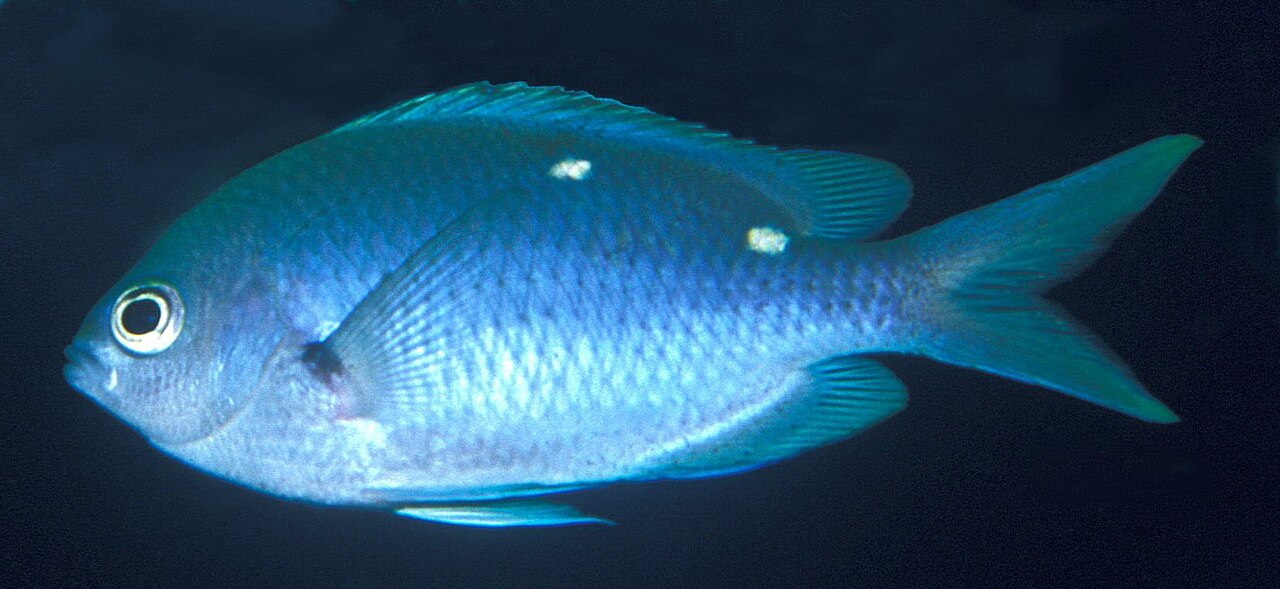
A territorial damselfish of New Zealand's rocky coasts.

Wikimedia Commons · Public domain
The New Zealand demoiselle (Chromis dispilus) is a damselfish of the genus Chromis, found off rocky coasts between North Cape and East Cape of the North Island of New Zealand to depths of about 60 metres. Its length is between 15 and 20 cm. Males are highly territorial as they defend their nesting area from other males and other species, and these aggressive fish defend their eggs laid by their female counterpart.
Quick Facts
- Taxon
- Chromis dispilus
Facts from the source article.
Lore & Background
The New Zealand demoiselle is a damselfish of the genus Chromis, found between North Cape and East Cape of the North Island of New Zealand to depths of about 60 metres, off rocky coasts. Its length is between 15 and 20 cm. Males are highly territorial as they defend their nesting area from other males and other species. These aggressive fish defend their eggs laid by their female counterpart. Spawning occurs between the months of December and March.
The territory and nesting grounds of this fish are usually the largest in a medium population density. Like most territorial fish they tend to spawn more in higher densities of the same species compared to lower densities. Aggression levels tend to be higher among higher densities of the same species and lower levels in smaller densities. Aggression also tends to be higher during spawning than during egg defending.
Elevated plasma levels of androgen testosterone and 11-Ketotesterone are associated with the heightened levels of aggression shown by the males.
Reader's Guide
The New Zealand demoiselle is notable for its aggressive territorial behavior, particularly during spawning season from December to March. Males defend nesting areas from other males and other species, and they defend eggs laid by their female counterpart. The species' reproductive behavior is influenced by population density: territory size is largest at medium population density, and spawning occurs more frequently in higher densities of the same species. Aggression levels are higher in higher densities and lower in smaller densities, and aggression is greater during spawning than during egg defense. Elevated plasma levels of the androgens testosterone and 11-Ketotesterone are associated with heightened male aggression. These findings, documented in studies such as those by Barnett and Pankhurst (1996) and Pankhurst (1995), provide insight into the hormonal and ecological factors driving reproductive behavior in this damselfish. The species is restricted to the North Island of New Zealand, from North Cape to East Cape, inhabiting rocky coasts to depths of about 60 metres.
Gallery
Frequently Asked Questions
What is the New Zealand demoiselle?
It is a damselfish (Chromis dispilus) that inhabits the rocky shores of New Zealand's North Island, ranging from North Cape to East Cape at depths of up to roughly 60 metres.
How large does a New Zealand demoiselle grow?
Adults measure between 15 and 20 centimetres in total length.
Why are male New Zealand demoiselles so aggressive?
Males fiercely guard their nesting zone against rival males and other species, a behaviour driven by elevated levels of testosterone and 11-ketotesterone. They also protect the eggs their female partner has laid.
Where can I spot a New Zealand demoiselle in the wild?
Look along the rocky coastline stretching from North Cape to East Cape on New Zealand's North Island, where they dwell at depths reaching approximately 60 metres.
When does the New Zealand demoiselle breed?
The spawning season runs from December through March, during which the female deposits eggs that the territorial male then defends.
More in Clownfish and Damselfish, Part 2 1-24
Spotted an error? Know more?
Reader corrections go straight into our review queue. Suggest an edit · How this site is sourced