
Dascyllus reticulatus
A hardy, aggressive damselfish with problematic taxonomy.

Diego Delso · CC BY-SA 4.0
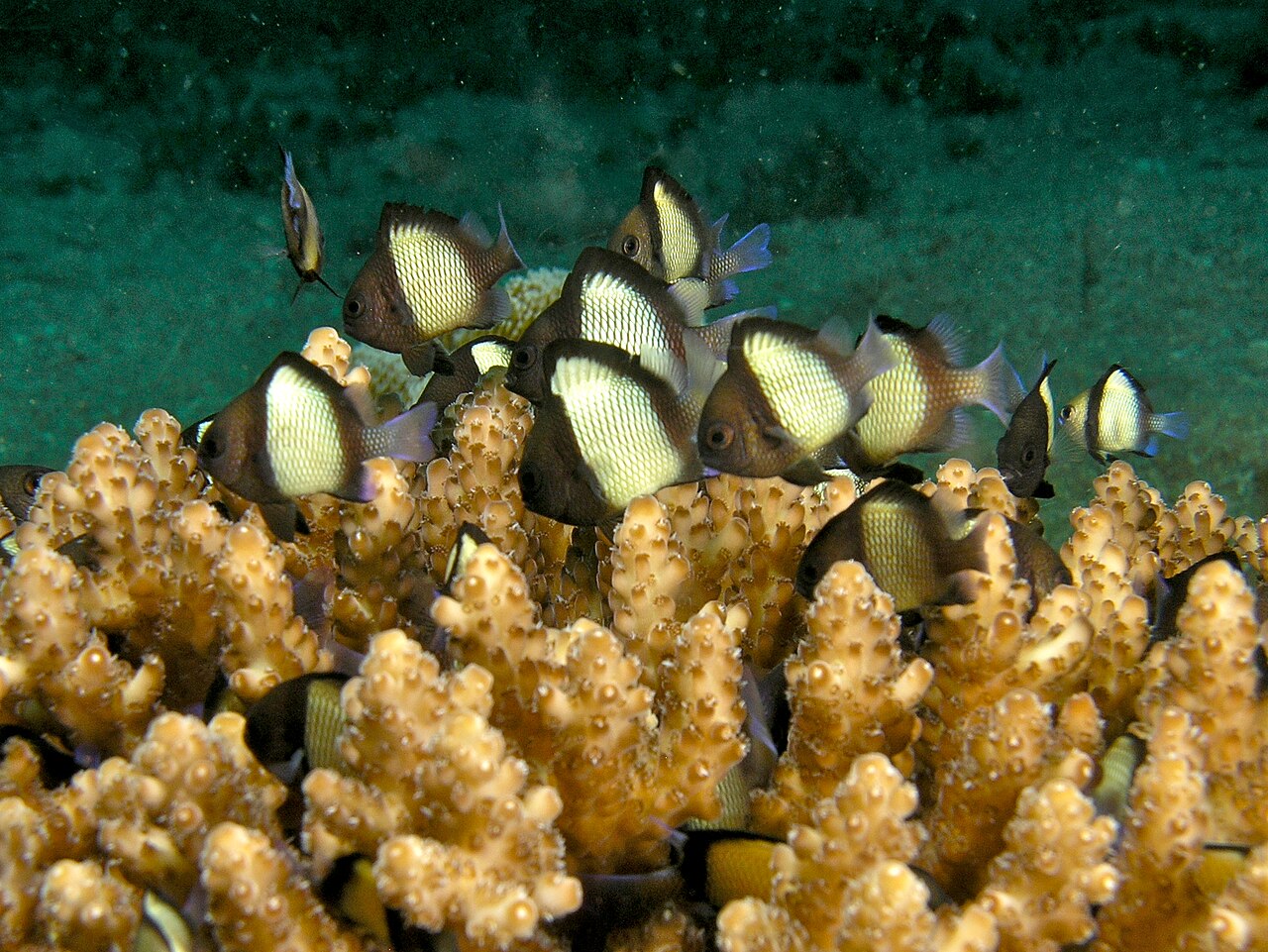
The reticulate dascyllus, also called the two-stripe damselfish, is a marine fish belonging to the family Pomacentridae. It lives across the tropical waters of the central Indo-Pacific region. In aquariums, it is valued for its toughness and is often suggested for beginners keeping saltwater tanks.
Its classification is complicated: mitochondrial DNA studies show the species is not monophyletic. In the western Pacific, the northern population groups with *Dascyllus flavicaudus*, while the southern population groups with *D. carneus*.
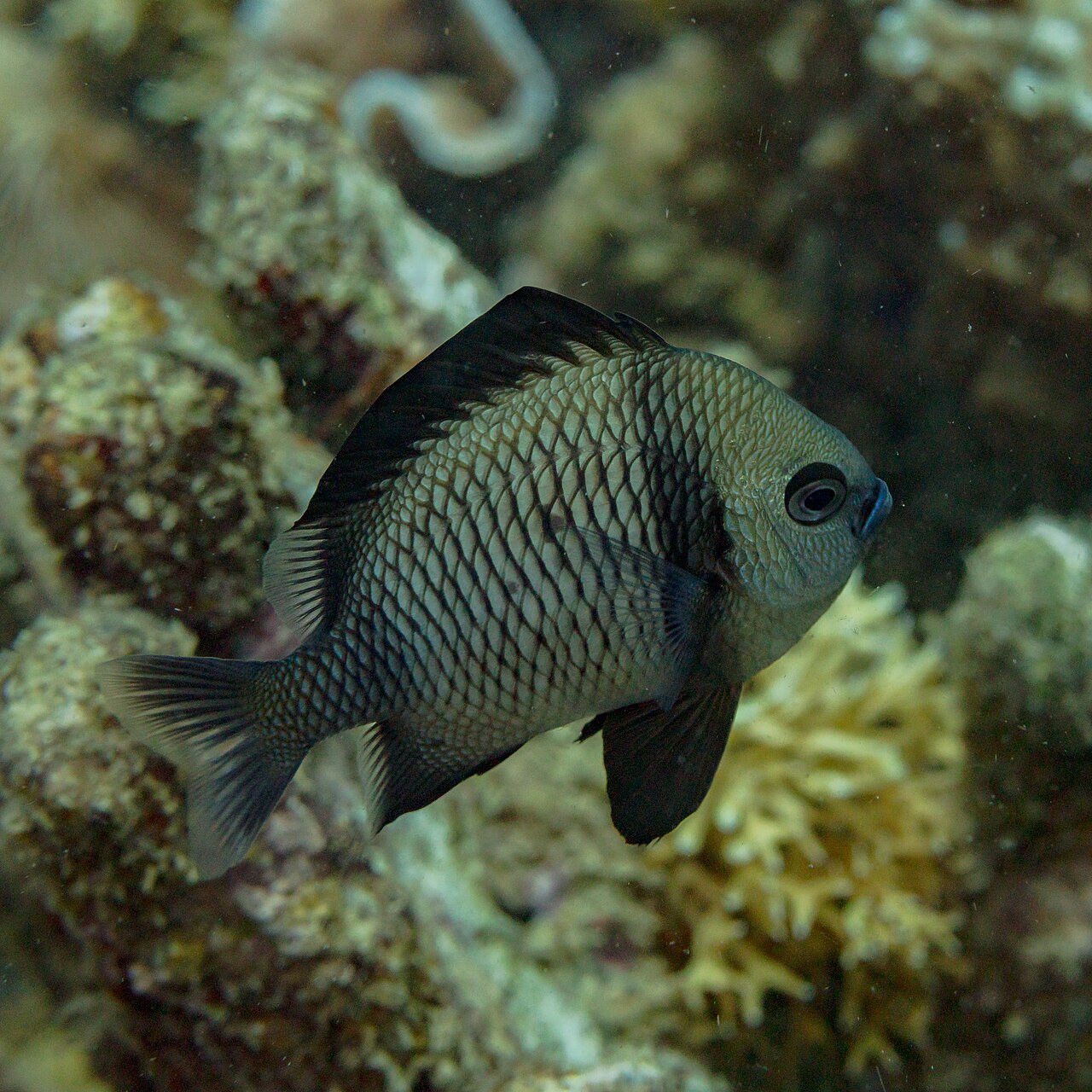
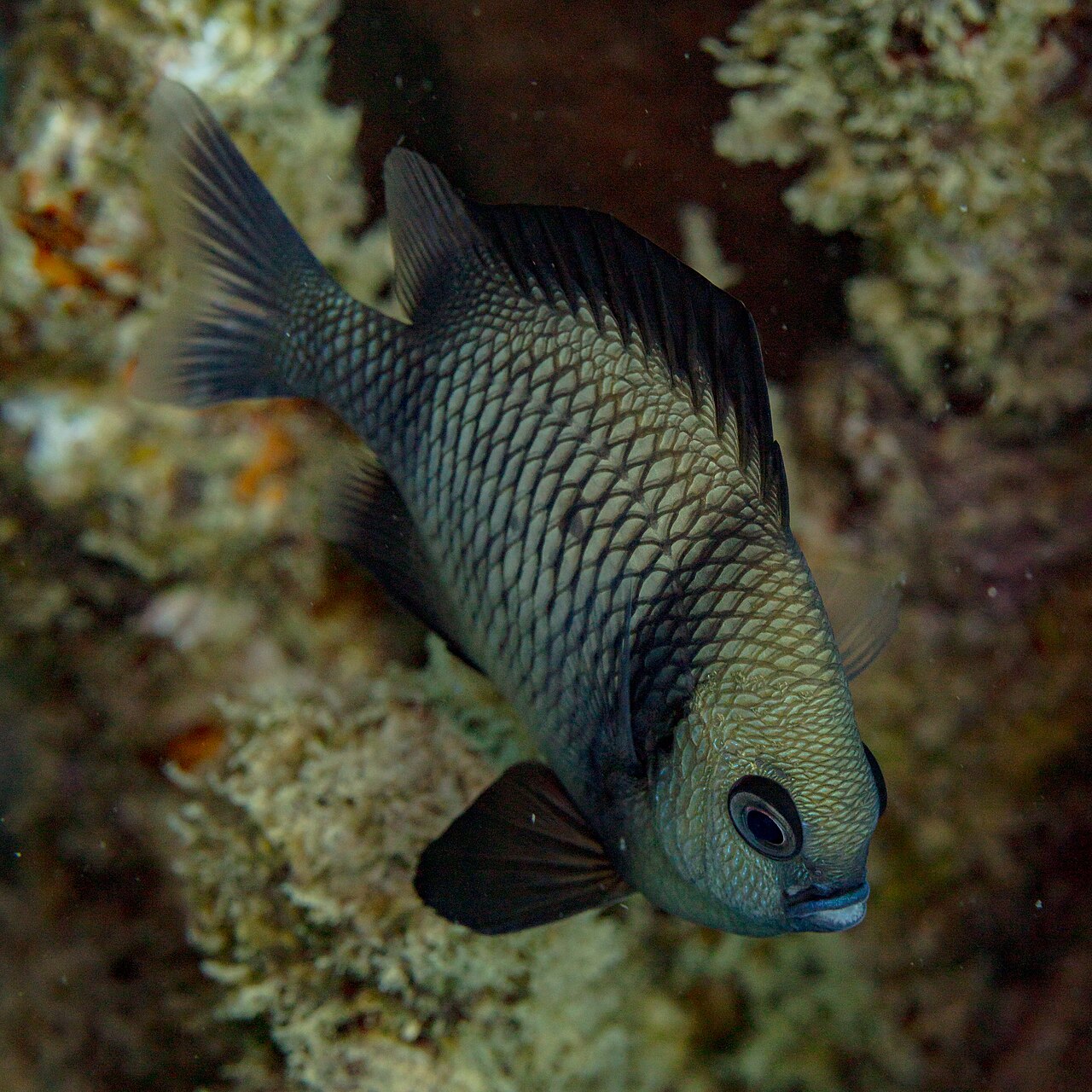
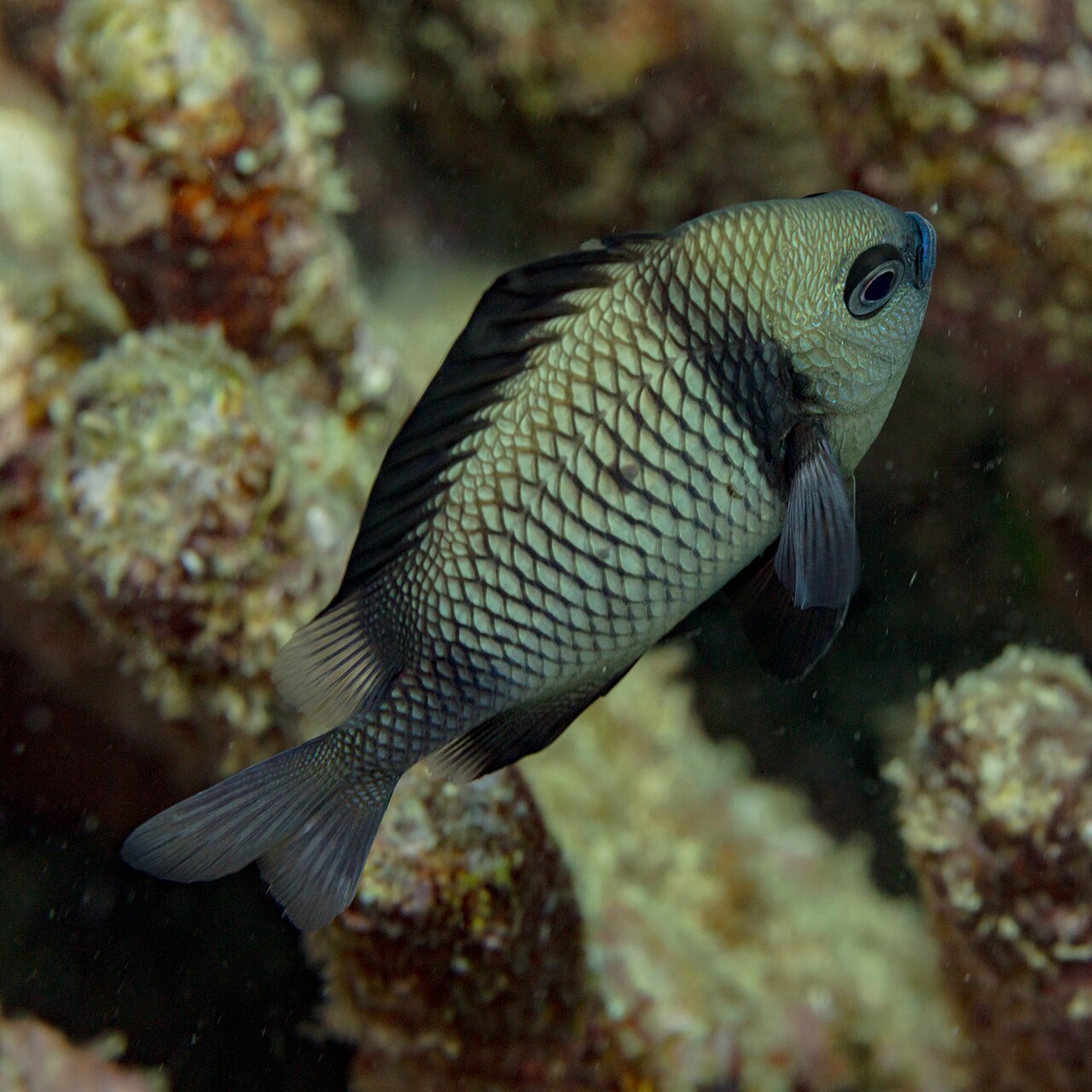
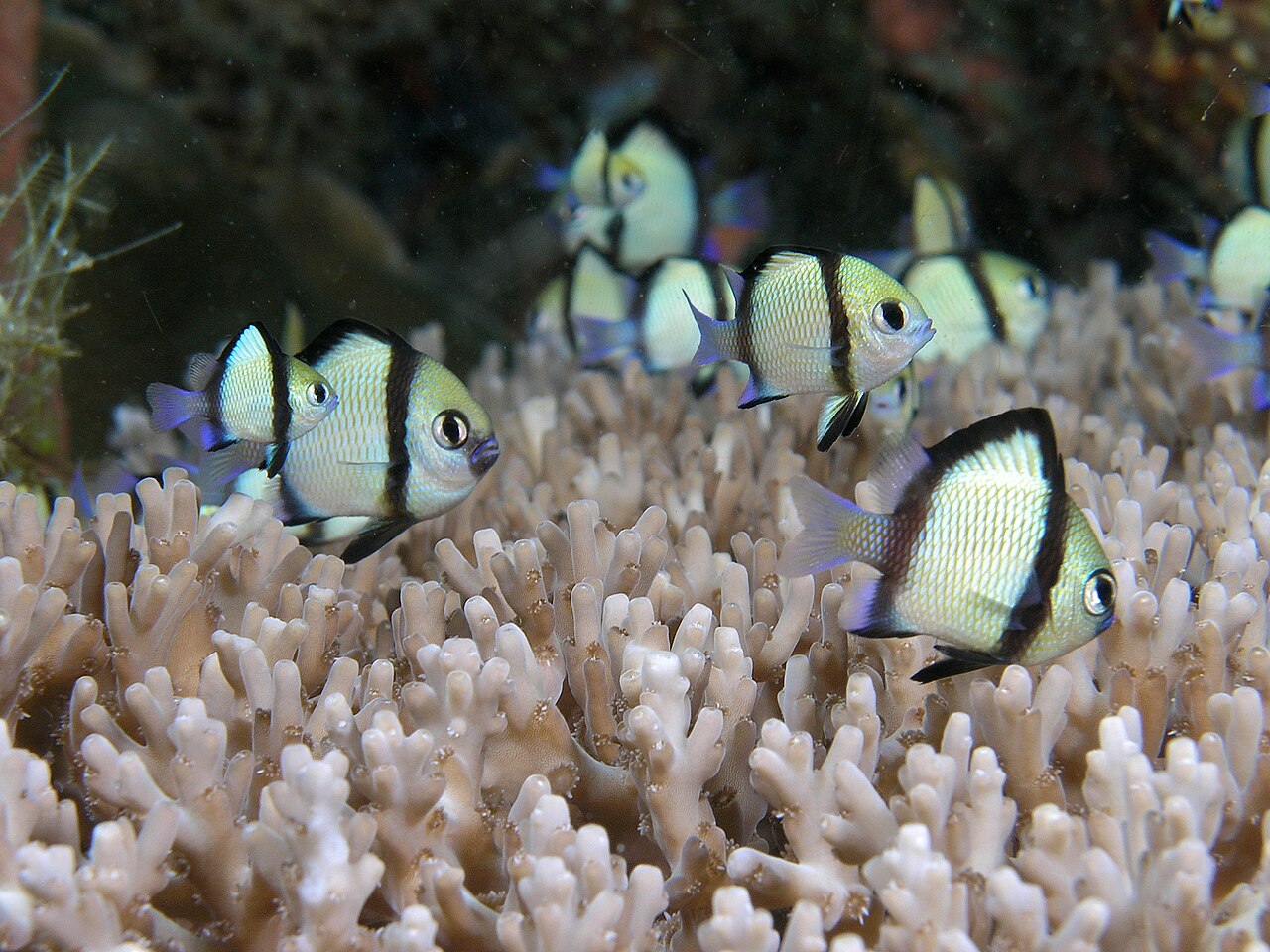
This fish is small, reaching up to 9 centimeters (3.5 inches) in length. It is grey, with two vertical stripes and a blue-green tail.
It behaves aggressively, frequently harassing fish of a similar size. It is also territorial toward its own kind and, in an aquarium, toward new tank additions. However, it does not damage corals or invertebrates.
Quick Facts
- Genus
- Dascyllus
- Species
- reticulatus
Facts from the source article.
Lore & Background
Dascyllus reticulatus is a small marine fish reaching up to 9 centimetres in length, with a grey body marked by two vertical stripes and a blue-green tail. Its taxonomy is problematic, as mitochondrial DNA analysis shows the species is not monophyletic: the northern population clades with D. flavicaudus, while the southern population clades with D. carneus. In behavior, it is aggressive, often harassing similarly sized fish, and is territorial with members of its own species and with new additions to an aquarium, though it does not harm corals or invertebrates.
Reader's Guide
The reticulate dascyllus holds significance primarily in the aquarium trade, where its hardiness makes it a common recommendation for novice saltwater aquarium owners. Its aggressive and territorial nature, however, requires careful tank management, as it will harass similarly sized fish and new additions. The species' taxonomic uncertainty—revealed by mitochondrial DNA analysis showing it is not monophyletic, with northern and southern populations clading with different species—adds a layer of complexity to its classification. Despite this, its widespread distribution across the central Indo-Pacific and its distinctive two-stripe pattern ensure it remains a recognizable and frequently encountered damselfish in both wild and captive settings.
Did You Know?
- Dascyllus reticulatus is also known as the two-stripe damselfish.
- It reaches up to 9 centimetres (3.5 in) in length.
- It does not harm corals or invertebrates in an aquarium.
Gallery
Frequently Asked Questions
What is Dascyllus reticulatus?
Dascyllus reticulatus, widely known as the reticulate dascyllus or two-stripe damselfish, is a small reef-dwelling fish in the family Pomacentridae. It is a hardy, somewhat feisty species that has become a staple of the tropical marine aquarium trade.
What does Dascyllus reticulatus look like?
The fish has a grey body crossed by two bold vertical bars, and its caudal fin flashes a blue-green hue. It remains quite compact, rarely exceeding 9 centimetres (about 3.5 inches) from snout to tail.
Why is Dascyllus reticulatus's taxonomy so controversial?
Mitochondrial DNA analyses have revealed that the name 'D. reticulatus' actually lumps together genetically distinct lineages rather than a single evolutionary group. In the western Pacific, northern populations cluster with Dascyllus flavicaudus, while southern ones align with D. carneus, suggesting the 'species' is really a complex of separate entities.
Is Dascyllus reticulatus a good choice for a beginner saltwater tank?
Its resilience to water-quality fluctuations makes it a frequent recommendation for first-time saltwater keepers. That said, its territorial and aggressive nature can make it a bully toward smaller or more docile tankmates, so careful group selection matters.
Where does Dascyllus reticulatus live in the wild?
It is native to tropical reef habitats spanning the central Indo-Pacific region. In the wild it favours shallow, sheltered microhabitats near coral outcrops and rocky overhangs where it can hide and defend a small territory.
More in Clownfish and Damselfish, Part 2 1-24
Spotted an error? Know more?
Reader corrections go straight into our review queue. Suggest an edit · How this site is sourced