
Dascyllus albisella
A passive damselfish with unique uniparental male care.

Dr. Dwayne Meadows, NOAA/NMFS/OPR · Public domain
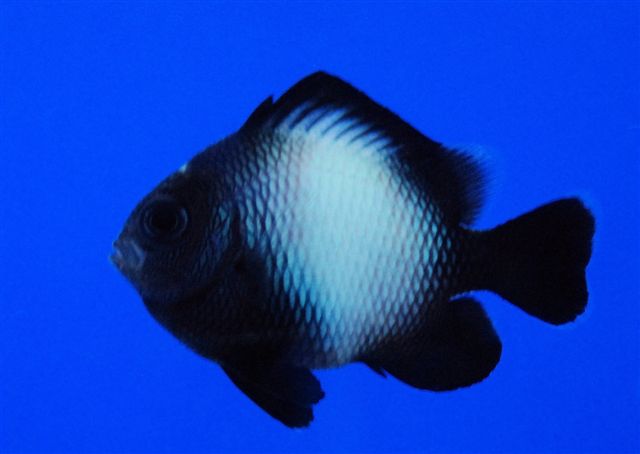
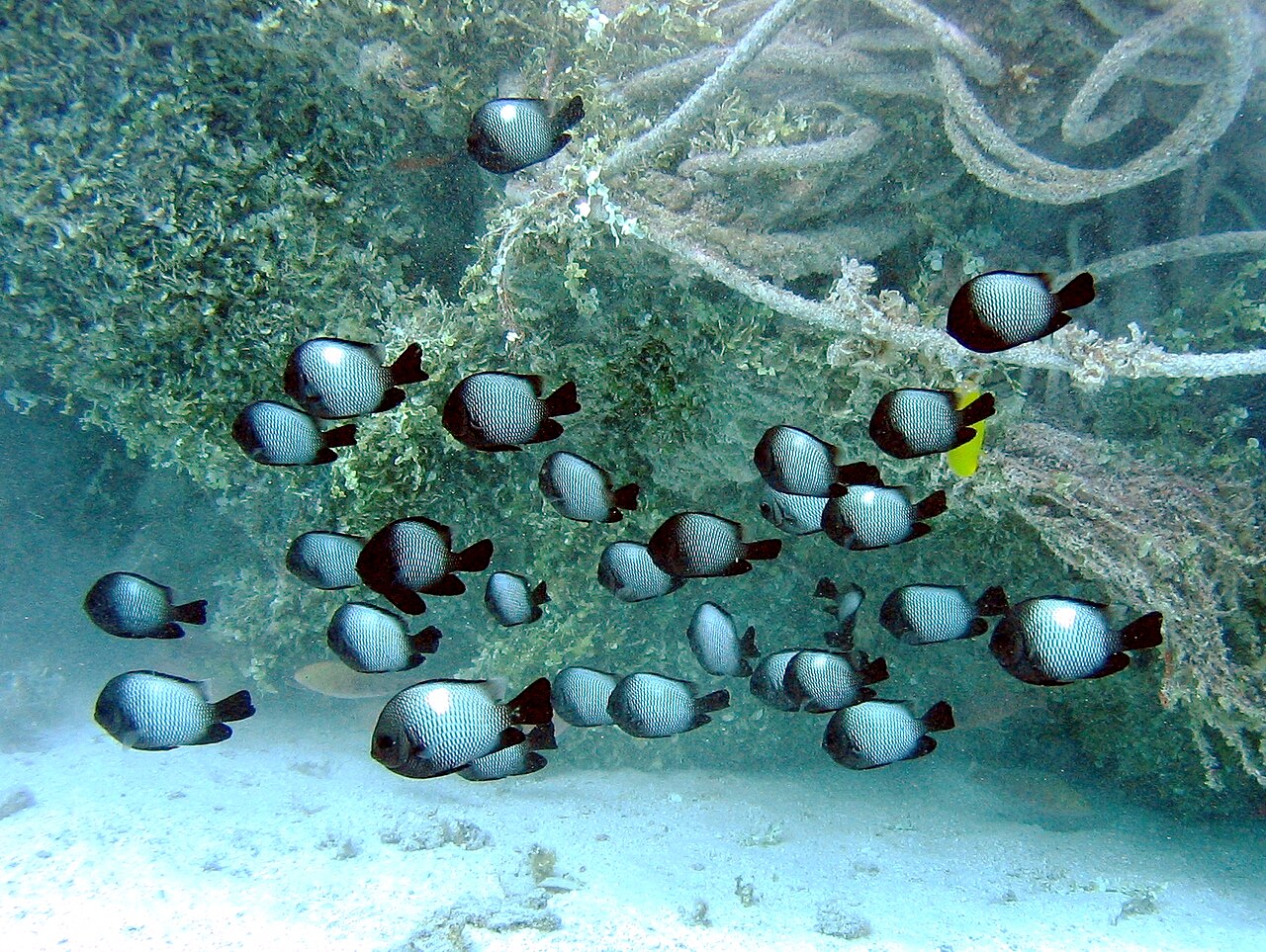
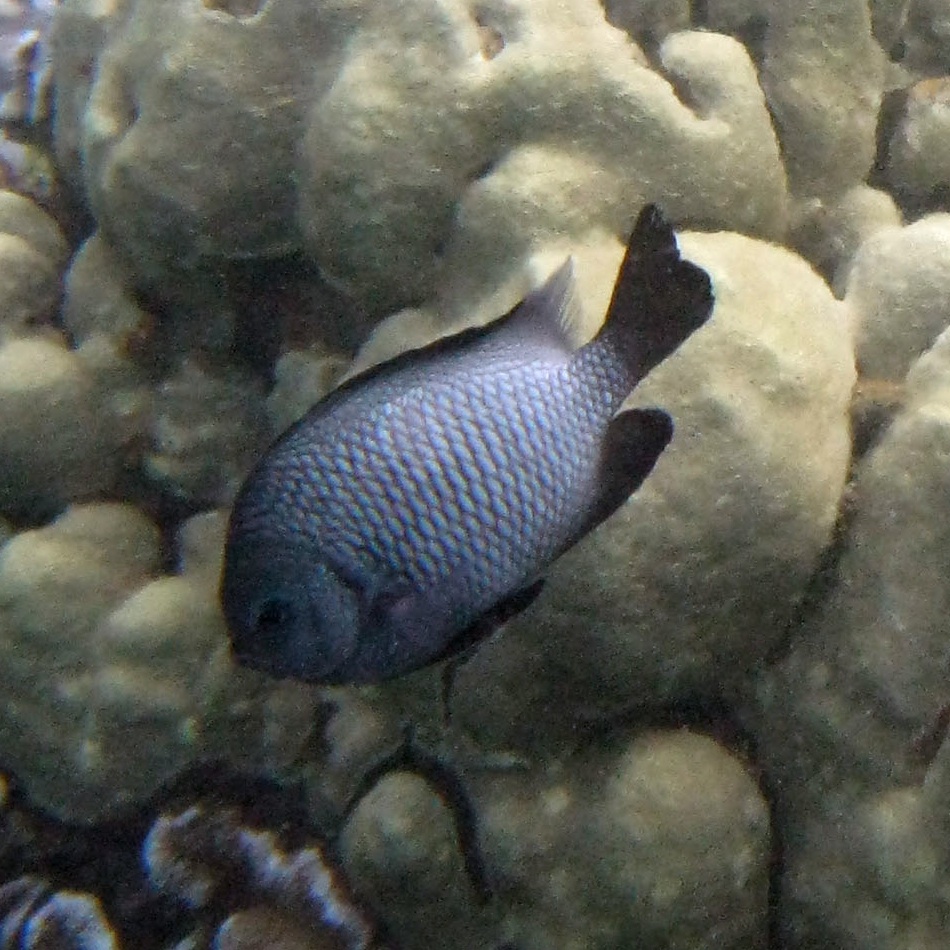
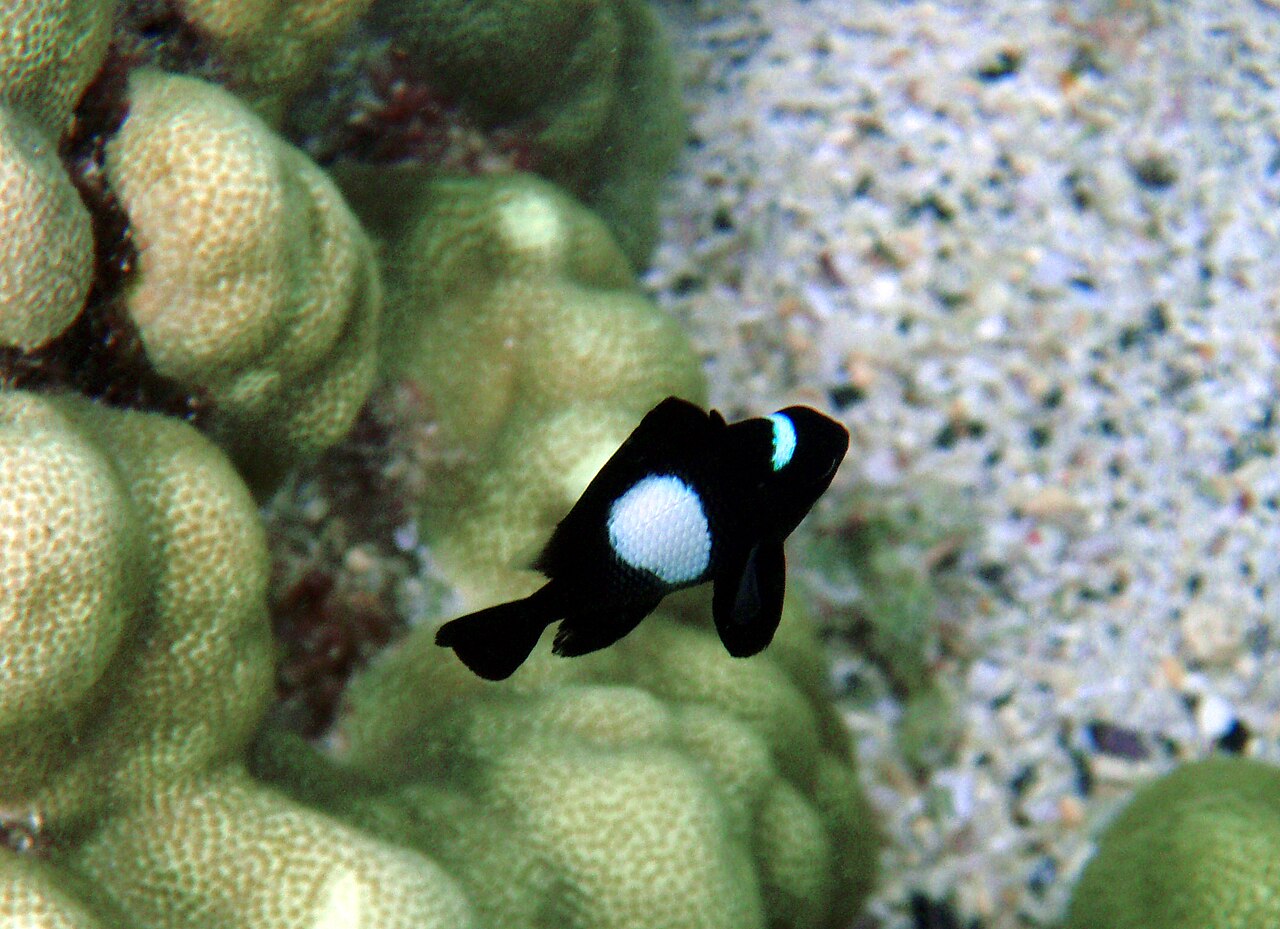
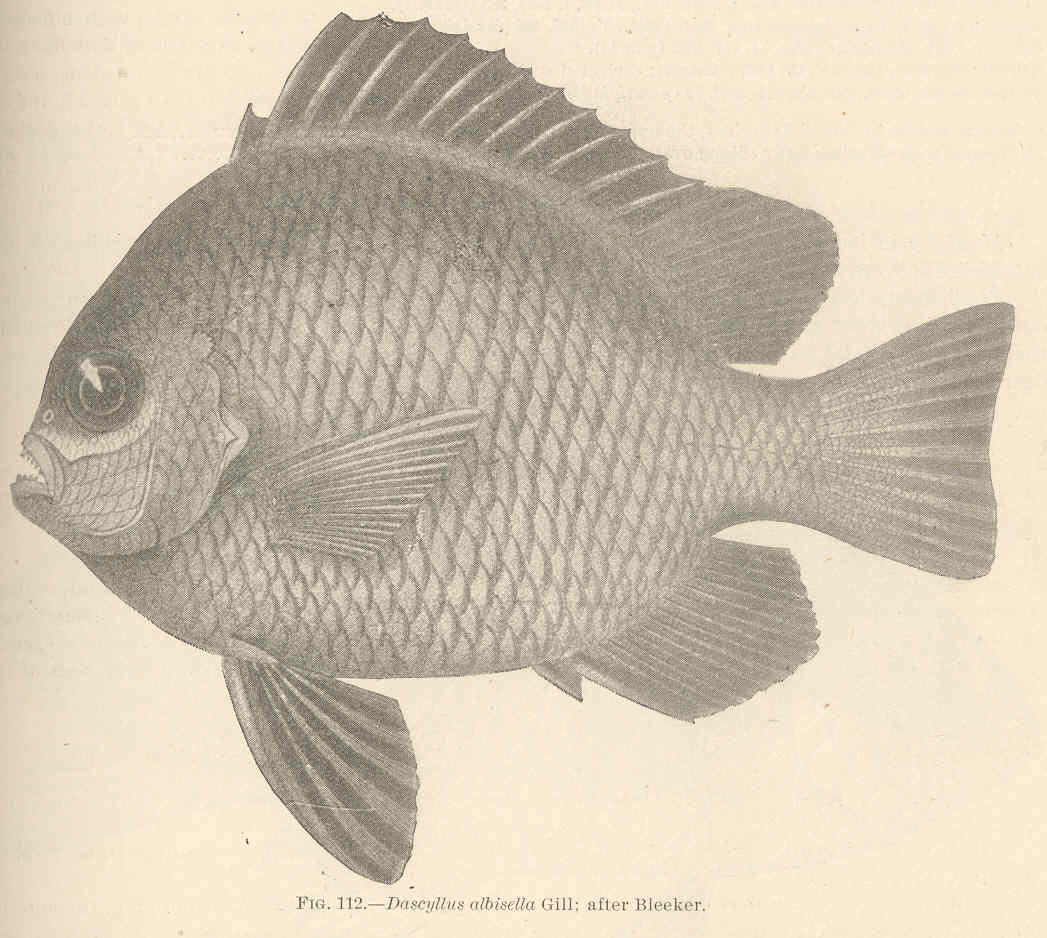
Dascyllus albisella, also called the Hawaiian dascyllus, Hawaiian domino, Domino damselfish, or white-spotted damsel, is a marine fish from the Eastern Central Pacific. It grows up to 12.5 centimeters long and is dark gray to black, with whitish centers on its body scales. This fish lives around coral reefs, usually in shallow, protected waters, and swims from the surface down to about 20 feet deep, often in small openings. Its range includes the Hawaiian Islands and Johnston Island.
This species is relatively passive and spends most of its time foraging. Males are generally more aggressive than females because they provide sole parental care for the offspring. While females do not desert the nest after laying eggs, larger females are more likely to defend the nest if the male is absent, especially if they were born at that nest. However, not all females defend the nest, and the link between size and defense is not strong—it is only a tendency. When both parents are present, females become more aggressive if predation levels rise, particularly when their own eggs are threatened.
Aggression in Dascyllus albisella involves chirping sounds. The fish make different noises depending on the target. Toward their own species, they produce a popping sound with multiple pulses, especially when chasing juveniles or when a male is chased by other females. Toward other species, they make one- or two-pulse sounds, showing they can distinguish between their own kind and others.
These fish also hold territories. A territory holder generally tolerates most fish that enter its area but will aggressively chase away a few, likely those of similar size that could challenge its control. Juveniles interact early on, forming a size-based linear dominance hierarchy. Aggressive scuffles occur between larger and smaller fish, which establishes the hierarchy early. Growth is slower in lower-status fish or in larger groups, possibly because the hierarchy keeps fish smaller. During settling season, fish join a group and stay with it even if they encounter a better one, indicating they are not highly aggressive in choosing their group.
Quick Facts
- Genus
- Dascyllus
- Species
- albisella
Facts from the source article.
Lore & Background
Dascyllus albisella is a relatively passive species that spends most of its time foraging. Males are generally more aggressive than females because they exhibit sole parental care of the offspring, a uniparental behavior. However, females do not desert the nest after mating; larger females are more likely to defend the nest in the male's absence, especially if they were born at that nest. This tendency is not absolute, as some females raised at the nest will not defend it, and the correlation between size and nest defense is not strong.
The species displays aggression through chirping sounds, with different acoustic signals used toward their own species versus other organisms. Toward conspecifics, they produce a popping sound of multiple pulses, while toward other species they make one- or two-pulse sounds, indicating an ability to distinguish between themselves and others. Territory holders interact aggressively only when other fish attempt to enter their domain, tolerating most intruders but chasing away those of similar size that threaten control.
Juveniles form a size-based linear dominance hierarchy, with aggressive scuffles between larger and smaller fish. Growth is reduced in lower-status fish or in larger groups, suggesting the hierarchy retards growth. Fish settle in a group during settling season and remain even if they encounter a better group, indicating low aggression in group choice.
Reader's Guide
Dascyllus albisella holds significance as a model for understanding uniparental male care in marine fish, a relatively rare reproductive strategy. The species demonstrates that while males are the primary caregivers, females retain a role in nest defense, particularly when males are absent, with larger females and those born at the nest more likely to defend. This nuanced parental behavior challenges simple assumptions about gender roles in fish. Additionally, the species' use of distinct acoustic signals for conspecifics versus other organisms highlights a capacity for species recognition and communication. The size-based dominance hierarchy among juveniles and the resulting growth suppression in lower-status individuals illustrate social dynamics that influence population structure. The species' preference for shallow, protected coral reef habitats around the Hawaiian Islands and Johnston Island ties it to specific ecosystems, and its passive foraging behavior contrasts with the aggressive territoriality seen in some other damselfish. The observation that fish remain in their initial group even when a better one is available suggests a degree of social fidelity.
Did You Know?
- Males exhibit sole care of the offspring, a uniparental behavior uncommon among animals.
- Females produce aggressive chirping sounds when a male is chased by other female fish.
- Juveniles form a size-based linear dominance hierarchy that can retard growth in lower-status fish.
- The species makes different aggressive sounds toward its own species versus other species.
Gallery

Frequently Asked Questions
What is Dascyllus albisella?
Dascyllus albisella is a small, relatively passive marine damselfish native to the Eastern Central Pacific, often called the Hawaiian domino or white-spotted damsel. It spends most of its time foraging around coral reefs in shallow, sheltered areas.
Where can I find Dascyllus albisella in the wild?
This species is found around coral reefs in the Hawaiian Islands and Johnston Island. It typically occupies shallow, protected waters, ranging from the surface down to roughly 20 feet, often near small openings in the reef structure.
How big does a Dascyllus albisella get?
Adults reach a maximum length of about 12.5 centimeters. Despite that modest size, their dark bodies with whitish scale centers make them visually striking against lighter coral backgrounds.
What does a Dascyllus albisella look like?
The fish has a dark gray-to-black body, and each scale bears a distinct whitish center, producing a spotted or domino-like pattern. This coloration is the origin of its common names 'Hawaiian domino' and 'white-spotted damsel.'
What makes Dascyllus albisella's breeding behavior notable?
This species practices uniparental male care, meaning the male alone handles parental duties after spawning. Males are also generally more aggressive than females, especially around breeding territory.
More in Clownfish and Damselfish, Part 2 1-24
Spotted an error? Know more?
Reader corrections go straight into our review queue. Suggest an edit · How this site is sourced