
Dascyllus melanurus
A striped damselfish native to the western Pacific Ocean.

Ad Meskens · CC BY-SA 4.0
Dascyllus melanurus goes by several common names, including four stripe damselfish, blacktail dascyllus, humbug damselfish, blacktail damselfish, and blacktail humbug. This fish belongs to the family Pomacentridae and is found naturally in the western Pacific Ocean. It is also kept in home aquariums.
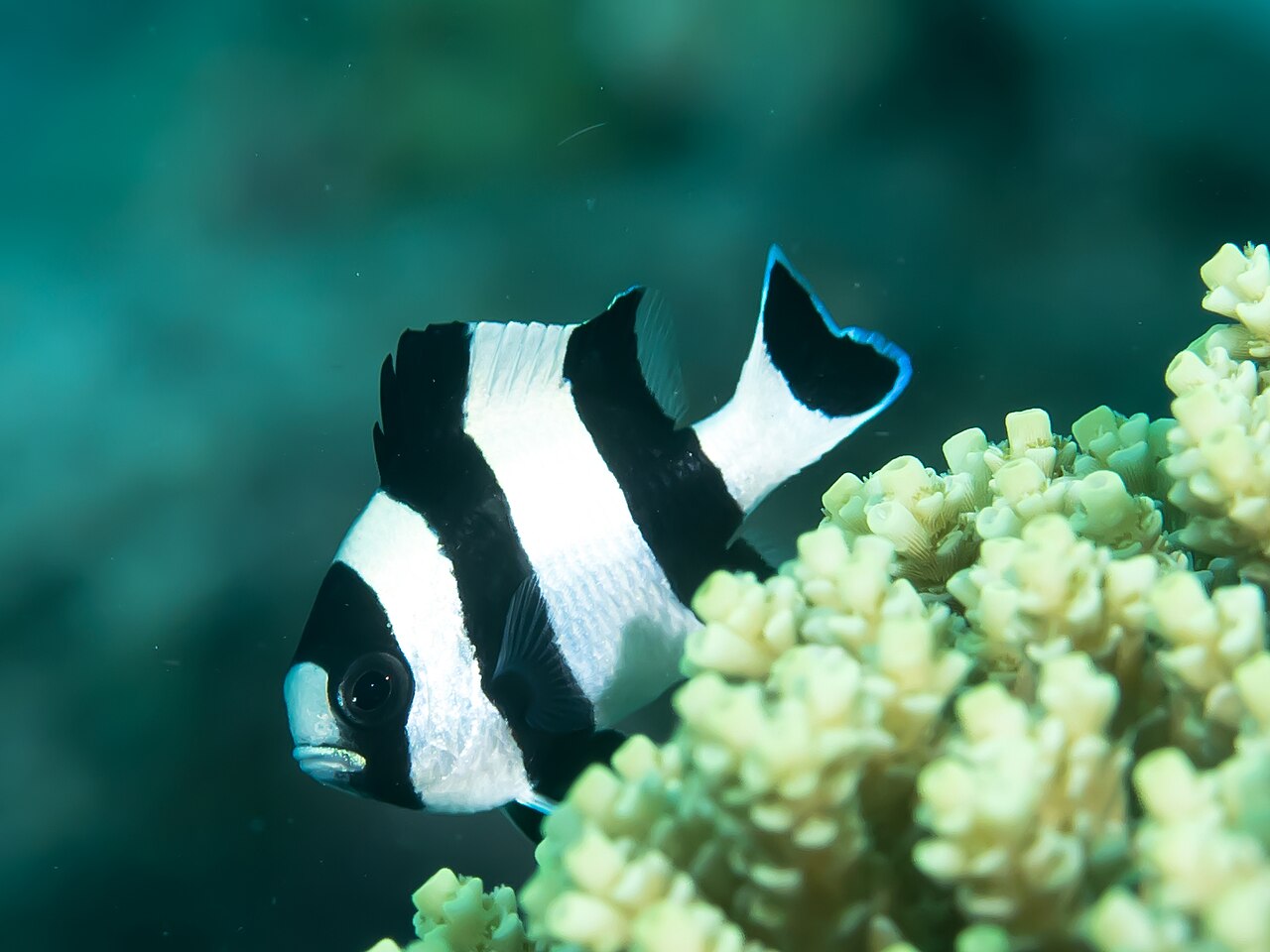
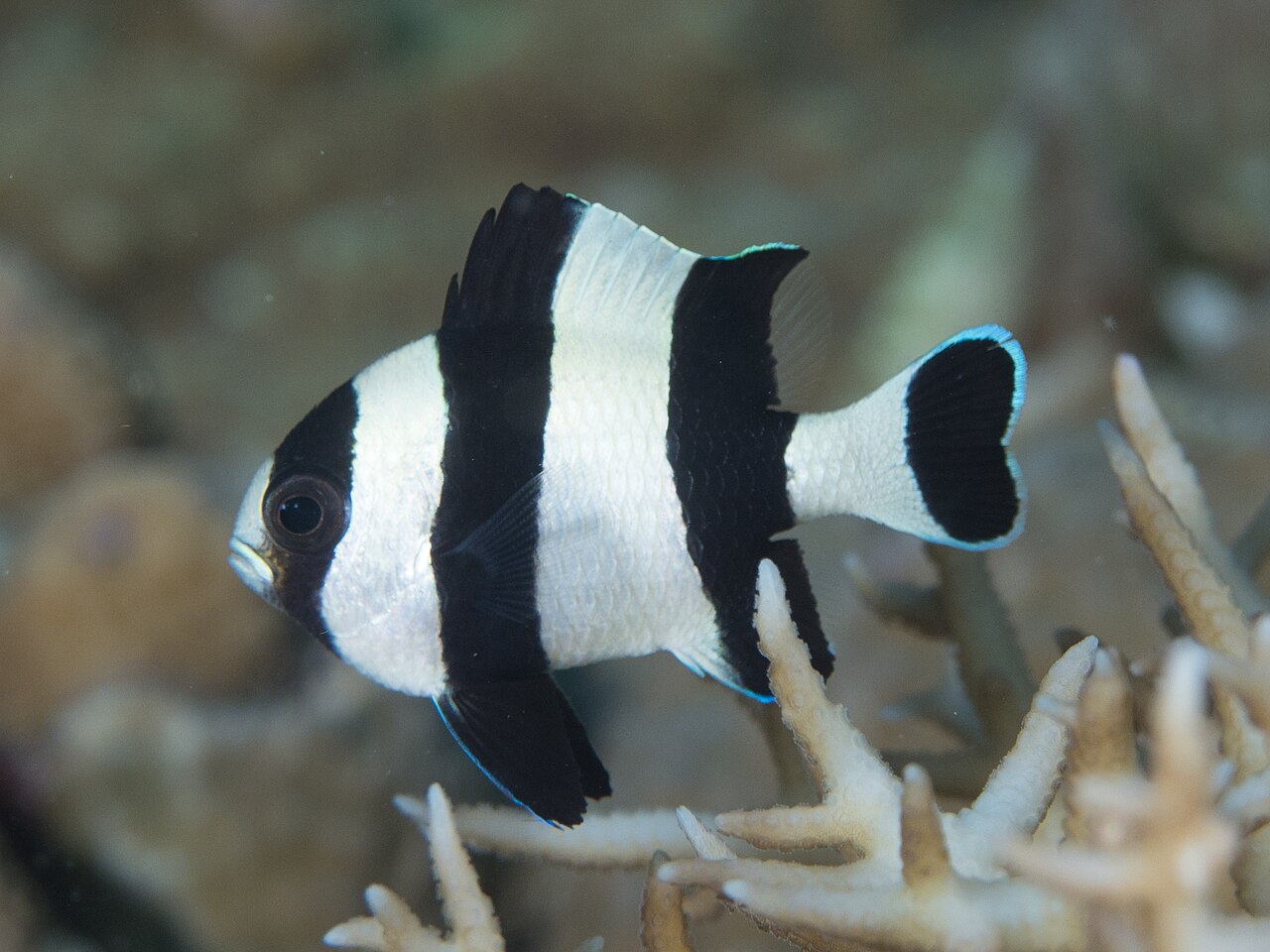
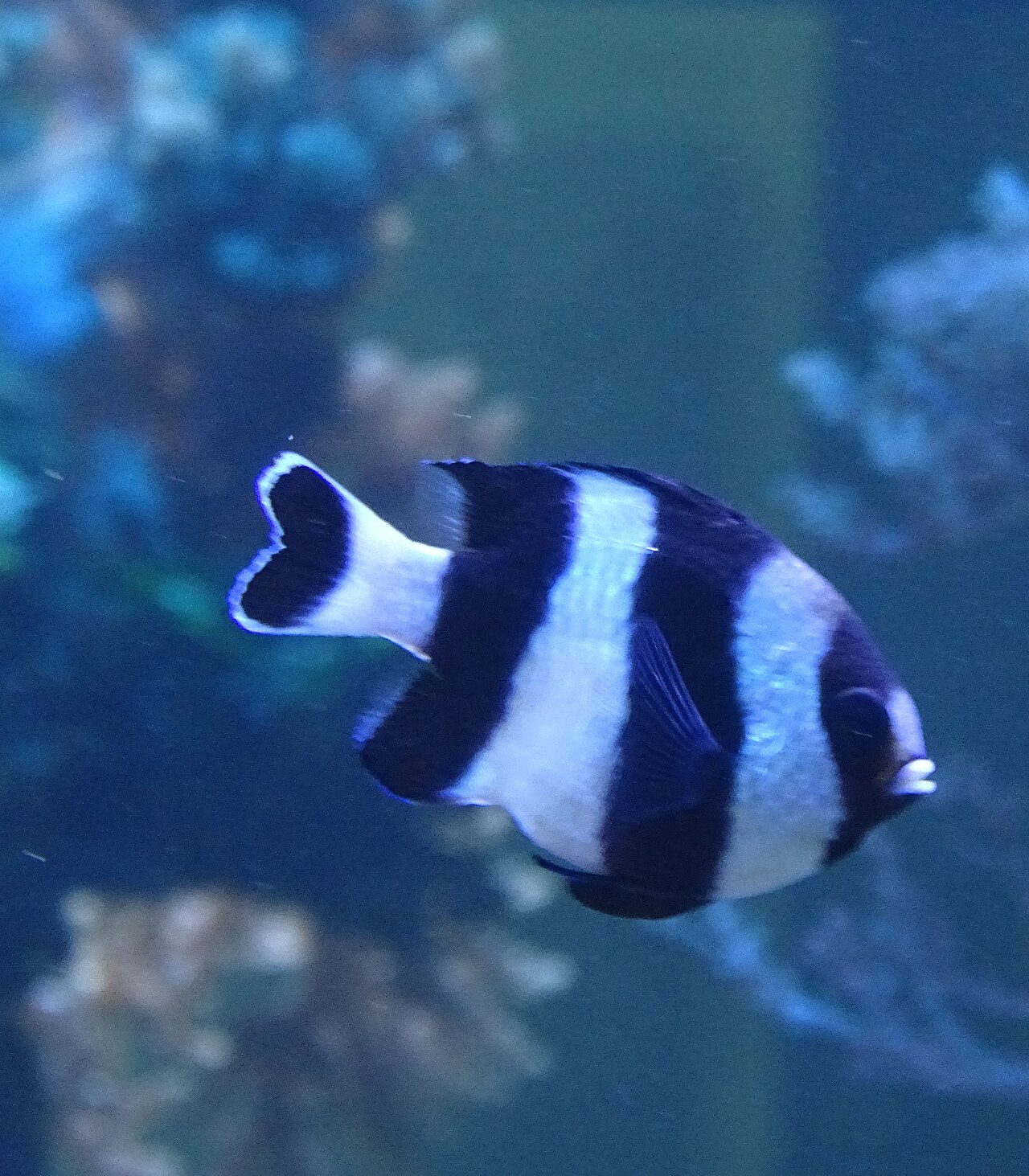
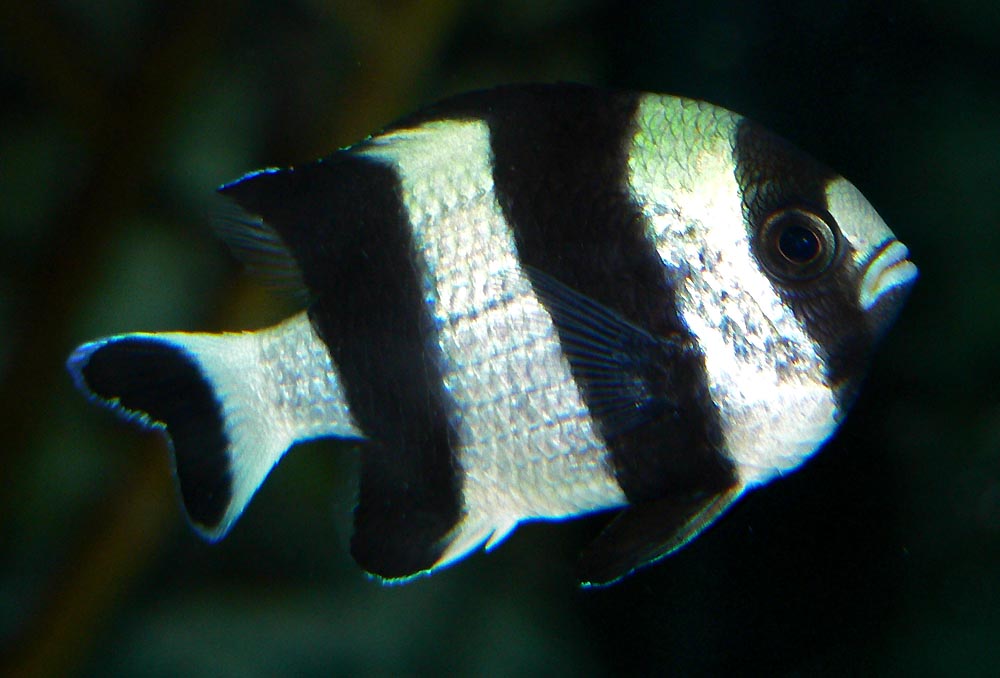
The four stripe damselfish lives in the Indo-Australian Archipelago and the western Caroline Islands, with populations in Indonesia, the Philippines, New Guinea, and the northern Great Barrier Reef of Australia. It inhabits depths down to 33 feet, usually around isolated coral heads in sheltered inshore areas. Like other damselfish, it can be territorial and aggressive, especially as it ages. Adults typically reach about three to four inches in length. It is an omnivore, eating everything from algae to small fish or shrimp. Its body has three alternating black and white vertical bands, plus a fourth black band that ends at the tail.
This fish travels in schools. Its diet includes fish eggs, crustacean larvae, algae, ostracods, amphipods, copepods, and tunicates.
In an aquarium, juvenile schools can number up to 25 fish, though a juvenile may sometimes prefer to live alone. Adults become very aggressive and territorial.
Quick Facts
- Genus
- Dascyllus
- Species
- melanurus
Facts from the source article.
Lore & Background
The four striped damselfish is commonly found in the Indo-Australian Archipelago and western Caroline Islands, including Indonesia, Philippines, New Guinea, and the northern Great Barrier Reef of Australia. It is associated with isolated coral heads in sheltered inshore habitats at depths down to 33 feet. Like all damselfish, they can be territorial and aggressive, especially as they get older. Three alternating black and white vertical bands make up the body coloration with a fourth black band ending at the tail. The less common species name is Dascyllus melanurus.
Reader's Guide
Dascyllus melanurus is notable for its distinctive four-band coloration and its behavior in both wild and aquarium settings. In the wild, it travels in schools and feeds on a varied diet including fish eggs, crustacean larvae, algae, ostracods, amphipods, copepods, and tunicates. In aquariums, juvenile school size can be up to 25 individuals, though some juveniles prefer to live alone. Adults become very aggressive and territorial, which is a key consideration for aquarium keepers. The species is associated with isolated coral heads in sheltered inshore habitats and is found at depths down to 33 feet. Its range includes the Indo-Australian Archipelago and western Caroline Islands, with specific locations such as Indonesia, Philippines, New Guinea, and the northern Great Barrier Reef of Australia. The species is sometimes kept as an aquarium pet, reflecting its popularity among hobbyists despite its aggressive tendencies as it matures.
Did You Know?
- The four stripe damselfish has three alternating black and white vertical bands with a fourth black band ending at the tail.
- Adults are very aggressive and territorial.
Gallery
Frequently Asked Questions
What is Dascyllus melanurus?
Dascyllus melanurus is a small striped damselfish in the family Pomacentridae, known by several common names including four stripe damselfish, blacktail humbug, and blacktail dascyllus. It is a native species of the western Pacific Ocean.
Where does Dascyllus melanurus live in the wild?
This species ranges across the Indo-Australian Archipelago and the western Caroline Islands, with established populations in Indonesia, the Philippines, New Guinea, and Australia's northern Great Barrier Reef. It typically shelters around isolated coral heads at depths up to roughly 33 feet.
What does Dascyllus melanurus eat?
As an omnivore, it forages on a broad mix of algae, small fish, shrimp, fish eggs, crustacean larvae, ostracods, amphipods, copepods, and tunicates. This varied diet lets it exploit the rich micro-ecosystem surrounding its coral-head habitat.
How big does Dascyllus melanurus grow?
Adults generally reach a length of three to four inches, keeping them a compact fish well matched to the tight crevices of isolated coral heads. Their modest size also makes them a manageable option for smaller reef setups.
Can Dascyllus melanurus be kept in a home aquarium?
Yes, this damselfish is a regular sight in hobbyist tanks and is a popular pick for reef enthusiasts. Its small stature and preference for sheltered, coral-rich surroundings make it a practical choice for aquarists who can mimic those conditions.
More in Clownfish and Damselfish, Part 2 1-24
Spotted an error? Know more?
Reader corrections go straight into our review queue. Suggest an edit · How this site is sourced