
Dascyllus flavicaudus
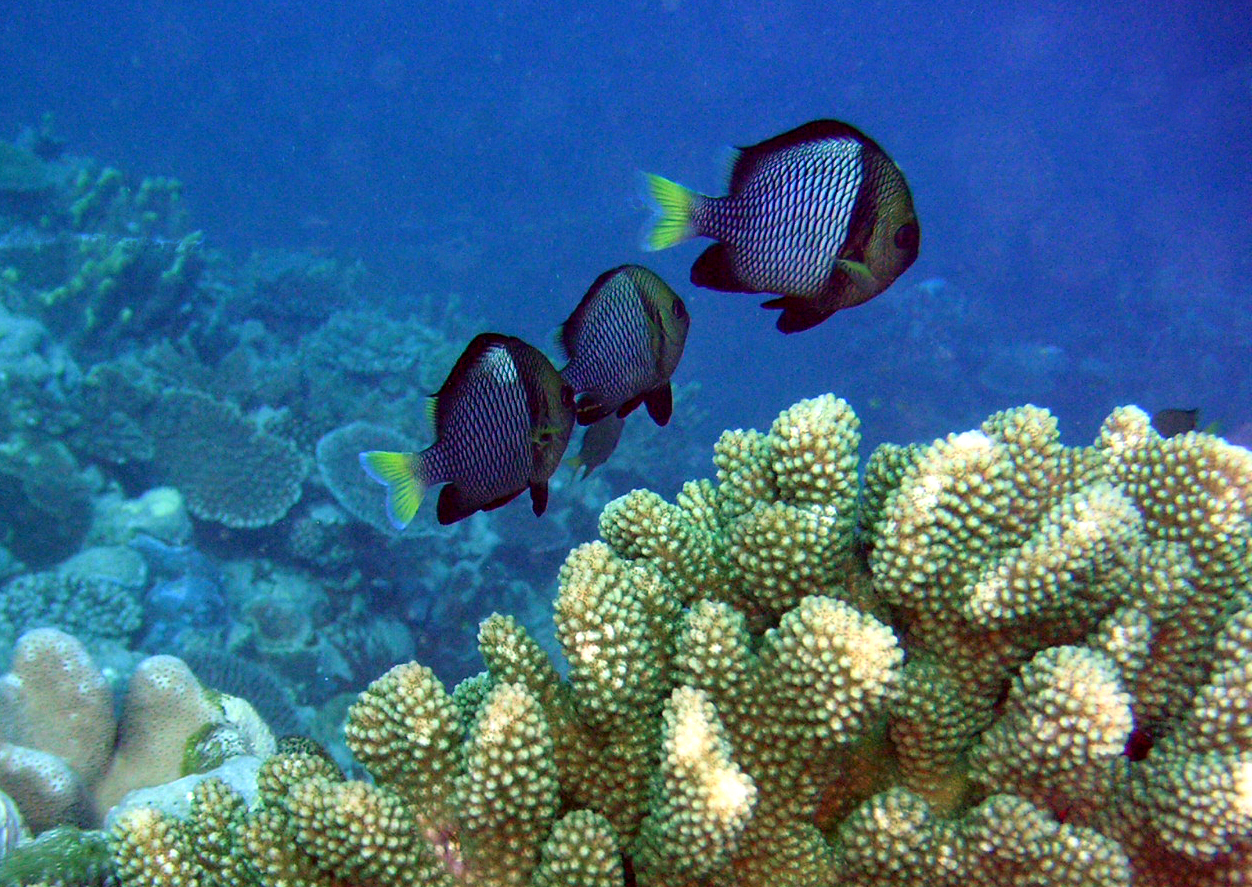
A dark damselfish with a yellow tail, found in Oceania reefs.

(c) Debra Baker, some rights reserved (CC BY) · CC BY 4.0
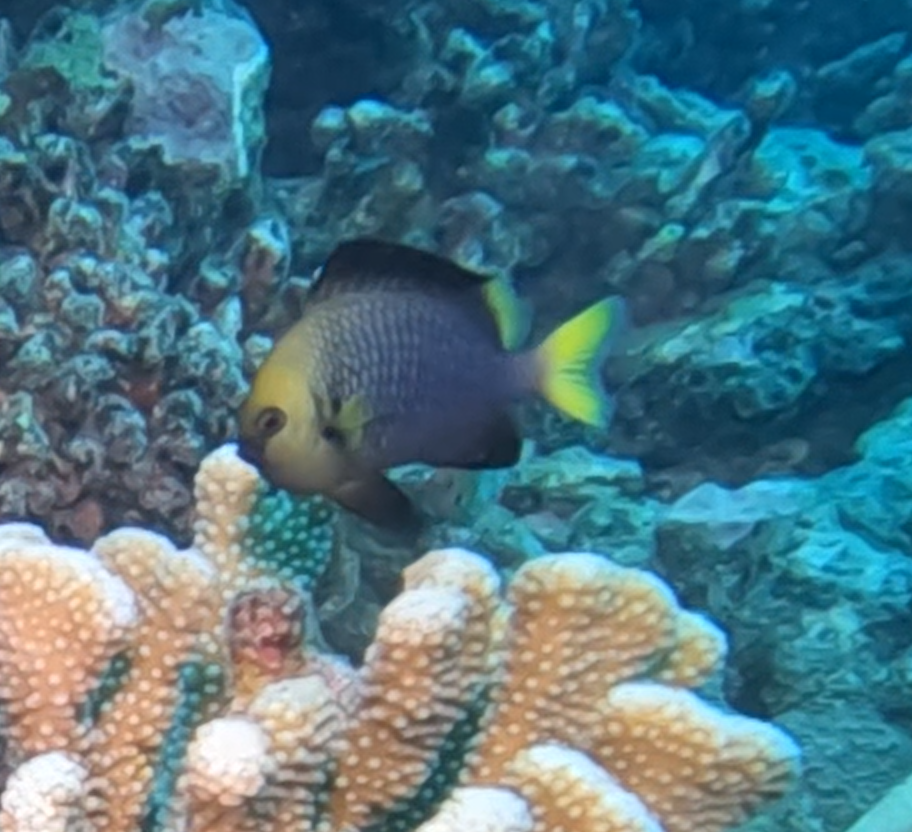
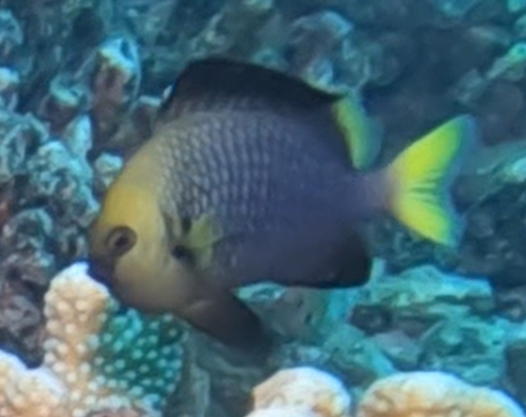
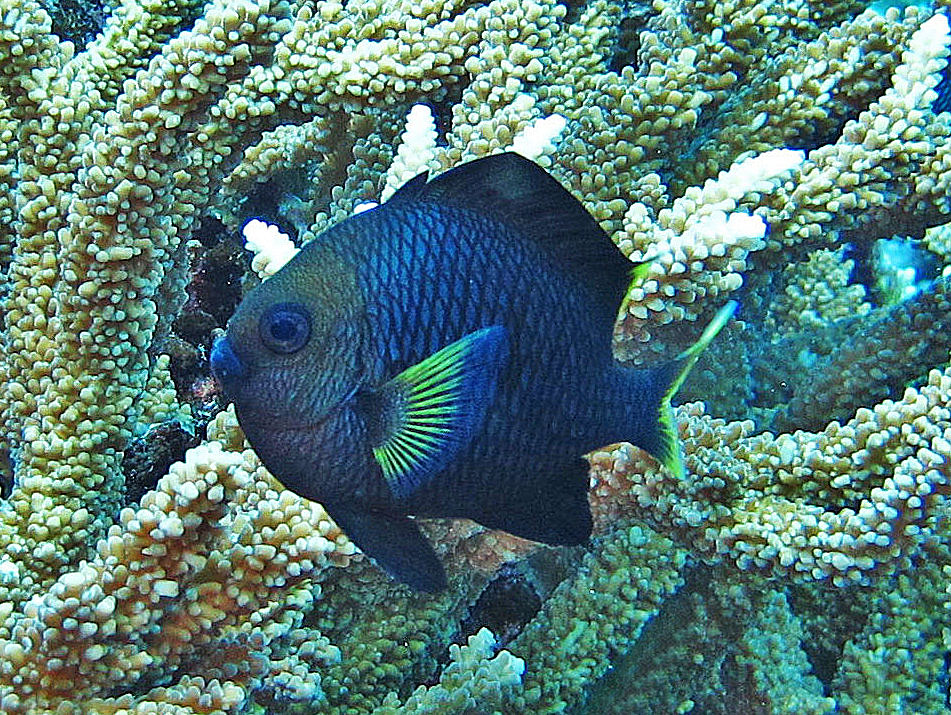
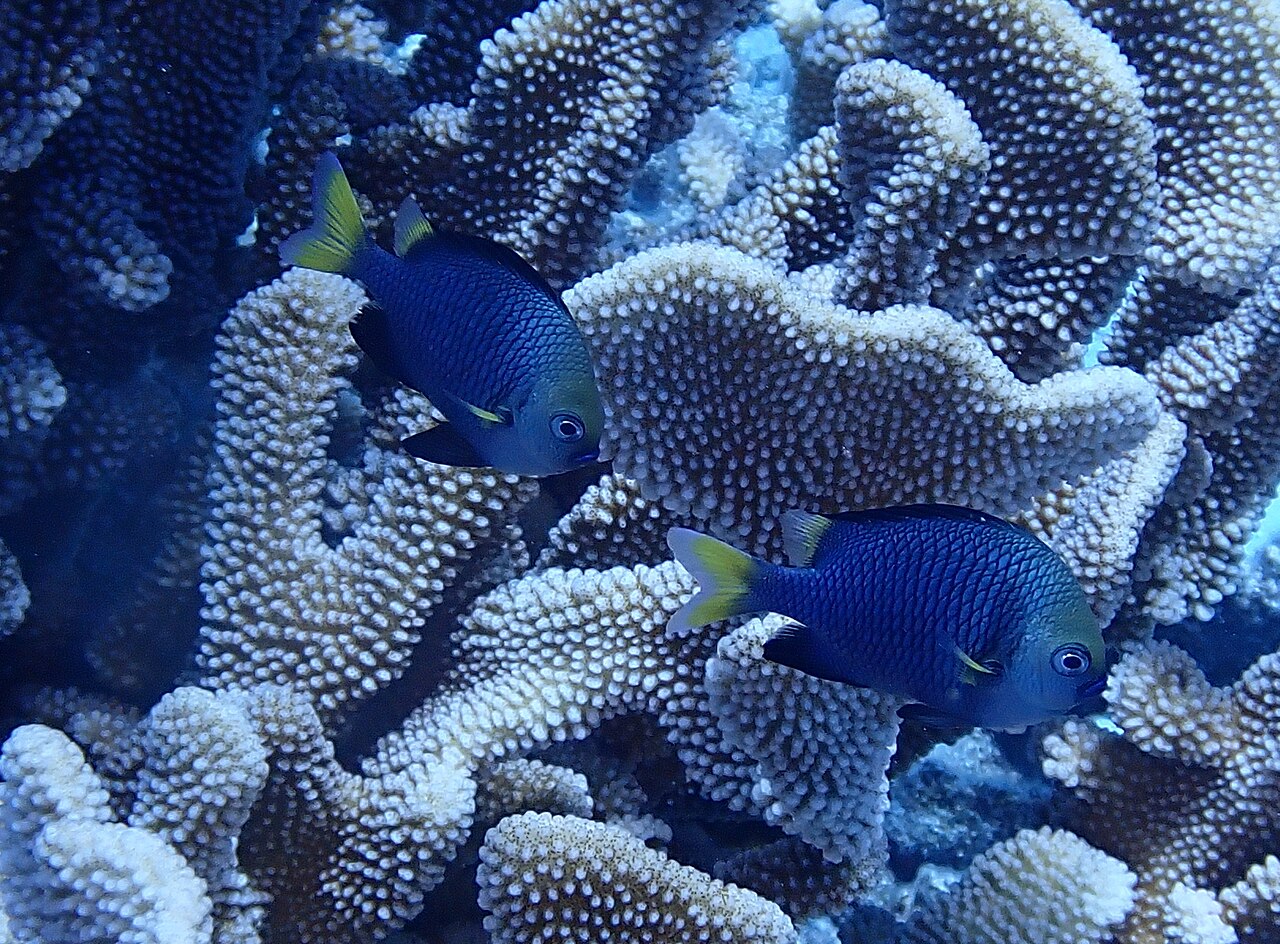
The yellowtail dascyllus (*Dascyllus flavicaudus*) is a damselfish from the family Pomacentridae. Its body is mostly dark, ranging from blackish-brown to blackish-blue, with a net-like pattern created by the dark edges of the scales. The tail and the rear part of the dorsal fin stand out in yellowish to yellowish-white. It can reach up to 12 cm in length and has a very deep body, with a height-to-length ratio of about 1 to 1.4–1.6. The dorsal fin has 12 spines and 15–16 soft rays, while the anal fin has 2 spines and 13–14 soft rays. During mating, males often become darker, sometimes with white spots.
This species is found in the Eastern Central Pacific, specifically in southeastern Oceania—the Society Islands, Tuamoto Islands, Pitcairn Islands, and Rapa Nui. It occasionally appears in the aquarium trade. A tropical, reef-associated fish, it lives in coral and rocky reefs at depths of 3 to 40 meters and does not migrate.
The yellowtail dascyllus is gonochoristic, meaning each individual is either male or female. It is oviparous and a non-functional hermaphrodite. Its diet consists mainly of copepods, other small planktonic crustaceans, and algae. Adults form permanent harems, with one male and several females living near coral heads. They are substrate spawners, laying adhesive eggs in caves or hidden niches, and the male guards and aerates the eggs until they hatch.
Quick Facts
- Genus
- Dascyllus
- Species
- flavicaudus
Facts from the source article.
Lore & Background
Dascyllus flavicaudus is a reef-associated, non-migratory tropical species inhabiting coral and rocky reefs at depths of 3 to 40 m. Its body is very high, with a height-to-length ratio of 1:1.4-1.6. The body is dark, blackish-brown to blackish-bluish, with dark scale edges forming a net-like pattern, while the tail and rear portion of the dorsal fin are yellowish to yellowish-white. During mating, males often turn darker, sometimes with white spots.
This species is gonochoristic, having distinct sexes, and is oviparous and a non-functional hermaphrodite. Adults form permanent harems consisting of one male and several females near coral heads. They are substrate spawners, depositing eggs in caves or hidden niches, with males guarding and aerating the adhesive eggs. Their diet mainly includes copepods, other small planktonic crustaceans, and algae.
Reader's Guide
Dascyllus flavicaudus is a damselfish of the family Pomacentridae, documented in the Eastern Central Pacific within southeastern Oceania, specifically the Society Islands, Tuamoto Islands, Pitcairn Islands, and Rapa Nui. It occasionally enters the aquarium trade. The species reaches a length of 12 cm and exhibits a high body shape. Its coloration is predominantly dark with a yellowish tail and dorsal fin rear, and males may darken further during mating. The fish is gonochoristic and oviparous, with a harem-based social structure where one male guards multiple females and their eggs. Its feeding habits center on planktonic crustaceans and algae. The species is non-migratory and associated with coral and rocky reefs at depths from 3 to 40 m. These biological and ecological traits, as described in the source article, define its role in reef ecosystems and its occasional presence in the aquarium hobby.
Did You Know?
- Dascyllus flavicaudus can grow to a size of 12 cm in length.
- Its body is dark with a yellowish to yellowish-white tail and rear dorsal fin.
- Males guard and aerate the eggs that adhere to the substrate.
- Adults form a permanent harem with one male and several females.
Gallery
Frequently Asked Questions
What is Dascyllus flavicaudus?
Dascyllus flavicaudus, commonly called the yellowtail dascyllus, is a small damselfish in the family Pomacentridae. It is a reef-associated species native to the Oceania region.
How big does Dascyllus flavicaudus grow?
This species reaches a maximum total length of about 12 cm. Its body is notably deep and compressed, with a height-to-length ratio of roughly 1:1.4 to 1:1.6, giving it a tall, blocky silhouette compared to more slender damselfish.
What does Dascyllus flavicaudus look like?
The body is predominantly dark, ranging from blackish-brown to blackish-blue, with a net-like or reticulated pattern produced by the dark margins of each scale. The caudal fin and the posterior portion of the dorsal fin stand out in a contrasting yellowish to yellowish-white.
Where can you find Dascyllus flavicaudus in the wild?
This damselfish inhabits coral reef environments in the Oceania region. Like other members of the genus Dascyllus, it is a typical reef-dwelling species within the Pomacentridae family.
What are the fin counts of Dascyllus flavicaudus?
The dorsal fin carries 12 spines followed by 15 to 16 soft rays, while the anal fin has 2 spines and 13 to 14 soft rays. During the breeding season, males often darken further and may develop additional white markings.
More in Clownfish and Damselfish, Part 2 1-24
Spotted an error? Know more?
Reader corrections go straight into our review queue. Suggest an edit · How this site is sourced