
Chromis chromis
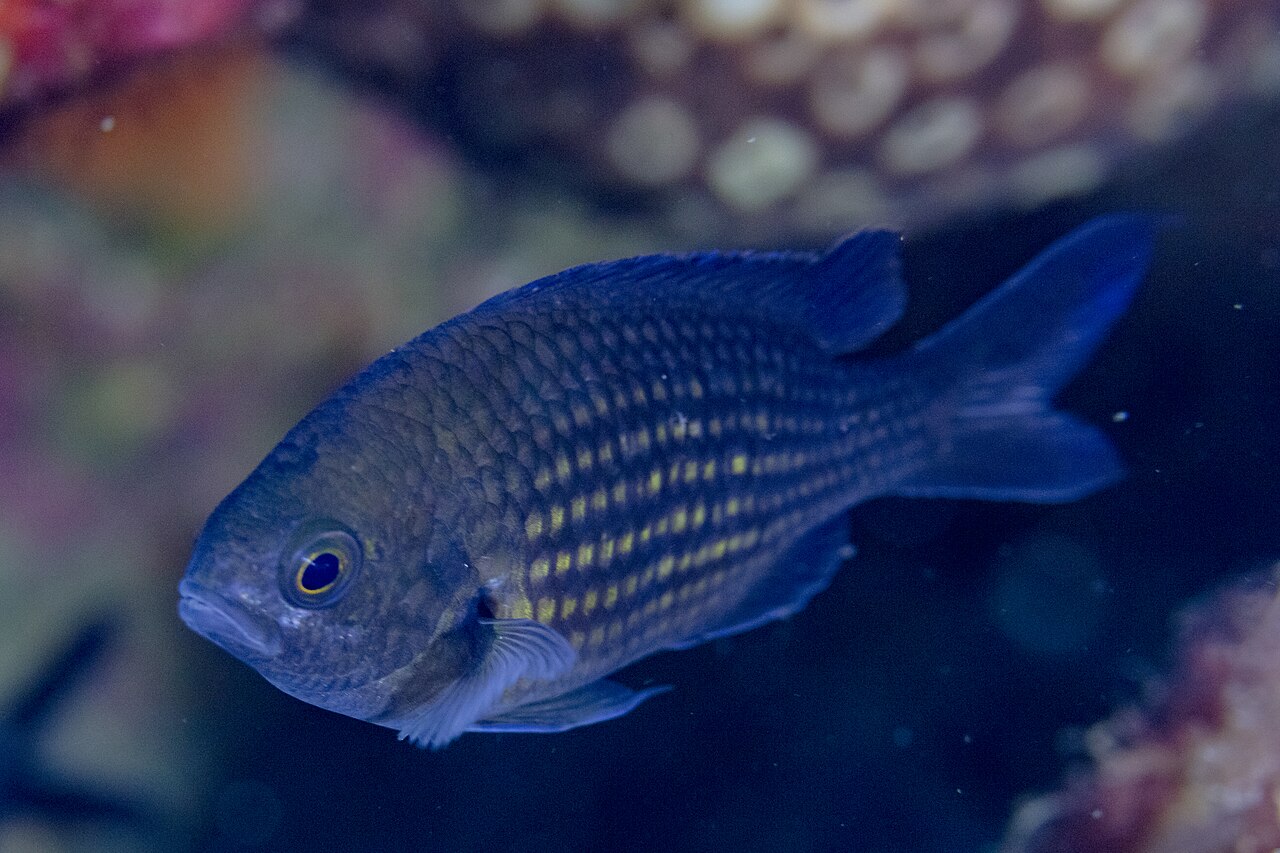
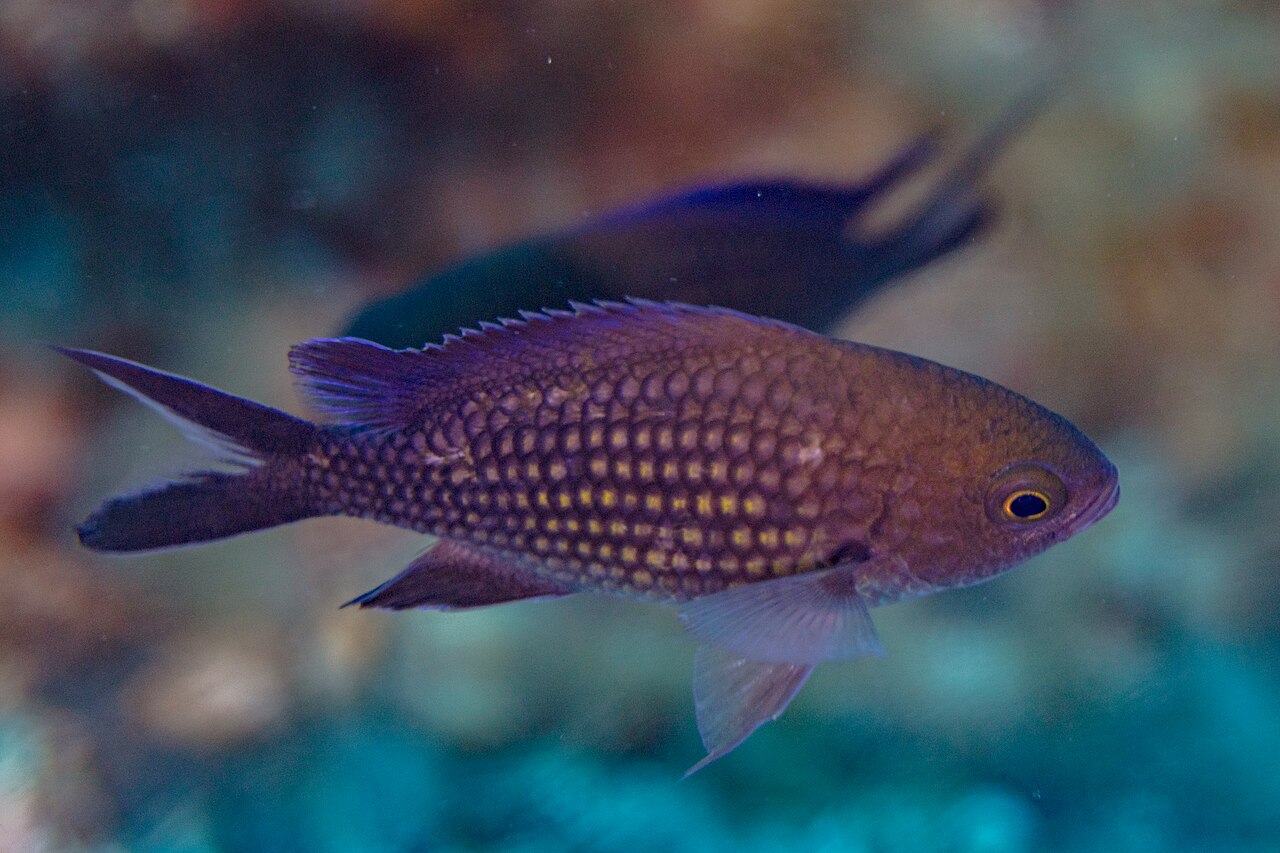
A small damselfish of the Eastern Atlantic and Mediterranean.

Diego Delso · CC BY-SA 4.0
Chromis chromis, commonly known as the damselfish or Mediterranean chromis, is a small species of ray-finned fish in the family Pomacentridae. It is notable for its distribution across the Eastern Atlantic and Mediterranean, including the Black Sea, and for its distinctive color changes from brilliant iridescent blue in juveniles to dark brown in adults.
Quick Facts
- Taxon
- Chromis chromis
Facts from the source article.
Lore & Background
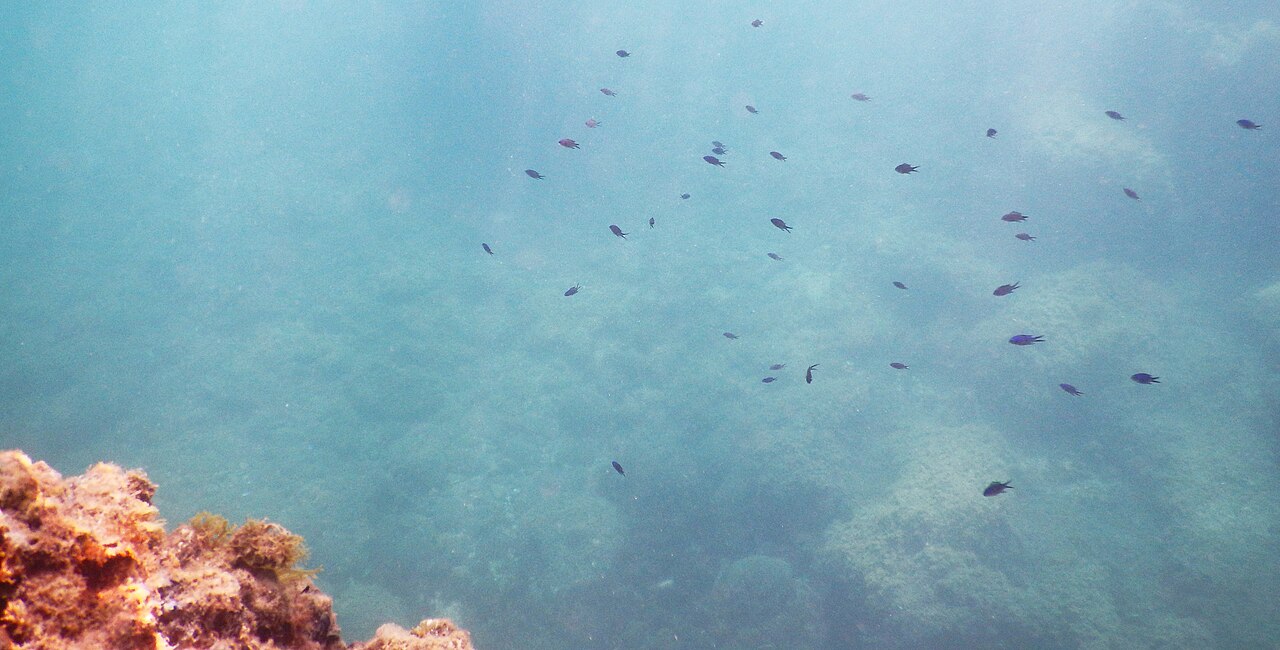
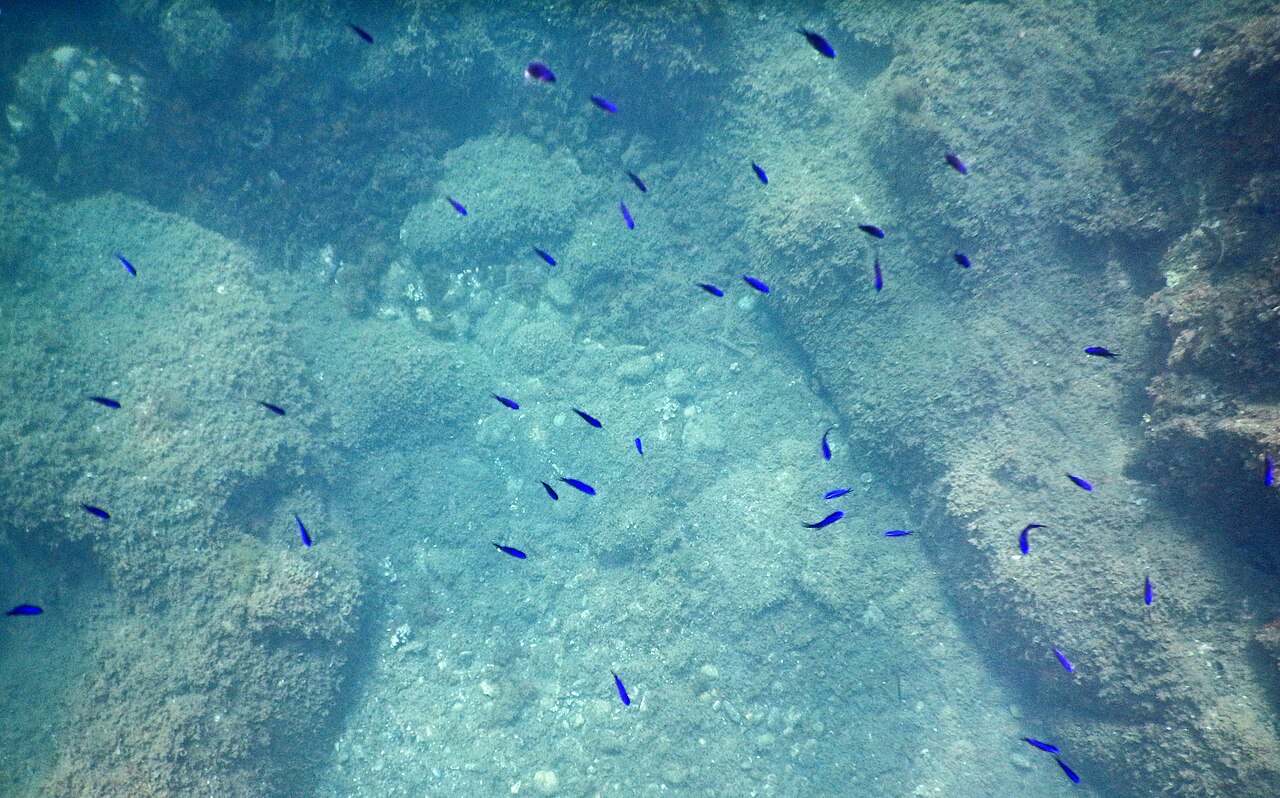
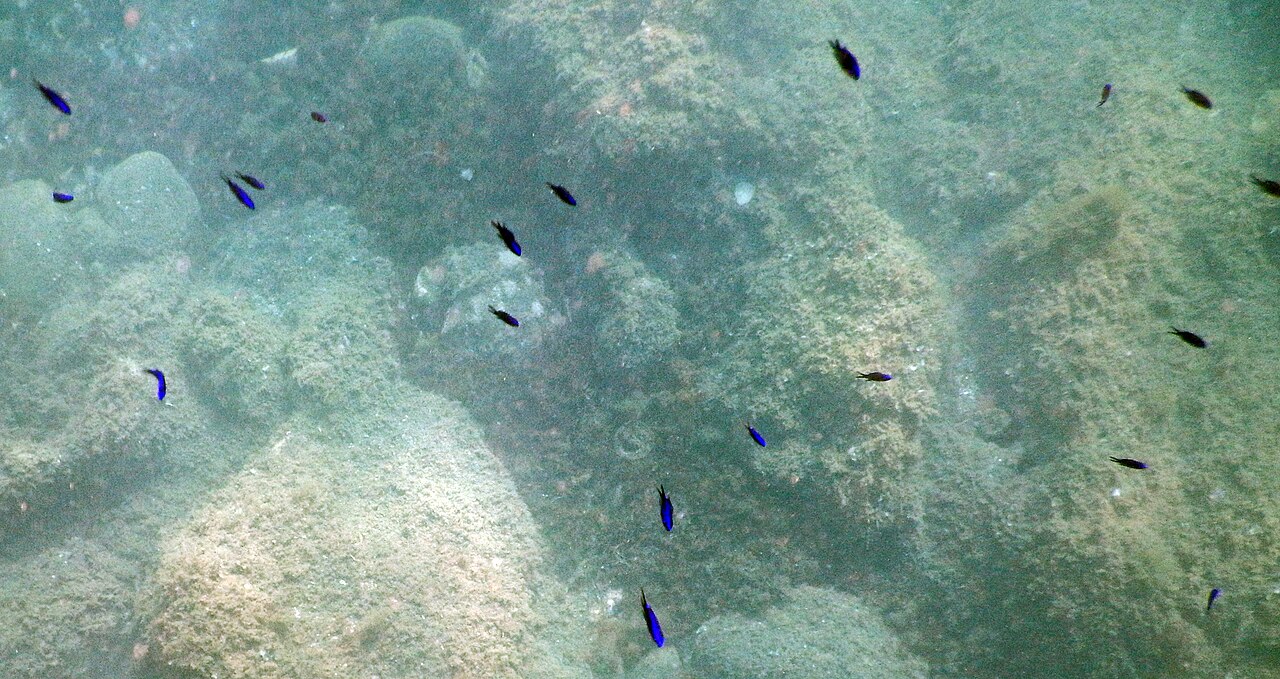
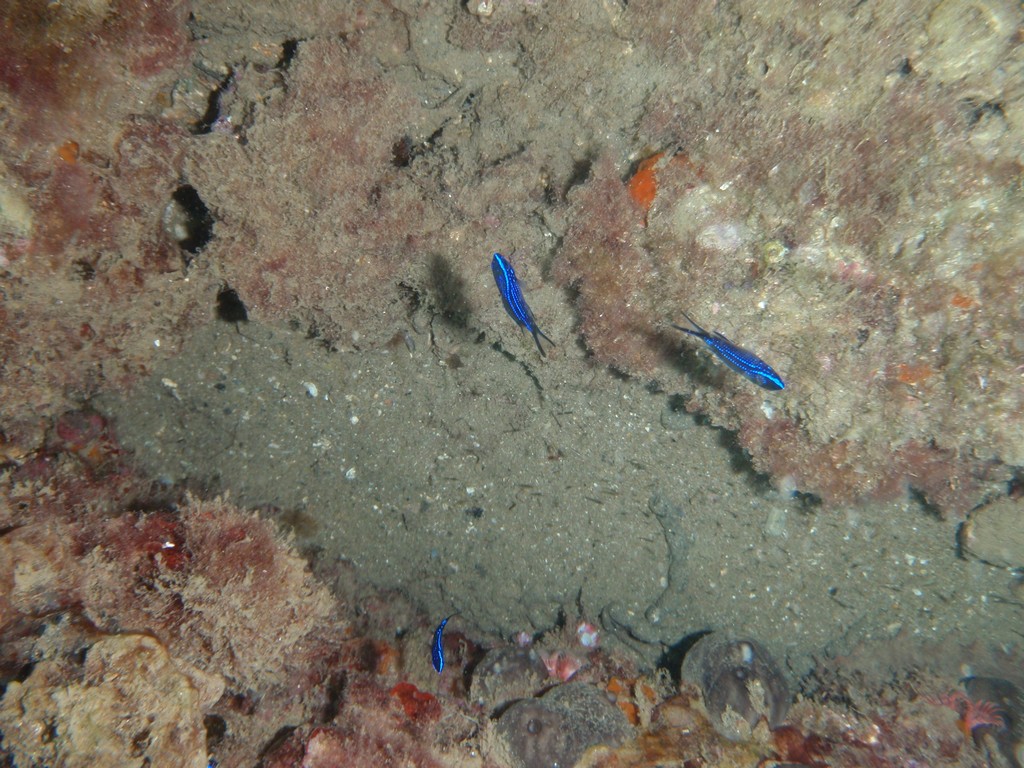
Chromis chromis has an oval, laterally compressed body with a noticeably large eye and a strongly protractile mouth. Its body is covered in large scales, including the head, and it has a single pair of nostrils. The youngest fish are a brilliant iridescent blue; older juveniles have blue stripes with dorsal and anal fins outlined in blue, while adults are dark brown with paler golden-brown or grey-brown scale centers and an uncolored caudal fin edge. Males become a vivid pale violet during spawning.
It inhabits littoral rocky areas from 2 to 40 meters depth, forming small shoals in midwater above or near rocky reefs and above seagrass meadows. Its diet consists of small zooplankton and benthic algae, including copepods, appendicularia, cladocera, gastropod larvae, bivalve larvae, fish eggs, and fish larvae. When confronted with increased top water activity, schools exhibit a behavioral response called polarization, diving to deeper depths and leaving food behind to avoid confrontation.
Spawning occurs during summer, varying by location. Males and females pair up, engage in courtship, and lay eggs in a nest on rocky or sometimes sandy bottoms. The eggs adhere to the substrate and are guarded by the male. The female can lay between 6,050 and 73,688 eggs.
Reader's Guide
Chromis chromis plays a minor role in commercial fishing due to its small size. As a game fish, it is often caught during the day on light tackle using baits such as bread, pasta, small chunks of fish, mussels, worms, and small prawns. It can also be taken in fish traps and nets, but is rarely caught with a speargun. The species is used as baitfish for larger predators that prey on damselfish schools, including the conger eel Conger conger and the common dentex Dentex dentex. Its ecological role as a midwater shoaling fish and its distinctive color changes across life stages make it a recognizable component of Mediterranean and Eastern Atlantic reef communities. The species is more common off islands than off mainland coasts, and it is uncommon in the Black Sea and Sea of Marmara.
Did You Know?
- The youngest Chromis chromis are a brilliant iridescent blue.
- It can grow up to 25 cm in length, with a common length of 13 cm.
Gallery
Frequently Asked Questions
What is Chromis chromis?
Chromis chromis is a small ray-finned fish in the family Pomacentridae, widely known as the Mediterranean chromis or simply the damselfish. It is one of the most recognizable tiny reef fish in European waters.
Where does Chromis chromis live in the wild?
This species ranges across the Eastern Atlantic, the Mediterranean Sea, and even extends into the Black Sea. It typically occupies depths from 2 to 40 meters, favoring rocky reefs, sheltered bays, and coastal inlets.
Why does Chromis chromis change color as it matures?
Juveniles flash a vivid iridescent blue, but adults shift to a much darker brown. This dramatic color transition is one of the most talked-about traits among aquarists and marine biologists alike.
How big does Chromis chromis get?
Most individuals hover around 13 centimeters in length, though the species can reach up to 25 centimeters at its maximum. It stays a relatively small damselfish compared to many other reef fish.
What are the key fin characteristics of Chromis chromis?
The species carries 13 to 14 dorsal-fin spines paired with 10 to 11 soft dorsal rays, along with 11 anal-fin spines. These fin counts are standard identifiers used to separate it from look-alike damselfish species.
More in Clownfish and Damselfish, Part 2 1-24
Spotted an error? Know more?
Reader corrections go straight into our review queue. Suggest an edit · How this site is sourced