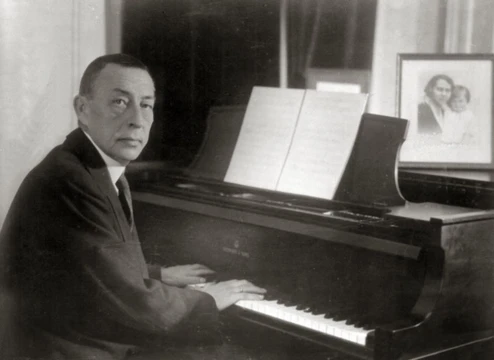
Lionel Tertis
English violist who elevated the viola to solo prominence.

Lionel Tertis, CBE, was an English violist and teacher who became one of the first performers on his instrument to gain international renown. Born in West Hartlepool to Polish-Jewish immigrants, he initially learned piano and left home at thirteen to support himself as a pianist. After saving enough money, he entered Trinity College of Music in London, studying violin and piano. He later spent time at the Leipzig Conservatorium before enrolling at the Royal Academy of Music (RAM), where he continued violin studies. While at the RAM, the principal encouraged him to switch to the viola, a suggestion reinforced by the influence of the violist Oskar Nedbal. Tertis took up the instrument and quickly rose to prominence, touring Europe and the United States as a soloist. He became Professor of Viola at the RAM in 1900, where he urged colleagues and students to write for the viola, significantly expanding its repertoire. He briefly played with the Bohemian Quartet and later joined the Walenn Quartet. Many prominent composers, including Arnold Bax, Frank Bridge, Gustav Holst, Ralph Vaughan Williams, and William Walton, created works for him. Walton’s Viola Concerto was written for Tertis, though he initially found it difficult and did not premiere it; he later performed it multiple times. Tertis owned a large 1717 Montagnana viola, which he discovered in Paris in an unplayable condition, and later developed his own Tertis model viola to offer similar tonal qualities in a slightly smaller size. He formed the Chamber Music Players with other musicians and coached Sidney Griller in founding the Griller Quartet. In 1937, at the height of his career, he retired from concert performance to focus on teaching, appearing as a soloist only once more in 1949. He was appointed a Commander of the Order of the British Empire in 1950. Tertis also composed original works and arranged pieces for viola, including Elgar’s Cello Concerto. He authored several publications on string playing and his life, including *Cinderella No More* and *My Viola and I*. He died in Wimbledon, London, at the age of 98.
- nationality
- English
- known_for
- First internationally famous violist; expanding viola repertoire; Tertis model v
Verified Timeline
Lore & Background
Lionel Tertis was an English violist who achieved international fame and was a noted teacher. He was born in West Hartlepool to Polish-Jewish immigrants. After initially studying piano and violin, he was encouraged at the Royal Academy of Music to take up the viola, an instrument he rapidly mastered. Tertis owned a 1717 Montagnana viola from 1920 to 1937, which he discovered in Paris in an unplayable condition, lacking bridge, strings, and fingerboard. Because no case was available for the instrument, which measured 17 1/8 inches, his wife wrapped it in her waterproof coat to transport it across the English Channel. Tertis strongly preferred a large viola to achieve an especially rich tone. Recognizing that a 17-1/8-inch instrument was too large for many players, he created his own Tertis model, which offered many tonal advantages of the larger size in a more manageable 16-3/4-inch instrument. He sold the Montagnana to his pupil Bernard Shore in 1937. Tertis also formed the Chamber Music Players with pianist William Murdoch, violinist Albert Sammons, and cellist Lauri Kennedy. He encouraged and coached Sidney Griller in founding the Griller Quartet. In 1934, he performed Strauss’s Don Quixote with cellist Pablo Casals at the Queen’s Hall. He announced his retirement from the concert platform in 1937 to focus on teaching, appearing as a soloist only once more in 1949 at a special concert at the Royal Academy of Music. He was appointed a Commander of the Order of the British Empire in 1950. Tertis composed original works and arranged pieces for viola, including Edward Elgar’s Cello Concerto. He authored publications about string playing and his life, including *Cinderella No More* and *My Viola and I*. He died in Wimbledon, London, in 1975 at age 98.
Reader's Guide
Lionel Tertis was a pioneering force in elevating the viola from a background orchestral role to a respected solo and chamber instrument. His career began as a pianist and violinist, but at the Royal Academy of Music, the principal encouraged him to switch to the viola. He quickly became one of the first internationally renowned violists, touring Europe and the United States. As a professor at the Royal Academy, he actively expanded the instrument’s repertoire by urging colleagues and students to compose for it. This led to major works written for him by composers such as Arnold Bax, Frank Bridge, Gustav Holst, and William Walton, whose Viola Concerto Tertis eventually performed multiple times despite initially finding it difficult. He also formed the Chamber Music Players with other notable musicians. Tertis was known for preferring a large viola for its rich tone, and he developed the Tertis model, a 16¾-inch instrument that offered similar tonal benefits in a more manageable size. His own 1717 Montagnana, which he discovered in Paris in an unplayable condition, was famously transported across the English Channel wrapped in his wife’s coat. He retired from performing in 1937 to focus on teaching, influencing many distinguished English violists. His writings, including *My Viola and I* and *Cinderella No More*, document his advocacy for the instrument, and his legacy continues through the Lionel Tertis International Viola Competition.
Did You Know?
- The Lionel Tertis International Viola Competition was established in 1980 to honor the memory of the English viola virtuoso Lionel Tertis.
- The competition did not take place during the years of the Coronavirus pandemic and resumed in January 2025 at The Glasshouse, Gateshead.
- The 13th Lionel Tertis International Festival, held from 6 to 13 April 2019, attracted 107 entries from around the world.
- The competition has now been paired with the Cecil Aronowitz International Viola Competition, with the two running concurrently.
- Participants in the Tertis competition must be aged between 19 and 30 at the time of the competition.
Origins & the Journey of a Venue
The Lionel Tertis International Viola Competition was founded in 1980 as a tribute to the English viola virtuoso whose name it bears. For nearly four decades, the event found its home at the Erin Arts Centre in Port Erin on the Isle of Man, a setting that gave the competition a distinctly island character. The competition operated on a triennial cycle, returning to the stage every three years rather than annually. However, the Coronavirus pandemic interrupted this rhythm, and no edition took place during those disrupted years. When the competition finally returned in January 2025, it did so in a new location: The Glasshouse in Gateshead, marking a significant shift from its long-standing Manx base. This relocation, combined with the pairing with another major viola competition, signals a new chapter for an event that had been rooted in a single island venue for almost forty years.
Structure, Eligibility & the Paired Format
The competition is open to viola players of any nationality, provided they fall within the age bracket of 19 to 30 at the time of the event. This makes it a distinctly young-artist platform, sitting in the gap between student-level contests and fully established careers. The triennial schedule means eligible players have a multi-year window to prepare and enter, and the 13th edition in April 2019 drew 107 entries from around the world, underscoring the global reach of the event. In a notable structural development, the Lionel Tertis competition has now been paired with the Cecil Aronowitz International Viola Competition, with the two events running concurrently. This pairing effectively doubles the competitive landscape for viola players in a single gathering, creating a broader showcase for the instrument. The 14th edition, held from 19 to 25 January 2025, represents the first iteration of this combined format, offering competitors and audiences a more concentrated and ambitious programme than the standalone event that preceded it.
A Living Archive of New Viola Writing
One of the competition's most distinctive features is its tradition of a required work that every competitor must perform. For each edition, a piece is either newly commissioned or carefully selected, and it is written specifically for viola solo. This practice has produced a remarkable catalogue of new viola writing over the decades. The earliest editions featured orchestral concertos, including Gordon Jacob's Concerto No. 2 in G major in 1980 and Wilfred Josephs's Concerto for viola and orchestra, Op. 131, in 1984. From 1988 onward, the compulsory works shifted to solo viola pieces, drawing on a constellation of composers: Paul Patterson, John McCabe, Michael Berkeley, Richard Rodney Bennett, Sally Beamish, John Woolrich, David Matthews, Roger Steptoe, Peter Maxwell Davies, Stuart MacRae, and Roxanna Panufnik. The 2025 edition features Garth Knox's The Bridges of Newcastle, published by Schott. This ongoing commissioning role has made the competition a significant engine for new viola repertoire.
Resilience Through Disruption and Renewal
The competition's 13th edition, held as a festival from 6 to 13 April 2019 at the Erin Arts Centre, attracted 107 entries from around the world, demonstrating the event's sustained international draw. That 2019 gathering represented the last edition before the global pandemic halted the competition's triennial cycle, leaving a gap in the calendar during the most disrupted years for live music. The return in January 2025 was therefore a moment of renewal: the 14th competition ran from 19 to 25 January at The Glasshouse in Gateshead, a venue far removed from the Isle of Man setting that had defined the event since 1980. The resumption also came with a structural evolution, as the Tertis competition was paired with the Cecil Aronowitz International Viola Competition, the two now running concurrently. For a competition that had weathered a pandemic-induced hiatus and a complete change of geography, the 2025 edition marked both a homecoming of sorts and a bold step forward in how the event presents itself to the international viola community.
Frequently Asked Questions
Who is Lionel Tertis?
Lionel Tertis was an English violist and pedagogue who, in the early twentieth century, became arguably the first player of the viola to gain genuine international recognition as a soloist. He is widely credited with elevating the instrument from a purely orchestral role to one worthy of dedicated concert repertoire.
What is the Tertis model viola?
The Tertis model viola refers to a specific instrument design associated with Tertis, reflecting his exacting standards for tone and projection. It became a reference point for luthiers and players seeking a viola built to meet the demands of solo performance rather than just ensemble blending.
How did Lionel Tertis expand the viola repertoire?
Tertis actively courted composers of his era, persuading them to write new works specifically for the viola. His advocacy helped transform the instrument's catalog and demonstrated that it could carry the same weight and expressiveness as the violin in the concert hall.
Where did Lionel Tertis teach?
He held a professorship at the Royal Academy of Music in London, where he shaped generations of young violists. His teaching philosophy emphasized technical freedom and musical independence, qualities he had championed in his own performing career.
When was Lionel Tertis born and when did he die?
He was born on 29 December 1876 in England and passed away on 22 February 1975. His long life spanned nearly a century, allowing him to witness the viola's journey from a neglected orchestral voice to a respected solo instrument.
More in Classical Virtuosos 1-24
Spotted an error? Know more?
This is a living reference — every entry is fact-audited, and reader corrections feed straight into our audit queue. Suggest an edit · See this site's audit record