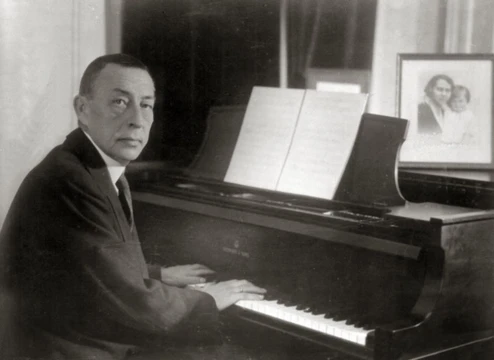
Paul Hindemith
German and American composer, music theorist, teacher, violist, and conductor; advocate of the Neue Sachlichkeit style.

Paul Hindemith, a composer, violist, conductor, teacher, and music theorist, was born in Hanau, near Frankfurt, as the eldest child of a painter and decorator. He learned violin as a child and later studied at Dr. Hoch's Konservatorium in Frankfurt under Adolf Rebner, Arnold Mendelssohn, and Bernhard Sekles. To support himself early on, he played in dance bands and musical-comedy groups. By 1914, he was deputy leader of the Frankfurt Opera Orchestra, becoming concertmaster in 1916, and also played second violin in the Rebner String Quartet.
After his father died in World War I in 1915, Hindemith was drafted into the Imperial German Army in September 1917. He played bass drum in a regimental band and formed a string quartet before being sent to the front in Flanders in May 1918, where he served as a sentry and narrowly survived grenade attacks. Following the armistice, he returned to Frankfurt and the Rebner Quartet.
In 1921, Hindemith founded the Amar Quartet, playing viola, and toured Europe extensively, focusing on contemporary music. His younger brother Rudolf was the original cellist. As a composer, he became a leading figure of the Neue Sachlichkeit (New Objectivity) style in the 1920s, producing works like *Kammermusik*, which echo Bach's Brandenburg Concertos and feature viola and viola d'amore as solo instruments. His pieces were performed at the 1922 International Society for Contemporary Music festival in Salzburg, bringing him international attention. The following year, he wrote the song cycle *Das Marienleben* and began organizing the Donaueschingen Festival, programming avant-garde composers like Anton Webern and Arnold Schoenberg. In 1927, he was appointed professor at the Berliner Hochschule für Musik. He composed and acted in Hans Richter's 1928 avant-garde film *Ghosts Before Breakfast*, though the score and original film were later burned by the Nazis. In 1929, he performed the solo part in the premiere of William Walton's viola concerto after Lionel Tertis declined it.
Hindemith married actress and singer Gertrud Rottenberg in 1924; the couple had no children.
The Nazi regime had a conflicted relationship with his music. Some officials condemned it as "degenerate," particularly his early, sexually charged operas like *Sancta Susanna*. In December 1934, Joseph Goebbels publicly called him an "atonal noisemaker." The Nazis banned his music in October 1936, and it was included in the 1938 *Entartete Musik* exhibition. However, other Nazi figures saw him as a potential model for modern German composition, as his later work was tonal and referenced folk music. Conductor Wilhelm Furtwängler defended him in 1934 along these lines. The controversy persisted throughout the 1930s, with Hindemith's favor with the Nazis fluctuating.
During the 1930s, Hindemith visited Cairo and Ankara multiple times. After Goebbels pressured him to request an indefinite leave from the Berlin Academy, he accepted an invitation from the Turkish government in 1935 to oversee the creation of a music school in Ankara. There, he became a key figure in music pedagogy under President Kemal Atatürk, with Eduard Zuckmayer as his deputy. He reorganized Turkish music education and helped establish the Turkish State Opera and Ballet. Though he did not stay as long as other émigrés, his influence was profound—the Ankara State Conservatory owes much to his efforts, and young Turkish musicians regarded him as a "real master."
Toward the end of the 1930s, Hindemith and his wife emigrated to Switzerland and then the United States ahead of World War II, after worsening difficulties with the Nazi regime. In his later years, he conducted and recorded much of his own music.
Most of Hindemith's compositions are anchored by a foundational tone and use musical forms, counterpoint, and cadences typical of Baroque and Classical traditions. His harmonic language is more modern, freely using all 12 notes of the chromatic scale within a tonal framework, as detailed in his three-volume treatise *The Craft of Musical Composition*. His notable works include the opera *Mathis der Maler* (1938), the symphony *Mathis der Maler* (1934), the *Symphonic Metamorphosis of Themes by Carl Maria von Weber* (1943), and the oratorio *When Lilacs Last in the Dooryard Bloom'd* (1946), a requiem based on Walt Whitman's poem.
- born
- 16 November 1895
- died
- 28 December 1963
- field
- Composer, music theorist, teacher, violist, conductor
- nationality
- German and American
- known_for
- Neue Sachlichkeit style, The Craft of Musical Composition, Mathis der Maler
Verified Timeline
Lore & Background
Paul Hindemith was born in Hanau, near Frankfurt, the eldest child of painter and decorator Robert Hindemith and his wife Marie. He was taught the violin as a child and entered Dr. Hoch's Konservatorium, studying violin with Adolf Rebner, and conducting and composition with Arnold Mendelssohn and Bernhard Sekles. He supported himself playing in dance bands and musical-comedy groups, became deputy leader of the Frankfurt Opera Orchestra in 1914, and was promoted to concertmaster in 1916. After his father's death in World War I, Hindemith was conscripted into the Imperial German Army in September 1917, sent to a regiment in Alsace in January 1918, and deployed to the front in Flanders in May 1918, where his diary has him 'surviving grenade attacks only by good luck.' After the armistice he returned to Frankfurt and the Rebner Quartet. In 1921 he founded the Amar Quartet, playing viola, and toured Europe extensively. He married actress and singer Gertrud Rottenberg on 15 May 1924; the marriage was childless. The Nazis' relationship to his music was complicated: some condemned it as 'degenerate,' and in December 1934 Joseph Goebbels publicly denounced him as an 'atonal noisemaker.' The Nazis banned his music in October 1936, and he was included in the 1938 Entartete Musik exhibition. However, some officials thought he might provide an example of a modern German composer. Hindemith accepted an invitation from the Turkish government to oversee the creation of a music school in Ankara in 1935, leading the reorganization of Turkish music education. He emigrated to Switzerland in 1938, partly because his wife was of part-Jewish ancestry, but primarily due to conflict with the Third Reich's artistic policies. Arriving in the U.S. in 1940, he taught at Yale University, where he founded the Yale Collegium Musicum. He became a U.S. citizen in 1946 but returned to Europe in 1953, living in Zürich and teaching at the university there until 1957. He died in Frankfurt of pancreatitis, aged 68, and was buried in La Chiésaz, Vaud, Switzerland.
Reader's Guide
Hindemith is among the most significant German composers of his time. His early works are in a late romantic idiom, and he later produced expressionist works before developing a leaner, contrapuntally complex style in the 1920s, heard in the Kammermusik series (1922–1927). Most of his compositions are anchored by a foundational tone and use musical forms, counterpoint, and cadences typical of the Baroque and Classical traditions, while his harmonic language freely uses all 12 notes of the chromatic scale, as detailed in his three-volume treatise The Craft of Musical Composition. Notable works include the song cycle Das Marienleben (1923), the opera Mathis der Maler (1938), the symphony Mathis der Maler (1934), the Symphonic Metamorphosis of Themes by Carl Maria von Weber (1943), and the oratorio When Lilacs Last in the Dooryard Bloom'd (1946), a requiem based on Walt Whitman's poem. Hindemith taught at Yale for a little over ten years, teaching 400 students, of whom 46 earned degrees, mostly in music theory. His notable students included Lukas Foss, Norman Dello Joio, Mel Powell, and Samuel Adler. He also taught at the University at Buffalo, Cornell University, and Wells College, and gave the Charles Eliot Norton Lectures at Harvard, from which the book A Composer's World (1952) was extracted. He received the Wihuri Sibelius Prize in 1955 and the Balzan Prize in 1962. Toward the end of his life he conducted and recorded much of his own music.
Did You Know?
- Hindemith played the viola d'amore, an instrument not in wide use since the baroque period, and wrote Kammermusik No. 6 as a concerto for it.
- He wrote the music for and acted in Hans Richter's 1928 avant-garde film Ghosts Before Breakfast; the score and original film were later burned by the Nazis.
- In 1929, Hindemith played the solo part in the premiere of William Walton's viola concerto after Lionel Tertis turned it down.
- He led the reorganization of Turkish music education and the early efforts to establish the Turkish State Opera and Ballet in the 1930s.
- Among Hindemith's students at Yale was the future rocket scientist Wernher von Braun.
Frequently Asked Questions
Who is Paul Hindemith?
Paul Hindemith (1895–1963) was a German-American composer, violist, conductor, teacher, and music theorist who is widely regarded as one of the most important German composers of the twentieth century.
What is Paul Hindemith best known for?
He is most associated with championing the Neue Sachlichkeit (New Objectivity) style in the 1920s, writing the opera Mathis der Maler, composing the Symphonic Metamorphosis of Themes by Carl Maria von Weber, and authoring the influential theory book The Craft of Musical Composition.
What is Mathis der Maler?
Mathis der Maler is Hindemith's opera that dramatizes the life of the Renaissance painter Matthias Grünewald. It is celebrated for weaving Baroque and Classical structural elements together with a distinctly modern harmonic vocabulary.
What role did Hindemith play in Neue Sachlichkeit?
Neue Sachlichkeit was a 1920s German movement calling for clarity, restraint, and objectivity in art. Hindemith became its leading musical voice, applying those principles to composition, performance, and pedagogy throughout that decade.
What happened to Hindemith later in life?
After leaving Germany, Hindemith settled in the United States, where he continued composing, conducting, and teaching until his death on 28 December 1963.
More in Classical Virtuosos 1-24
Related in Classical Virtuosos
Links follow this subject's own source article.
Spotted an error? Know more?
This is a living reference — every entry is fact-audited, and reader corrections feed straight into our audit queue. Suggest an edit · See this site's audit record