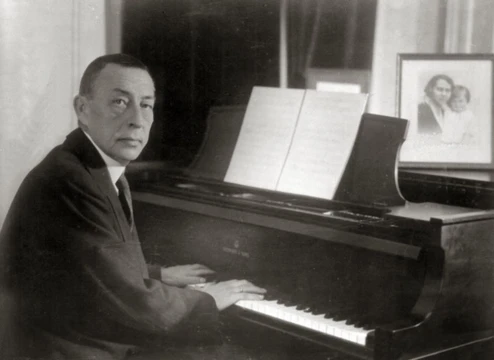
Lauritz Melchior
Danish-American heldentenor, quintessential Wagnerian voice of his era.

Lauritz Melchior (20 March 1890 – 18 March 1973) was a Danish-American opera singer, widely regarded as the leading Wagnerian heldentenor from the 1920s through the 1940s and the definitive example of that voice type. In the later part of his career, he performed in movie musicals, on radio and television, and made many recordings.
Born Lauritz Lebrecht Hommel Melchior in Copenhagen, he sang as a treble and amateur before beginning formal vocal studies at the Royal Opera School in Copenhagen at age 18 in 1908. His sister, Agnes Melchior (1883–1945), was a blind Danish Esperantist. He made his debut in 1913 as a baritone in the minor role of Silvio in Leoncavallo's *Pagliacci* at Copenhagen's Royal Theatre. For several years after, he sang mostly secondary baritone and bass parts for the Royal Danish Opera and provincial Scandinavian companies.
While on tour, Melchior helped an ailing soprano in *Il trovatore* by singing a high C in the Act IV duet. The American contralto Mme Charles Cahier, playing Azucena, was struck by the sound and advised him he was actually a tenor "with the lid on." She urged the Royal Opera to grant him a sabbatical and stipend to retrain his voice. From 1917 to 1918, he studied with Danish tenor Vilhelm Herold, a Wagnerian who had sung at Covent Garden and the Chicago Opera. This was a turning point: his high baritone was reshaped into a low tenor with a strong upper range. His second debut came on 8 October 1918, singing the title role in *Tannhäuser* at the Royal Opera in Copenhagen.
In 1920, Melchior traveled to England for an experimental radio broadcast from the Marconi station in Chelmsford to Scandinavian capitals. That same year, he became a regular performer in London, appearing at Sir Henry J. Wood's Prom Concerts in Queen's Hall. At a September 1920 Prom, while singing the Steersman's Song from Wagner's *Der fliegende Holländer*, he met novelist and Wagner enthusiast Hugh Walpole. They became close friends, traveling together and visiting each other's homes. During a stay at Walpole's cottage in Polperro, Melchior "caused a sensation by singing at a concert in the village," and later in Helston, both men took part in the Floral Dance. In December 1921, Melchior gave a concert at Edinburgh's Usher Hall during a visit with Walpole to his parents. Walpole provided financial support in February 1922, paying two-thirds of the fees for Melchior's studies with Victor Beigel, and in 1923 gave him another £800 to continue studying with Ernst Grenzebach and dramatic soprano Anna Bahr von Mildenburg.
Word of Melchior's talent reached Cosima and Siegfried Wagner at Bayreuth, where the festival was set to reopen in 1924. He was hired to sing Siegmund and Parsifal. This prestigious engagement led to other opportunities, including a 1923 Wagner concert with Frida Leider in Berlin, around which time he made acoustic recordings for Polydor. On 14 May 1924, he debuted as Siegmund at London's Royal Opera House, Covent Garden, to great success. Weeks later, he made his Bayreuth Festspielhaus debut in the same roles. In July 1925, Adolf Hitler attended a *Parsifal* performance in Bayreuth as a guest of Winifred Wagner. According to Walpole, who sat in Wagner's box next to Hitler, "the tears poured down Hitler's cheeks" as Melchior sang. On 17 February 1926, Melchior made his first appearance at the Metropolitan Opera in New York, singing *Tannhäuser* opposite Maria Jeritza, Friedrich Schorr, Karin Branzell, and Michael Bohnen, with Artur Bodanzky conducting. The debut drew no harsh criticism but little enthusiasm. He sang only eight times in his first Met season and just once in his second. To expand his repertory and experience, he accepted an engagement at the Hamburg State Opera, performing roles including Lohengrin, Otello, Radames in *Aida*, and Jean van Leyden in *Le prophète*. He also sang regularly at other major German houses, such as the State Operas of Berlin and Munich.
Though Melchior performed at most major Western theatres and concert halls, he is best remembered for his 519 performances of Wagnerian roles with the Metropolitan Opera between 1926 and 1950. His breakthrough there came on 20 March 1929, in *Tristan und Isolde*, after which his career thrived. He appeared at Covent Garden from 1924 to 1939, singing Otello (opposite Viorica Ursuleac as Desdemona) and Florestan in addition to Wagner. In 1932 at Covent Garden, he performed *Siegfried* opposite soprano Florence Easton, their only joint appearance. Other important engagements included the Teatro Colón in Buenos Aires (1931–1943), San Francisco Opera (1934–1945), and Chicago Opera (1934–1945). His final stage performance, on 2 February 1950, was Lohengrin's Farewell. Notable colleagues included sopranos Frida Leider, Kirsten Flagstad, and Lotte Lehmann.
- field
- Opera singer (heldentenor)
Lore & Background
Lauritz Melchior was a Danish-American opera singer, renowned as the leading Wagnerian heldentenor from the 1920s through the 1940s and widely regarded as the definitive example of that voice type. He was born in Copenhagen and began his vocal studies at the Royal Opera School at age eighteen. His early career saw him debut as a baritone in a secondary role at the Royal Theatre in Copenhagen, after which he sang mostly minor baritone and bass parts for the Royal Danish Opera and other Scandinavian companies. A pivotal moment occurred when, while on tour, he sang a high C to assist an ailing soprano; the American contralto performing that night recognized his true potential as a tenor and advocated for him to receive a sabbatical and stipend to retrain his voice. After studying with a noted Danish tenor, he made a second debut in the title role of *Tannhäuser* in Copenhagen. Melchior’s international career was launched when he was engaged to sing at the Bayreuth Festival in 1924, performing Siegmund and Parsifal. He made his Covent Garden debut that same year as Siegmund to great success. His first appearance at the Metropolitan Opera in New York came in 1926, singing Tannhäuser, though his breakthrough there did not occur until a 1929 performance of *Tristan und Isolde*. Over his long career, he sang 519 performances of Wagnerian roles at the Met between 1926 and 1950. He also appeared regularly at major German opera houses, the Teatro Colón in Buenos Aires, and the San Francisco and Chicago operas. Late in his career, he performed in movie musicals, on radio, and on television, and made numerous recordings.
Reader's Guide
Lauritz Melchior is regarded as the definitive Wagnerian heldentenor of the 1920s through the 1940s, a voice type he came to epitomize. His career was transformed after a chance event during a tour, when he sang a high C to assist an ailing soprano; the contralto Madame Charles Cahier recognized his true potential and advised him to restudy his voice as a tenor. Following this, he retrained with the Danish tenor Vilhelm Herold, successfully recasting his high baritone into a low tenor with a strong upper register. His second debut, in the title role of *Tannhäuser* in 1918, marked his true operatic arrival. He gained crucial early support from the novelist Hugh Walpole, who financed his studies with Victor Beigel and later with Ernst Grenzebach and the dramatic soprano Anna Bahr von Mildenburg. Engagements at Bayreuth in 1924, singing Siegmund and Parsifal, opened the way to major houses. He made a successful debut at Covent Garden in 1924 and, after a slow start, achieved his breakthrough at the Metropolitan Opera in 1929 with *Tristan und Isolde*. Over his long career, he performed 519 Wagnerian roles at the Met and appeared regularly at Covent Garden, the Hamburg State Opera, and the opera houses of Berlin, Munich, Buenos Aires, San Francisco, and Chicago. Beyond opera, he later appeared in movie musicals and on radio and television, and made numerous recordings. His influence on the heldentenor tradition is enduring.
Did You Know?
- His sister, Agnes Melchior, was a Danish Esperantist.
A Name in the Essex House Roster
In the biographical record of the pianist Russell Sherman, Lauritz Melchior appears in a single but telling capacity: as a neighbor at the Essex House hotel in Manhattan. The Essex House thus functioned as a small constellation of figures connected to the performing arts, and Melchior's presence among them situates him firmly within New York's mid-twentieth-century musical community. Nothing in the surviving record elaborates on the day-to-day interactions between the Sherman children and their adult neighbors, yet the mere fact of co-residence in a single Manhattan hotel places Melchior in the same physical and social orbit as a family where a mother was actively steering her youngest son toward the piano, where a father ran a raincoat manufacturing business, and where the ambient culture was one of recital halls, opera houses, and conservatory corridors.
The Company of Bing, Pons, and Curzon
The grouping of Lauritz Melchior with Rudolf Bing, Lily Pons, and Clifford Curzon as Essex House neighbors is a compact snapshot of the New York classical-music world as it existed in the late 1920s and 1930s. Bing was a figure of operatic management, Pons a celebrated soprano, and Curzon a distinguished pianist; Melchior's inclusion in the same list of household neighbors suggests he moved in the same professional and social stratum. For a young Sherman, whose mother had tried to get all four children to sit at the piano and succeeded only with him, the daily reality of growing up within earshot of such a cluster of performers must have made the world of concert music feel less like a distant institution and more like the hallway next door. The Essex House was not merely a lodging; it was a living archive of the performing arts, and Melchior was one of its resident entries, a name a child could hear mentioned at the dinner table or see arriving by elevator.
A Childhood Context for a Future Pianist
Russell Sherman's own trajectory—beginning piano lessons at six, being accepted by the formidable Eduard Steuermann at eleven, and debuting with the New York Philharmonic under Leonard Bernstein at fifteen—was shaped in part by the cultural environment of the Essex House. Lauritz Melchior, as a neighbor, was part of that environment even if no direct teacher-student relationship is recorded. Sherman's mother had attempted to instill piano study in all four Sherman children, and only Russell took to it; the surrounding presence of accomplished performers like Melchior, Pons, and Curzon likely reinforced the idea that musical life was a viable, everyday reality rather than an abstraction. Steuermann, who had studied with Schoenberg and Busoni, later taught Sherman that music was about joy and play rather than mere technical mastery, a philosophy that resonated with a childhood spent in a building where the air was thick with the sounds and conversations of working musicians.
The Limits of the Record
What makes Lauritz Melchior's appearance in this particular biographical text both interesting and frustrating is its brevity. He is named once, in a list of neighbors, and the record offers no further detail about his work, his repertoire, his career arc, or his personal life. Unlike the other figures in Sherman's orbit—Steuermann, Bernstein, Schuller, Kahn—Melchior does not appear as a teacher, collaborator, or subject of direct influence. His role in this narrative is purely environmental: a presence in the same building, a name in the same social set as Bing, Pons, and Curzon. For a fan encyclopedia seeking to build a fuller portrait, this single reference is a starting point rather than a destination.
Frequently Asked Questions
What kind of voice did Lauritz Melchior have and what was he known for?
Melchior possessed a powerful heldentenor voice and was best known for his commanding portrayals of Wagner's heroic roles. He is widely regarded as the definitive interpreter of that voice type during the 1920s through the 1940s.
What did Lauritz Melchior do later in his career beyond opera?
In his final decades he expanded into popular entertainment, taking roles in movie musicals and appearing on both radio and television. He also left a substantial legacy of studio recordings that preserved his artistry for later generations.
Why is Lauritz Melchior considered important in opera history?
He is remembered as the quintessential Wagnerian heldentenor of his generation, setting the standard against which singers of that voice type are still measured. His nearly four-decade career bridged the golden age of live opera and the early era of recorded sound.
More in Classical Virtuosos 1-24
Spotted an error? Know more?
This is a living reference — every entry is fact-audited, and reader corrections feed straight into our audit queue. Suggest an edit · See this site's audit record