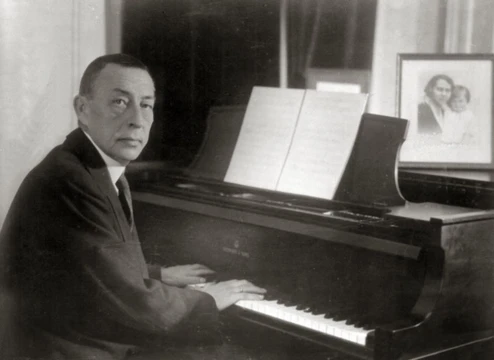
Nikolaus Harnoncourt
Conductor and pioneer of historically informed performance, known for his work with Concentus Musicus Wien.

Nikolaus Harnoncourt (1929–2016) was an Austrian conductor renowned for his pioneering role in historically informed performance. Born in Berlin to an Austrian mother who was a descendant of Holy Roman Emperors and an Austrian engineer father, he was raised in Graz after the family moved there in 1931. He studied cello and viola da gamba at the Vienna Music Academy, and from 1952 to 1969 played cello with the Vienna Symphony. In 1953, he founded the period-instrument ensemble Concentus Musicus Wien with his wife, Alice Hoffelner, initially performing on the viola da gamba and cello. This ensemble became a cornerstone of the Early Music movement, recording Baroque repertoire for Telefunken (later Teldec), including works by Purcell, Monteverdi, and Rameau. Harnoncourt left the Vienna Symphony to focus on conducting, making his operatic debut at La Scala in the 1972/73 season with Monteverdi’s *Il ritorno d’Ulisse in patria*. He is especially noted for his complete recording of J.S. Bach’s 193 cantatas, a joint project with Gustav Leonhardt begun in 1971 and completed in 1990, which used an all-male choir and soloists except where the score specified a female soprano. He also made early historically informed recordings of Bach’s Mass in B minor (1968) and St Matthew Passion (1970), later winning a Grammy for a 2001 recording of the Passion. Harnoncourt expanded his repertoire to include Classical and early Romantic works, performing with modern-instrument orchestras while retaining historically informed tempi and dynamics. He conducted the Vienna Philharmonic in four new Mozart productions at the Vienna State Opera between 1987 and 1991, and led the orchestra’s New Year’s Concert in 2001 and 2003. With the Chamber Orchestra of Europe, he made benchmark recordings of Beethoven’s symphonies and piano concertos. He was named Honorary Guest Conductor of the Royal Concertgebouw Orchestra in 2000, and appeared regularly at the Salzburg Festival, conducting major opera productions and concerts. Harnoncourt also authored several books on performance history and musical aesthetics.
- field
- Conductor, cellist, author
- nationality
- Austrian
- known_for
- Historically informed performance, founder of Concentus Musicus Wien, Bach canta
Lore & Background
Nikolaus Harnoncourt was an Austrian conductor and cellist who became a leading figure in the historically informed performance movement. He was born in Berlin in 1929 to an Austrian mother, a descendant of Holy Roman Emperors, and an Austrian engineer father. The family moved to Graz, Austria, in 1931, where Harnoncourt was raised. He studied cello and viola da gamba at the Vienna Music Academy. From 1952 to 1969, he played cello with the Vienna Symphony. In 1953, he founded the period-instrument ensemble Concentus Musicus Wien with his wife, Alice Hoffelner, dedicated to performing on original instruments. He initially played viola da gamba and cello with the group. Harnoncourt recorded a wide Baroque repertoire for Telefunken, including works by Purcell, Bach, Monteverdi, and Rameau. He left the Vienna Symphony to focus on conducting. In 1971, he began a joint project with Gustav Leonhardt to record all of Bach’s cantatas, a cycle completed in 1990. He also made historically informed recordings of Bach’s Mass in B minor and St Matthew Passion. Later, he conducted modern-instrument orchestras while retaining historical performance considerations, and expanded his repertoire to include Classical, early Romantic, and Viennese operetta works. He was a guest conductor of the Vienna Philharmonic and led the Vienna New Year’s Concert in 2001 and 2003. He debuted at the Salzburg Festival in 1992 and conducted major opera productions there. The Royal Concertgebouw Orchestra named him Honorary Guest Conductor in 2000. Harnoncourt also authored several books on performance history and musical aesthetics.
Reader's Guide
Nikolaus Harnoncourt began his musical career as a cellist, performing with the Vienna Symphony from 1952 until 1969. In 1953, he founded the period-instrument ensemble Concentus Musicus Wien with his wife, Alice Hoffelner, initially playing both cello and viola da gamba. This ensemble became a pioneering force in the Early Music movement, dedicated to historically informed performance. For the Telefunken label, Harnoncourt recorded a wide range of Baroque repertoire, including works by Purcell, Bach, Monteverdi, and Rameau. A landmark project was his collaboration with conductor Gustav Leonhardt, begun in 1971, to record all of J.S. Bach’s cantatas, a cycle completed in 1990 that notably used an all-male choir and soloists except for two cantatas requiring a female soprano. He also made early historically informed recordings of Bach’s Mass in B minor and St Matthew Passion. Around 1970, Harnoncourt transitioned to conducting, making his opera debut at La Scala in the 1972/73 season. He later conducted major international symphony orchestras and appeared at leading venues and festivals, including the Salzburg Festival and the Vienna State Opera. He expanded his repertoire beyond Baroque music to include Classical and early Romantic works, as well as Viennese operetta, and made benchmark recordings of Beethoven’s symphonies with the Chamber Orchestra of Europe. Harnoncourt also conducted the Vienna Philharmonic’s New Year’s Concert in 2001 and 2003. He was the author of several books on performance history and musical aesthetics.
Did You Know?
- Harnoncourt conducted the 1974 recording of Mozart's Horn Concertos with Hermann Baumann and the Concentus Musicus Wien, using natural horns.
- Baumann was a regular hornist for Karl Richter and the Münchener Bach-Chor, a group Harnoncourt was associated with through the historically informed performance movement.
- The source mentions Harnoncourt's recording as a pioneering effort in the revival of natural horn performance.
Frequently Asked Questions
How did Harnoncourt's repertoire evolve over his career?
He began by focusing almost exclusively on Baroque music through historically informed performance practices. Over the decades he broadened his scope to encompass Classical and early Romantic works while maintaining his commitment to period-appropriate interpretation.
More in Classical Virtuosos 1-24
Spotted an error? Know more?
This is a living reference — every entry is fact-audited, and reader corrections feed straight into our audit queue. Suggest an edit · See this site's audit record