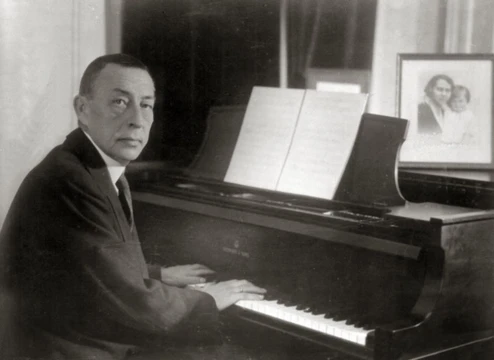
Mikhail Glinka
First Russian composer to gain wide recognition; fountainhead of Russian classical music.

Mikhail Ivanovich Glinka is recognized as the first Russian composer to achieve widespread acclaim within his own country and is frequently considered the originator of Russian classical music. His work significantly influenced later Russian composers, particularly the group known as The Five, who developed a distinctly Russian musical style. Glinka was born in the village of Novospasskoye in the Smolensk Governorate, into a wealthy family with a history of service to the tsars. His early childhood was spent under the care of his overprotective grandmother, who kept him confined to a warm room. This isolation fostered a hypochondriac nature, but the only music he heard—dissonant church bells and folk songs sung by peasant choirs using an improvised, harmonically independent style—shaped his unique musical ear. After his grandmother’s death, he lived on his uncle’s estate, where exposure to an orchestra playing works by Haydn, Mozart, and Beethoven deepened his passion for music. He later studied in Saint Petersburg, taking piano lessons from John Field and Charles Mayer. Following school, he worked a light government job, composing melancholy romances for social gatherings. In 1830, on a doctor’s advice, he traveled to Italy, studying at the Milan conservatory and meeting figures like Mendelssohn and Berlioz. Disenchanted, he resolved to return to Russia and create music in a Russian style. His journey home included stops in Vienna, where he heard Liszt, and Berlin, where he studied composition with Siegfried Dehn. His father’s death brought him back to Russia. Glinka’s first great opera, *A Life for the Tsar*, originally titled *Ivan Susanin*, tells the story of a peasant who sacrifices himself for the tsar. His marriage to Maria Petrovna Ivanova was unhappy and short-lived, and he later lived with his mother and then his sister, Lyudmila Shestakova.
- field
- Composer
- nationality
- Russian
- known_for
- First Russian composer to gain wide recognition; fountainhead of Russian classic
Lore & Background
Mikhail Glinka was born in the village of Novospasskoye, near the Desna River in the Smolensk Governorate of the Russian Empire. His father was a wealthy retired army captain, and the family had a history of loyalty to the tsars. Raised by his overprotective grandmother, he was confined to a warm room and heard only the sounds of village church bells and folk songs from passing peasant choirs. The church bells were tuned to a dissonant chord, and the peasant choirs used an improvised style with dissonant harmonies beneath the melody, which influenced his independence from standard Western harmony. After his grandmother’s death, he moved to his uncle’s estate, where he heard an orchestra playing Haydn, Mozart, and Beethoven. A clarinet quartet by Bernhard Henrik Crusell profoundly affected him. He later studied piano with John Field and Charles Mayer in Saint Petersburg. He traveled to Italy for three years, taking lessons at the conservatory in Milan, and met Mendelssohn and Berlioz. Disenchanted, he resolved to return to Russia and write in a Russian manner. He studied composition in Berlin with Siegfried Dehn. His first great opera, *A Life for the Tsar*, tells the story of the peasant Ivan Susanin who sacrifices his life for the tsar. Glinka is regarded as the fountainhead of Russian classical music and an important influence on later composers.
Reader's Guide
Glinka’s early life shaped his distinctive musical voice. Confined as a child by his grandmother, his only music came from dissonant church bells and peasant choirs using an improvised, harmony-defying technique, which later freed him from standard Western progressions. After her death, he heard his uncle’s orchestra playing Haydn, Mozart, and Beethoven, and a clarinet quartet by Crusell left a profound impression. In Saint Petersburg he studied piano with John Field and later Charles Mayer. After a period composing melancholy romances for salon audiences, he traveled to Italy, where he studied with Francesco Basili but found counterpoint irksome. Disenchanted, he resolved to return to Russia and create a national style akin to what Donizetti and Bellini had done for Italy. In Berlin, he studied with Siegfried Dehn, producing a Capriccio on Russian Themes and an unfinished symphony. His first great opera, *A Life for the Tsar*, tells the story of a peasant who sacrifices himself for the tsar. Glinka’s compositions directly influenced The Five, who forged a distinctly Russian classical music. His legacy endures as the wellspring of Russian national music, built on folk song, dissonant harmony, and independence from Western models.
Did You Know?
- Glinka's grandmother raised him in a warm room where he heard only church bells and folk songs, which shaped his later harmonic style.
- He studied piano with John Field and Charles Mayer before attending school in Saint Petersburg.
Conducting Career Across Europe and Beyond
Tchakarov's professional trajectory as a conductor spanned nearly two decades of increasingly prominent appointments across the continent and beyond.
The Karajan Connection and Breakthrough Moments
The breakthrough on the operatic stage followed swiftly.
The Sofia Festival Orchestra and the Russian Opera Cycle
In 1986 Tchakarov took the initiative to found the Sofia Festival Orchestra, assembling it with the backing of prominent Bulgarian musicians. This ensemble became the cornerstone of his final years of creative work and the vehicle for his most ambitious recording project. Beyond the studio, Tchakarov was also instrumental in creating a New Year's Music Festival in Sofia, a venture that brought major international orchestras and soloists to Bulgaria during the late socialist period and reflected his broader ambition to weave the country's musical life into the global performing-arts conversation.
Artistic Identity and Enduring Legacy
His repertoire gravitated toward the great works of the nineteenth and twentieth centuries, with a particular affinity for Russian opera and large-scale Romantic and late-Romantic symphonic writing. This combination of operatic drama and orchestral breadth defined his public identity. His life was cut short when he died in Paris on 4 August 1991, just weeks after his final concert with the Orchestre National de France on 22 March, leaving him only forty-three years old. Yet his imprint on Bulgarian cultural life endures.
Frequently Asked Questions
Who is Mikhail Glinka?
Mikhail Ivanovich Glinka (1804–1857) was a Russian composer widely regarded as the founding figure of the national classical tradition. He was the first composer from Russia to achieve broad acclaim within his own country.
What are Mikhail Glinka's most famous compositions?
His two landmark operas, A Life for the Tsar and Ruslan and Lyudmila, remain his best-known works. These pieces established a distinctly Russian operatic voice that had not existed before him.
Why is Mikhail Glinka considered important in music history?
He is often called the fountainhead of Russian classical music because he proved that Russian composers could create works of international caliber rooted in their own cultural heritage. His success opened the door for an entire generation of successors.
How did Mikhail Glinka influence later Russian composers?
His melodic language and use of folk elements directly shaped the distinctive national style pursued by The Five. Composers such as Balakirev and Cui explicitly built upon the groundwork he laid.
When was Mikhail Glinka born and when did he die?
He was born on 1 June 1804 (Old Style 20 May) and passed away on 15 February 1857 (Old Style 3 February). His active career spanned roughly the first half of the nineteenth century.
More in Classical Virtuosos 1-24
Spotted an error? Know more?
This is a living reference — every entry is fact-audited, and reader corrections feed straight into our audit queue. Suggest an edit · See this site's audit record