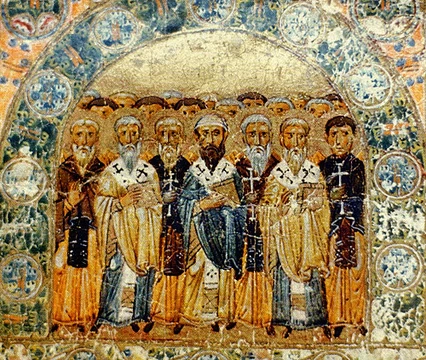
Peter the Hermit
Priest who led the People's Crusade and was linked to early massacres.
Last updated

Txllxt TxllxT · CC BY-SA 4.0
Peter the Hermit—also called Little Peter, Peter of Amiens, or Peter of Achères—was a Roman Catholic priest from Amiens who played a key role in the 1096 People’s Crusade, the military expedition from France to Jerusalem. Jewish tradition associates him with the Rhineland massacres, which set a precedent for later Crusades, though he has never been officially beatified by the Catholic Church, despite being sometimes referred to as “Blessed.”
Family
His French name, Pierre l’Ermite, has led some Francophone scholars to treat “l’Ermite” as a surname rather than a title. Some sources claim he was born around 1050, the son of Renauld L’Ermite of Auvergne and Alide Montaigu of Picardie; others say he belonged to the L’Hermite family of Auvergne in the Netherlands. These claims are disputed, as no evidence confirms “the Hermit” was a real surname, and surnames did not develop until after his time.
Prior to 1096
Before 1096, according to Anna Komnene’s Alexiad, Peter attempted a pilgrimage to Jerusalem but was blocked by Seljuk Turks and mistreated. He reportedly witnessed disturbing scenes at the Church of the Holy Sepulchre—gentiles polluting holy places, stealing offerings, beating Christians, and extorting pilgrims. When he asked the patriarch why this was allowed, the patriarch replied that he had only the strength of a tiny ant compared to the oppressors and had to pay regular tribute (jizya) to avoid death. This experience led Peter to preach inflammatory statements about the Turks, though doubts remain whether he ever made such a journey.
It is uncertain if Peter attended Pope Urban II’s Council of Clermont in 1095, where the Pope announced his military strategy for the First Crusade. What is certain is that Peter became a preacher of the armed pilgrimage in France afterward, and his own experiences may have fueled the cause. Tradition in Huy holds that he was present when war was declared and began preaching immediately. He gained fame as an emotional revivalist, and most historians agree that thousands of serfs and peasants eagerly took the cross at his bidding, partly due to promises he made.
This became known as the Crusade of the Paupers. Peter organized them as a spiritually purified, holy group supposedly protected by the Holy Ghost, but he did not train them, supply weapons, or provide food. Some historians think the People’s Crusade may have also included well-armed soldiers and nobles.
Crusade to the Holy Land
Pope Urban II commissioned Peter to command an armed pilgrimage to Jerusalem. Before departing, Peter received permission from Patriarch Simeon II of Jerusalem. He recruited from England, Lorraine, France, and Flanders, arriving in Cologne, Germany, on Holy Saturday, 12 April 1096.
Massacre of Jewish civilians
In spring 1096, Peter was one of the prominent figures involved in the Rhineland massacres against Jews. His troops participated in the torture and slaughter of Jews in Lorraine, Cologne, Worms, Speyer, and Mainz. In Mainz, his followers killed a large group of Jews who had been granted refuge by a local bishop in exchange for money.
Death toll estimates generally range from 2,000 to 2,800 civilians, though some claim about 5,000 or even 10,000. These killings are known as Gzerot Tatnó (Edicts of 4856). Another group, led by the knight count Emicho of Leiningen, provoked the massacres.
Before reaching Constantinople, Peter and his followers faced difficulties. In Zemun, the governor—a descendant of a Ghuzz Turk—and a colleague, frightened by the army’s size, tightened frontier regulations. A dispute over a pair of shoes sparked a riot, and against Peter’s wishes, the town was attacked and the citadel stormed.
This resulted in 4,000 Hungarians killed and many provisions stolen. On 26 June 1096, Peter’s army crossed the Sava River, marched into Belgrade, set it on fire, and pillaged it. They then moved through Nish after an eight-day delay.
Riding toward Sofia, they were attacked by Byzantine soldiers on the road, losing a quarter of their army. Peter’s forces were almost entirely annihilated by the Seljuk Turks, forcing him to winter in Constantinople and join the Prince’s Crusade. He continued to hold a leadership role, with varying significance, as the Crusaders invaded the Levant and captured Jerusalem.
Lore & Background
Others claim he was a member of the L'Hermite family of Auvergne in France. These claims are disputed by still other authors, who argue that no evidence can confirm that 'the Hermit' was an actual surname, and that surnames did not develop until after his time. He was said to have witnessed disturbing scenes, and after reaching the Church of the Holy Sepulchre, he saw 'many forbidden and wicked things' and questioned the patriarch, who expressed helplessness against the Turks.
This experience caused Peter to preach inflammatory statements about the Turks, though doubts remain whether he ever made such a journey. It is certain that he was one of the preachers of the armed pilgrimage in France afterwards. He soon leapt into fame as an emotional revivalist, and the vast majority of sources and historians agree that thousands of serfs and peasants eagerly took the cross at his bidding.
Peter organized and guided the paupers as a spiritually purified and holy group of pilgrims. He did not train his army, nor did he supply weapons or food. Before reaching Constantinople, Peter and his followers experienced difficulty. The army then marched into Belgrade, set the town on fire, and pillaged it.
After an eight-day delay in Nish, they were attacked by Byzantine soldiers and lost a quarter of their army. Byzantine emperor Alexios I Komnenos was displeased. After being shipped across the Bosporus, the paupers entered Turkish territory despite warnings.
Reader's Guide
Peter the Hermit's significance lies in his role as a catalyst for the People's Crusade, a popular movement that preceded the main armed crusade and demonstrated the power of religious fervor among common people. His preaching, based on his reported pilgrimage and the patriarch's complaints, mobilized thousands of serfs and peasants, though his lack of military organization led to disaster.
These killings, known as Gzerot Tatnó, set a precedent for violence against Jews in later Crusades. The People's Crusade itself was almost entirely annihilated by the Seljuk Turks, forcing Peter to winter in Constantinople and join the Prince's Crusade, where he continued to have a leadership role in varying degrees of significance as the Crusaders invaded the Levant and took Jerusalem. His legacy is thus twofold: as a symbol of popular crusading zeal and as a figure associated with early anti-Jewish violence.
Also in the Codexery
More in Christian Saints & Early Church Fathers
Sources
Compiled from Wikipedia and the sources listed below. Text from Wikipedia is available under CC BY-SA 4.0; this entry is adapted from it.
- Wikipedia: Peter the Hermit (CC BY-SA 4.0).
Spotted an error? Know more?
Reader corrections go straight into our review queue. Suggest an edit · How this site is sourced