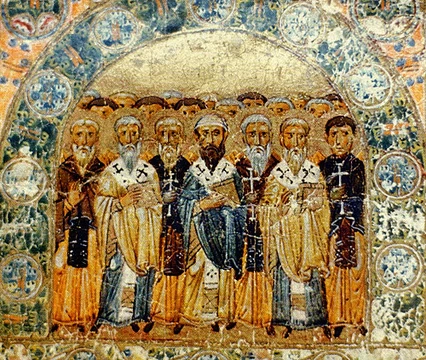
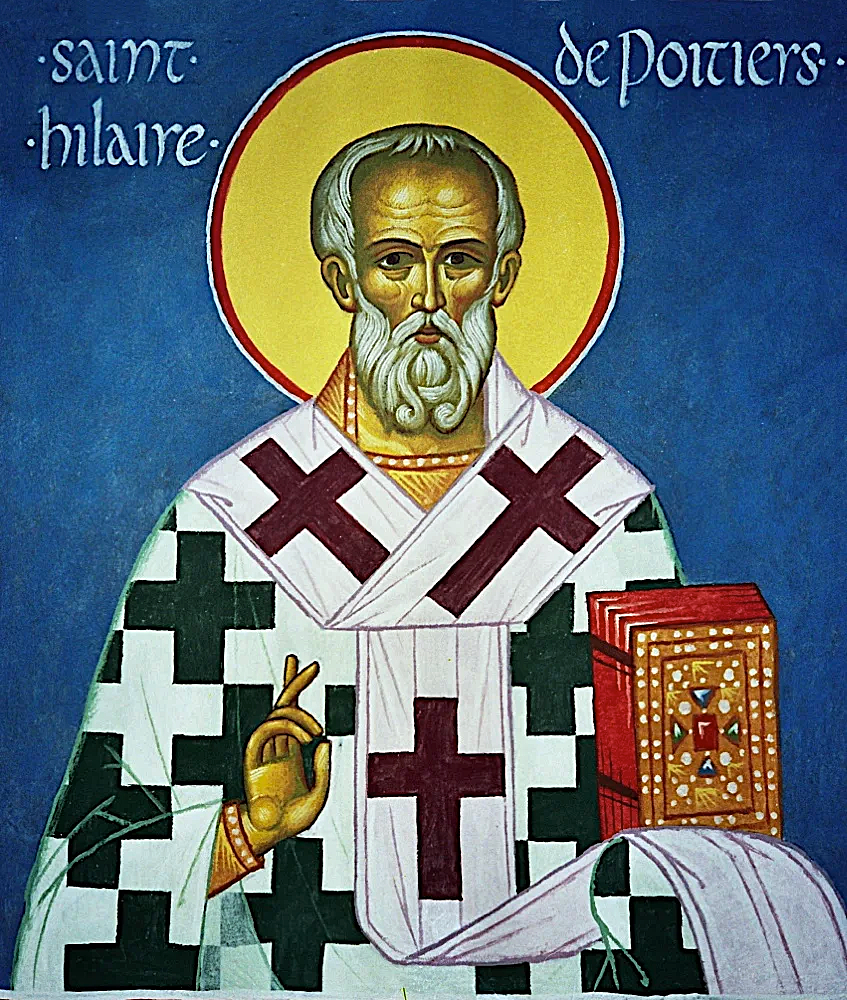
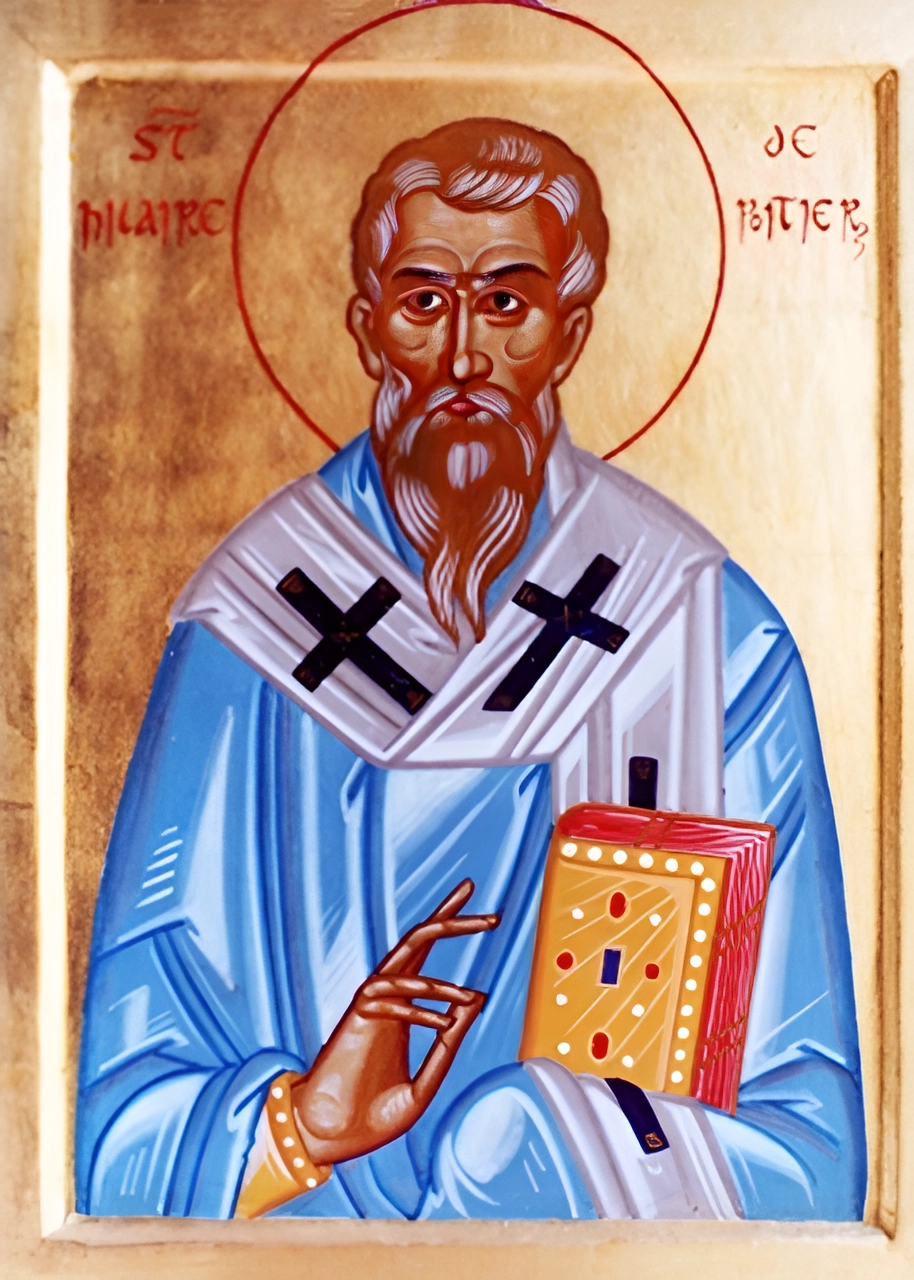
Hilary of Poitiers
Bishop of Poitiers, Doctor of the Church, and staunch defender of Nicene orthodoxy against Arianism.
Last updated

Rodhullandemu · CC BY-SA 4.0
Hilary of Poitiers was born in that city near the turn of the fourth century to distinguished pagan parents. He received an excellent education, including a strong command of Greek. After studying the Old and New Testaments, he abandoned his Neoplatonist beliefs for Nicene Christianity, and he, his wife, and their daughter Abra were baptized.
Abra later became a nun and saint renowned for her charity. In 353, Trinitarian Christians in Arles elected Hilary as bishop, as the sitting bishop was an Arian. At the Council of Arles, papal legates refused to condemn Arianism, but Hilary secured the excommunication of the Arian bishop and two prominent supporters.
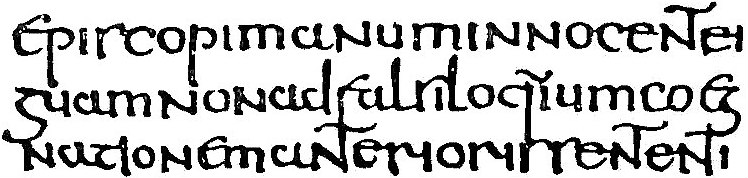
He wrote a remonstrance to Emperor Constantius II against Arian persecutions, but an imperial rescript at the synod of Béziers in 356 banished Hilary and another bishop to Phrygia, a stronghold of Arianism. He spent nearly four years in exile, though the reasons remain obscure—possibly for refusing to condemn Athanasius or for political opposition. While exiled, he continued governing his diocese and wrote two major theological works. The De synodis analyzed Eastern bishops’ views on the Nicene controversy, counseling Western bishops to be reserved in condemnation.
The De trinitate libri XII was the first successful Latin expression of the Council’s Greek theological subtleties. Hilary also attended the council at Seleucia in 359, and in 360 unsuccessfully sought an audience with Constantius. When a council ratified decisions against Nicene orthodoxy, Hilary responded with a bitter attack on the emperor.
Lore & Background
Hilary was born at Poitiers either at the end of the 3rd or beginning of the 4th century AD. His parents were pagans of distinction. He received a good education, which included a high level of Greek. He studied, later on, the Old and New Testament writings, with the result that he abandoned his Neoplatonism for Nicene Christianity, and with his wife and his daughter, traditionally known as Saint Abra of Poitiers, were baptized and received into the Church.
In 353, the Trinitarian Christians of Arles elected Hilary as bishop as the existing bishop, Saturninus of Arles, was an Arian. At the Council of Arles, the legates of Pope Liberius refused to condemn Arianism and considered formally opposing Athanasius of Alexandria. Hilary still managed to secure the local excommunication, by those of the Gallican hierarchy who were his allies, of Bishop Saturninus and two of his prominent supporters, Bishops Ursacius of Singidunum and Valens of Mursa. About the same time, Hilary wrote to Emperor Constantius II a remonstrance against the persecutions by which the Arians had sought to crush their opponents.
His efforts did not succeed at first, for at the synod of Biterrae (Béziers), summoned by the emperor in 356 with the professed purpose of settling the longstanding dispute, an imperial rescript banished the new bishop, along with Rhodanus of Toulouse, to Phrygia, a stronghold of Arianism. Hilary spent nearly four years in exile, although the reasons for this banishment remain obscure. The traditional explanation is that Hilary was exiled for refusing to subscribe to the condemnation of Athanasius and the Nicene faith.
In exile
More recently several scholars have suggested that political opposition to Constantius and support of the usurper Claudius Silvanus may have led to Hilary's exile. While in Phrygia, he continued to govern his diocese, as well as writing two of the most important of his contributions to dogmatic and polemical theology: the De synodis and the De trinitate libri XII. Hilary also attended several synods during his time in exile, including the council at Seleucia (359). In 360, Hilary tried unsuccessfully to secure a personal audience with Constantius, as well as to address the council which met at Constantinople in 360.
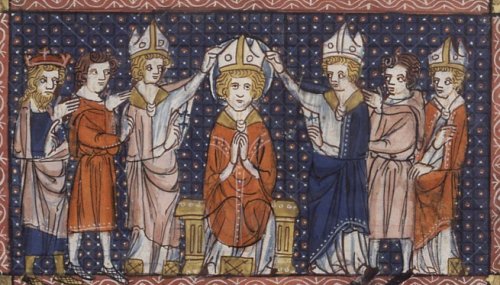
From Pagan Poets to Christian Bishop
He received a thorough classical education that included advanced Greek, a skill that would later prove essential to his theological work. His intellectual journey carried him from Neoplatonism into the study of Old and New Testament writings, a path that ultimately led him to embrace Nicene Christianity. He was married before his conversion, and he and his wife were baptized together.
Their daughter, traditionally identified as Saint Abra of Poitiers, went on to become a nun and saint remembered for her charitable works. His name itself derives from the Latin word meaning happy or cheerful, a fitting contrast to the turbulent theological battles that would define his adult life. The era in which he came of age was one of fierce division: Arianism was gaining ground among Christians, and the debates between Trinitarians and Arians had grown so heated that they included violent disputes, culminating in the Council of Nicaea under Constantine.
The Hammer of the Arians
Hilary earned the epithet Malleus Arianorum, the Hammer of the Arians, and was also called the Athanasius of the West for his relentless defense of Trinitarian orthodoxy. At the Council of Arles, papal legates under Liberius refused to condemn Arianism and even considered opposing Athanasius of Alexandria. Despite this, Hilary secured the local excommunication of Saturninus and two of his key allies, Bishops Ursacius of Singidunum and Valens of Mursa.
Exile, Writings, and the Question of Power
The traditional explanation is that he refused to condemn Athanasius and the Nicene faith, though some scholars point instead to political opposition to Constantius and possible support for the usurper Claudius Silvanus. During nearly four years of exile, Hilary continued to govern his diocese from afar and produced two landmark works. When the latter ratified the decisions of Ariminum and Seleucia, Hilary responded with the scathing In Constantium, branding the emperor Antichrist.
Legacy Beyond the Sarcophagus
Hilary of Poitiers was recognized as a Doctor of the Church, a distinction reflecting the enduring weight of his theological contributions. His De trinitate libri XII stands as the first major Latin treatment of Trinitarian doctrine, making the Greek theological subtleties of Nicaea accessible to the Western-speaking Church.
His polemical writings, including the In Constantium and the Apologetica, established a framework for critiquing the entanglement of ecclesiastical authority with imperial power, arguing that the Church's appeal to secular force insulted Christ by implying His support was insufficient, and that the true witness of the Church had always been endurance rather than coercion. His daughter Abra carried forward a legacy of charity in her own right as a nun and saint. The epithets Hammer of the Arians and Athanasius of the West attest to how contemporaries and later tradition understood his role: as the principal Western voice defending Nicene orthodoxy against Arian and Semi-Arian challenges during a period when imperial politics repeatedly threatened to override theological conviction.
Reader's Guide
Hilary of Poitiers, a Doctor of the Church, was bishop of Poitiers and a fierce opponent of Arianism, earning the epithets "Hammer of the Arians" and "Athanasius of the West." Born to pagan parents of high standing at the end of the 3rd or beginning of the 4th century, he received an excellent education, including fluency in Greek. After studying the Old and New Testaments, he abandoned Neoplatonism for Nicene Christianity and was baptized along with his wife and daughter, Abra, who later became a nun and saint renowned for her charity. In 353, Trinitarian Christians elected him bishop of Arles to counter the Arian bishop Saturninus. Hilary secured the excommunication of Saturninus and two allies from the Gallican hierarchy.
He wrote a remonstrance to Emperor Constantius II against Arian persecutions, but at the synod of Béziers in 356, an imperial rescript banished him to Phrygia, an Arian stronghold, for nearly four years. While in exile, he continued to govern his diocese and wrote two major works: De synodis, an epistle to Western bishops analyzing Eastern creeds and urging restraint in condemning Semi-Arians, and De trinitate libri XII, the first successful Latin exposition of the Nicene Council's Greek theological subtleties. He attended the council at Seleucia in 359 and later wrote the bitter In Constantium attacking the emperor. Hilary criticized bishops who sought secular power, arguing that the Church once spread faith through endurance of persecution, but now exiled bishops and imposed faith by violence, which he saw as the work of Antichrist.
Also in the Codexery
More in Christian Saints & Early Church Fathers
Sources
Compiled from Wikipedia and the sources listed below. Text from Wikipedia is available under CC BY-SA 4.0; this entry is adapted from it.
- Wikipedia: Hilary of Poitiers (CC BY-SA 4.0).
Spotted an error? Know more?
Reader corrections go straight into our review queue. Suggest an edit · How this site is sourced