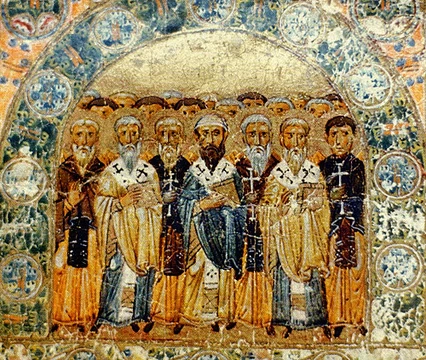
Martin of Tours
Third bishop of Tours, patron saint of the French Third Republic.
Last updated
Martin of Tours (c. 316/336 – 8 November 397) served as the third bishop of Tours. He is the patron saint of numerous European communities and organizations, including the former French Third Republic. Born in Pannonia (modern-day Hungary), he embraced Christianity early in life. After serving in the Roman cavalry in Gaul, he left the military before 361 to follow Hilary of Poitiers and founded the monastery at Ligugé.
He was made bishop of Caesarodunum (Tours) in 371. In that role, he worked to suppress the remaining Gallo-Roman religious practices. He is most famous for the story of cutting his cloak in half with his sword to share it with a ragged beggar in winter. His shrine at Tours became a popular stop for pilgrims traveling to Santiago de Compostela in Spain.
Hagiography
The contemporary writer Sulpicius Severus, who knew Martin personally, composed a hagiography of his early life. It recounts supernatural events, including encounters with the devil and miracles such as casting out demons, healing a paralytic, and raising the dead. Other reported miracles involve turning back flames from a house while Martin burned an adjoining Roman temple, deflecting the path of a felled sacred pine, and the healing power of a letter he wrote. Martin was born in either 316 or 336 in Savaria, in the Diocese of Pannonia (now Szombathely, Hungary).
Soldier
His father was a senior officer (tribune) in the Roman army. After receiving veteran status, his father was granted land to retire at Ticinum (now Pavia) in northern Italy, where Martin grew up. At age ten, he began attending Christian church against his parents’ wishes and became a catechumen. Christianity had been legalized in the empire in 313, but it remained a minority faith, more common in the eastern empire and cities, spread by converted Jews and Greeks.
It was not widely accepted among the upper classes, and Mithraic worship was stronger in the military. As the son of a veteran officer, Martin was required to join a cavalry unit at age fifteen. Around age eighteen (c. 334 or 354), he was stationed at Ambianensium civitas or Samarobriva in Gaul (now Amiens, France). He likely joined the Equites catafractarii Ambianenses, a heavy cavalry unit listed in the Notitia Dignitatum.
Lore & Background
Martin was born in AD 316 or 336 in Savaria, in the Diocese of Pannonia (now Szombathely, Hungary). His father was a senior officer (tribune) in the Roman military, later granted veteran status and land at Ticinum (now Pavia), where Martin grew up. At age 10, he attended church against his parents' wishes and became a catechumen. As the son of a veteran officer, Martin at 15 was required to join a cavalry ala.
At age 18 (around 334 or 354), he was stationed at Ambianensium civitas or Samarobriva in Gaul (now Amiens, France). Historian Andre Mertens concluded Martin served under Constantine II (ruled 337–340) and afterwards under Julian (ruled 361–363). Just before a battle at Borbetomagus (now Worms, Germany), Martin told Julian, 'I am the soldier of Christ: it is not lawful for me to fight.' He was charged with cowardice and jailed, but volunteered to go unarmed to the front. Before his superiors could act, the invaders sued for peace, the battle never occurred, and Martin was released from military service.
Reader's Guide
Martin of Tours is significant as a key figure in the spread of monasticism and Christianity in Gaul during the late Roman Empire. His life, as recorded by the contemporary hagiographer Sulpicius Severus, became a model for later saints and a source of popular devotion. The account of his cutting his cloak for a beggar became an iconic image of charity. As bishop, he actively suppressed the remnants of Gallo-Roman religion, destroying pagan temples, altars, and sculptures.
His shrine in Tours became an often-frequented stop for pilgrims on the road to Santiago de Compostela in Spain, cementing his role in medieval pilgrimage culture. His legacy includes the monastery at Ligugé, which claims to be the oldest monastery known in western Europe, and his patronage of the former French Third Republic. The hagiography by Sulpicius Severus contains descriptions of supernatural events, such as interactions with the devil and various miracles: Martin casts out demons, heals a paralytic, and raises the dead. Other miracles are: turning back the flames from a house while Martin was burning down the Roman temple it adjoined; deflecting the path of a felled sacred pine; the healing power of a letter written by Martin.
Frequently Asked Questions
What is Martin of Tours most famous for?
His most iconic act is cutting his military cloak in half to give to a freezing beggar, a story that later inspired the Order of the Holy Spirit. He is also well known for founding Ligugé Abbey and for his aggressive campaign tearing down pagan temples across Gaul.
When is Martin of Tours's feast day and how did he die?
He passed away on 8 November 397 in Tours, and that date continues to mark his principal feast day in the Western liturgical calendar. His tomb in Tours became one of the most significant pilgrimage destinations in medieval Gaul.
Also in the Codexery
More in Christian Saints & Early Church Fathers
Sources
Compiled from Wikipedia and the sources listed below. Text from Wikipedia is available under CC BY-SA 4.0; this entry is adapted from it.
- Wikipedia: Martin of Tours (CC BY-SA 4.0).
Spotted an error? Know more?
Reader corrections go straight into our review queue. Suggest an edit · How this site is sourced