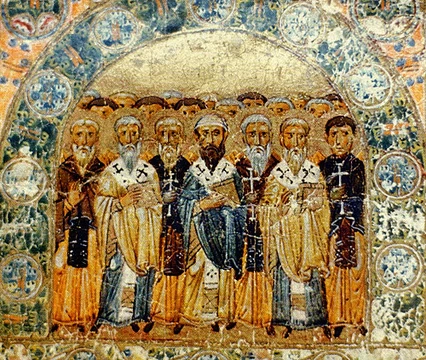
Peter Damian
Italian reforming Benedictine monk, cardinal, and Doctor of the Church
Last updated

via Wikipedia: Saint Peter · see source
Peter Damian (1007 – 21 or 22 February 1072 or 1073) was an Italian reforming Benedictine monk and cardinal in the circle of Pope Leo IX. Dante placed him in one of the highest circles of Paradiso as a great predecessor of Francis of Assisi and he was declared a Doctor of the Church on 27 September 1828. His feast day is 21 February.
Lore & Background
Peter was born in Ravenna around 1007, the youngest of a large but poor noble family. Orphaned early, he was at first adopted by an elder brother who ill-treated him as a swineherd. Another brother, Damianus, an archpriest at Ravenna, took him to be educated. Adding his brother's name to his own, Peter studied theology and canon law at Ravenna, Faenza, and Parma (cathedral schools, not a university).
Around age 25 he was a famous teacher at Parma and Ravenna. About 1035 he entered the hermitage of Fonte Avellana near Gubbio. His fervor led to extreme self-mortification and severe insomnia. On recovery he lectured to fellow monks and, at the request of Guy of Pomposa and others, lectured at neighboring monasteries.
About 1042 he wrote the life of Romuald. He became prior of Fonte Avellana in 1043 and remained so until his death. He introduced flagellation and the daily siesta, built a cloister, purchased silver chalices and a processional cross, and added books to the library.
He wrote the Liber Gomorrhianus (about 1050) and the Liber Gratissimus (about 1053). He was created cardinal by Pope Stephen IX on 30 November 1057 and appointed administrator of the Diocese of Gubbio. He served as legate to Milan around the end of 1059. He later assisted Pope Alexander II against the antipope Honorius II.
Reader's Guide
Peter Damian is a Doctor of the Church known for his reforming zeal, his advocacy of monastic discipline including flagellation, and his defense of papal authority. His writings address simony, clerical celibacy, and the validity of ordinations by simoniacal clerics. He argued that philosophy must serve theology.
Also in the Codexery
More in Christian Saints & Early Church Fathers
Related in Christian Saints & Early Church Fathers
Links follow this subject's own source article.
Sources
Compiled from Wikipedia and the sources listed below. Text from Wikipedia is available under CC BY-SA 4.0; this entry is adapted from it.
- Wikipedia: Peter Damian (CC BY-SA 4.0).
Spotted an error? Know more?
Reader corrections go straight into our review queue. Suggest an edit · How this site is sourced