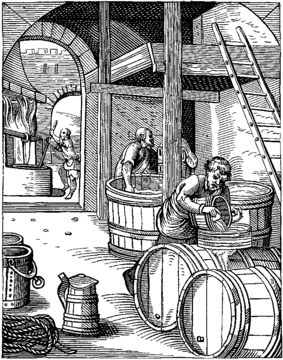
Decoction mashing
Traditional method boiling part of the mash for rich flavor.

Decoction mashing is a traditional method in which a portion of the grains are boiled and then returned to the mash, raising the temperature. This process extracts more starches from the grains by breaking down the cell walls and is common in German and Central European breweries.
- Classification
- one-, two-, and three-step decoctions
- Common regions
- German and Central European breweries
- Boiling time
- around 15 minutes
- Temperature range
- 45–78 °C (113–172 °F)
Lore & Background
Decoction mashing involves boiling a portion of the grains and then returning them to the mash, raising the temperature. The boiling extracts more starches from the grains by breaking down the cell walls. It can be classified into one-, two-, and three-step decoctions, depending on how many times part of the mash is drawn off to be boiled. Decoction is a traditional method and is common in German and Central European breweries. It was used out of necessity before the invention of thermometers allowed for simpler step mashing, but the practice is still in use for many traditional beers because of the unique malty flavor it lends to the end product. Boiling part of the grain results in Maillard reactions, which create melanoidins that create rich, malty flavors. In decoction mashing, part of the mash is taken out of the mash tun and placed in a cooker, where it is boiled for a period of time. This caramelizes some of the sugars, giving the beer a deeper flavor and color, and frees more starches from the grain, making for a more efficient extraction from the grains. The portion drawn off for decoction is calculated so the next rest temperature is reached by simply putting the boiled portion back into the mash tun. Before drawing off for decoction, the mash is allowed to settle a bit, and the thicker part is typically taken out for decoction, as the enzymes have dissolved in the liquid, and the starches to be freed are in the grains, not the liquid. This thick mash is then boiled for around 15 minutes and returned to the mash tun.
Reader's Guide
Decoction mashing is notable for its historical role before thermometers enabled simpler step mashing, yet it remains in use for traditional beers due to the unique malty flavor it imparts. The boiling of part of the grain triggers Maillard reactions, producing melanoidins that create rich, malty flavors. This method also caramelizes some sugars, giving the beer deeper flavor and color, and frees more starches for efficient extraction. Breweries implementing a decoction process must possess at least two dedicated vessels. The practice is common in German and Central European breweries, where it is classified into one-, two-, or three-step decoctions based on how many times part of the mash is drawn off and boiled. The thick portion of the mash is typically taken for decoction, as enzymes dissolve in the liquid while starches remain in the grains. The boiled portion is returned to the mash tun to reach the next rest temperature. This traditional method continues to be valued for the distinctive character it lends to certain beer styles.
Did You Know?
- The thick part of the mash is typically taken for decoction because starches are in the grains, not the liquid.
- Breweries using decoction must possess at least two dedicated vessels.
More in Brewing Processes 1-24
Spotted an error? Know more?
Reader corrections go straight into our review queue. Suggest an edit · How this site is sourced