Boiling (brewing)
Boiling adds hops for bitterness, flavor, and preservation.

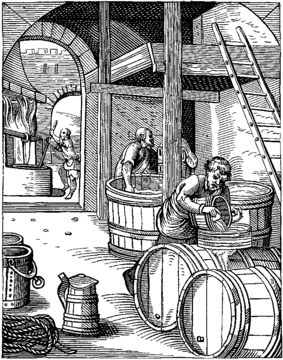
Boiling is a step in the brewing process that occurs after lautering and before fermenting. It is notable because it is during boiling that hops are typically added to the wort, providing bitterness, flavor, and aroma, as well as preservative qualities that favor brewer's yeast over undesirable microorganisms.
- Ingredients added during boiling
- hops
- Hop characteristics
- bitterness, floral/citrus/herbal aromas, antibiotic effect, aids head retention
- Historical hop cultivation recorded
- 13th century
- Pre hop flavoring
- gruit (yarrow, wild rosemary, bog myrtle, juniper berries, aniseed, ginger)
Lore & Background
Hops had been used for medicinal and food flavouring purposes since Roman times; by the 7th century in Carolingian monasteries in what is now Germany, beer was being made with hops, though it isn't until the thirteenth century that widespread cultivation of hops for use in beer is recorded. Before the thirteenth century, beer was flavoured with plants such as yarrow, wild rosemary, and bog myrtle, and other ingredients such as juniper berries, aniseed and ginger, which would be combined into a mixture known as gruit and used as hops are now used. Between the thirteenth and the sixteenth century, during which hops took over as the dominant flavouring, beer flavoured with gruit was known as ale, while beer flavoured with hops was known as beer. Some beers today, such as Fraoch by the Scottish Williams Bros Brewing Company and Cervoise Lancelot by the French Brasserie Lancelot, use plants other than hops for flavouring.
Reader's Guide
Boiling is a critical step in the brewing process, primarily because it is when hops are introduced. Hops contribute bitterness that balances the sweetness of the malt, provide floral, citrus, and herbal aromas and flavours, have an antibiotic effect that favours the activity of brewer's yeast over less desirable microorganisms, and aid in head retention. The preservative quality of hops has historically been important, allowing beer to last longer. The article notes that before the widespread use of hops, beer was flavoured with gruit, a mixture of various plants. The transition from gruit to hops as the dominant flavouring occurred between the thirteenth and sixteenth centuries. Today, nearly all beer is made with hops, though some brewers still use alternative plants. The boiling step itself is part of the standard sequence of malting, milling, mashing, lautering, boiling, fermenting, conditioning, filtering, and packaging.
Did You Know?
- Hops contain an antibiotic effect that favours brewer's yeast over less desirable microorganisms.
- Before the 13th century, beer was flavoured with gruit, a mixture of plants such as yarrow, wild rosemary, and bog myrtle.
- Between the 13th and 16th centuries, beer flavoured with hops became known as beer, while ale was flavoured with gruit.
- Some modern beers, such as Fraoch and Cervoise Lancelot, use plants other than hops for flavouring.
More in Brewing Processes 1-24
Spotted an error? Know more?
Reader corrections go straight into our review queue. Suggest an edit · How this site is sourced